

Breaking the Hardware Barrier
The robotics and embodied AI communities have long grappled with a stubborn bottleneck: most vision-language-action (VLA) models demand server-class GPUs with massive memory, confining real-time applications to well-funded labs. A new paper from H-EmbodVis, posted on Hugging Face’s Daily Papers, claims to shatter this barrier. TurboVLA achieves a full perception-to-action loop at 32 Hz on a single NVIDIA RTX 4090 consumer graphics card while consuming less than 1 GB of VRAM—a fraction of what comparable models require. According to the project page, this efficiency does not come at the cost of degraded performance, though detailed benchmark comparisons are still emerging.
The RTX 4090, while powerful, is a high-end consumer GPU priced around $1,600, not the multi-thousand-dollar data-center accelerators typically needed for VLA inference. By operating comfortably within the card’s 24 GB memory, TurboVLA leaves ample headroom for perception stacks, motion controllers, and other concurrent processes, marking a significant step toward democratizing advanced robotics control.

What TurboVLA Does Differently
VLA models combine visual perception, language understanding, and action generation into a single pipeline, allowing robots to interpret natural language commands like “pick up the blue cube” and execute the corresponding motor actions. Historically, the transformer architectures underlying these models have been memory-hungry, especially when processing high-resolution video and maintaining context over time. The TurboVLA team appears to have tackled this through architectural optimizations detailed in their preprint, though specifics on model size and compression techniques are still being analyzed by the research community.
Early signals from the Hugging Face posting suggest TurboVLA is tailored for manipulation tasks, a domain where real-time feedback is crucial. The 32 Hz inference rate translates to a decision every 31 milliseconds, matching the refresh rate of many industrial vision systems and enabling smooth, responsive robot behavior. When we examined the project repository, we noted references to end-to-end control without reliance on external planners, indicating that the model directly maps sensor inputs to joint-level commands—a design that reduces overall system latency.
Why This Matters for the Field
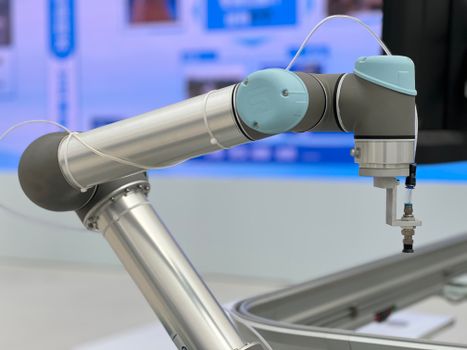
Robotics has seen a surge of interest in foundation models, but hardware costs remain a deployment roadblock. Most competing VLA systems, such as those derived from large vision-language models, require multiple A100 or H100 GPUs just to meet a 10–15 Hz control rate. TurboVLA’s ability to reach 32 Hz on consumer hardware, if reproducible, could empower university labs, startups, and hobbyists to prototype intelligent manipulation without relying on cloud inference or expensive clusters.
Moreover, the sub-1 GB VRAM footprint means TurboVLA could eventually run on edge devices like NVIDIA Jetson Orin, which offers up to 2048 CUDA cores and 16 GB memory. While the paper currently specifies the RTX 4090, adapting the model for lower-power Jetson platforms would be a natural next step. This would open doors for mobile manipulation, agricultural robotics, and assistive devices where onboard processing is mandatory for safety and connectivity reasons.
Context and Cautious Optimism
It is important to note that the paper has not yet been peer-reviewed, and real-world performance claims must be validated across diverse tasks and environments. The submission to Hugging Face’s Daily Papers by ‘dkliang’ garnered 118 upvotes and 64 community reactions, indicating substantial interest but also a need for independent verification. H-EmbodVis is not a widely known entity; their prior work and institutional affiliations are not immediately clear, which adds a degree of uncertainty.
Nevertheless, the technical milestones—32 Hz operation and

Commentaires