

The Acquisition: AI Agents Take on Global Trade Paperwork
On July 27, 2026, supply chain technology company Altana announced the acquisition of Cervo AI, a platform specializing in AI-driven customs brokerage. The deal, confirmed by Altana CEO Evan Smith in an interview with The Verge the same day, injects agentic AI capabilities directly into the documentation-heavy process of cross-border trade. While the financial terms were not disclosed, the move signals a rapid scaling of AI agents to handle paperwork that did not exist a few years ago — a direct consequence of escalating geopolitical fragmentation and tariff regimes.
Why Cervo AI Matters in a Fractured Trade Landscape
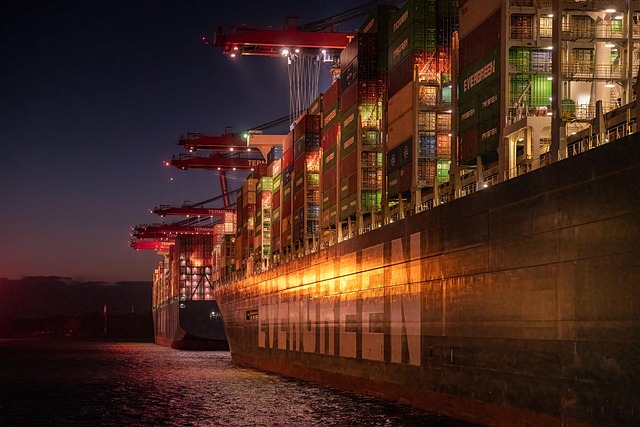
Customs brokerage involves the preparation and submission of documentation required to facilitate imports and exports across international borders. For decades, this was a human-intensive, compliance-driven function. But the recent explosion of tariffs, sanctions, and national security checks has multiplied the complexity. Smith acknowledged the irony: "We're now having robots fill out forms presumably for other robots to read just to get back to the trade we had before." Yet with no return to a simpler era in sight, automation becomes not just efficient but essential. Cervo AI's platform uses large language models and structured workflow agents to classify goods, calculate duties, and file electronic declarations with customs authorities. Altana intends to integrate this into its existing supply chain network, which already connects eight of the world's ten largest logistics providers, nine national governments including US Customs and Border Protection, and numerous Fortune 1000 companies.
Agentic Orchestration and the Vision of a Self-Filing Supply Chain
Altana's core product is a shared digital map of the global supply chain — Smith calls it "Google Maps for the supply chain" — overlaid with a collaboration layer for trade management. With Cervo AI, that layer will now include AI agents that can transact across borders without human intervention for routine entries. Smith revealed that the company already has "AI agents and AI systems on one side of the border talking to our AI systems and agents on the other side of the border." This agentic orchestration goes beyond simple robotic process automation. The agents reason about trade regulations, adapt to policy changes in near real-time, and negotiate data exchange between shippers, customs brokers, and government agencies. Smith framed this as a technological inevitability: "The future is some version of agentic orchestration of the trade network. That's a sensible statement whether or not there's policy volatility out there."

Altana's Growth and the Broader AI Pivot
Since early 2025, Altana has grown from roughly 240 employees to just under 300, with the Cervo AI team pushing it past that threshold. The company's investor pitch as "an index bet on global dislocation" appears prescient. Trade policy whipsawing — from the Trump administration's tariff whack-a-mole to Strait of Hormuz chokepoint crises — has made the need for flexible, AI-powered compliance tools urgent. Altana is not alone: several logistics startups are applying language models to trade documentation. However, Altana's deep integration with both public and private sectors, and its ownership of a proprietary shared data model, give it a distinct position. The acquisition also reflects a larger enterprise trend: software firms are rapidly embedding domain-specific AI agents rather than waiting for generic horizontal assistants. Smith described how pairing deep domain experts with agentic coding methods has accelerated Altana's own product development, compressing timelines from months to weeks.
Implications and What Comes Next
The immediate effect will be felt by shippers and logistics providers in Altana's network, who can expect reduced manual data entry and faster clearance times. However, the longer-term picture is more structural. If AI agents become the primary interface for customs interactions, the cost of compliance for small and mid-sized importers could drop significantly, potentially offsetting some tariff-induced inflation. On the other hand, an arms race of AI-generated paperwork versus AI-based auditing may simply shift costs rather than eliminate them. Smith's comment that the U.S. and other nations are "weaponization of choke points" suggests that automation will not reduce the adversarial nature of trade policy, only the speed at which it is executed. For the AI community, Altana's move is another validation of verticalized agentic AI over generalized chatbots, and a clear signal that logistics and supply chain — a multi-trillion-dollar sector — is becoming a major deployment arena for autonomous agents.

Comments