
A Sudden Reversal on Chip Approvals
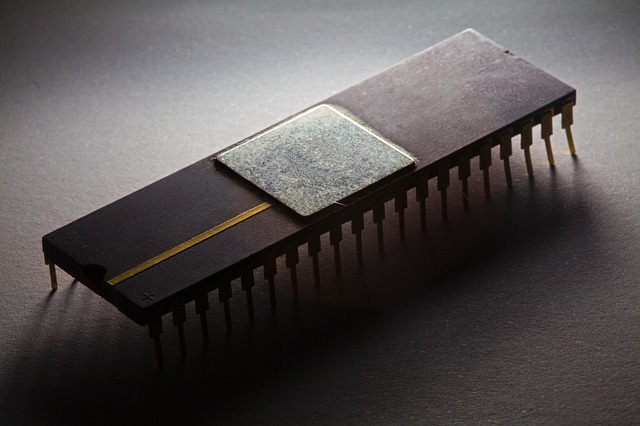
China is poised to grant permission to its leading artificial intelligence companies—Alibaba, ByteDance, and DeepSeek—to purchase Nvidia’s H200 graphics processing units, according to a report from The Information, as highlighted in MIT Technology Review’s daily newsletter. The move marks a significant reversal after Beijing had reportedly been blocking such purchases despite the US government’s authorization to export the chips. This decision could inject a massive computational boost into China’s AI sector at a time when the global race for advanced AI models is intensifying, but it also underscores the complex balancing act China faces between fostering indigenous chip development and meeting immediate computing demands.
The Geopolitics of Silicon: Why the H200 Matters
To understand the weight of this decision, we need to look at the chip at its center. The Nvidia H200, launched in late 2023 as a successor to the widely adopted H100, introduces a critical upgrade: 141 gigabytes of HBM3e memory with 4.8 terabytes per second of bandwidth, compared to the H100’s 80 gigabytes. That’s a 76% increase in memory capacity and a 43% jump in bandwidth. For large language model training and inference, these figures translate directly into the ability to handle bigger models, longer context windows, and faster token generation. For companies like Alibaba, which has its Tongyi Qianwen (Qwen) model family, and ByteDance, which powers Doubao and the recommendation algorithms behind TikTok and Douyin, the H200 would represent a direct path to more capable systems without requiring radical re-engineering of infrastructure. DeepSeek, which gained international fame for building performant models with reportedly lower resource footprints, would be able to scale its research without the memory bottlenecks that force painful engineering tradeoffs.
Why Did China Block Imports in the First Place?
The background to this reversal lies in the tightening web of US export controls. Since October 2022, Washington has progressively restricted the sale of high-end AI accelerators to China, aiming to cap the performance of chips that can legally reach the country. The H100 was caught in these nets, leading Nvidia to design a slower, bandwidth-capped variant called the H800 specifically for the Chinese market. But the H200, by virtue of its higher memory bandwidth, was in a gray zone—technically meeting many of the performance density thresholds that trigger restrictions. When the US later authorized its export under specific license requests, many expected a straightforward adoption. However, Chinese authorities apparently hesitated. Sources cited by Reuters earlier this year indicated that Beijing was using its own approval process as a lever, possibly to push companies toward domestic alternatives like those from Huawei’s Ascend series. The message was clear: China wanted to signal that self-reliance is the priority, even if it meant short-term pain.
The Strategic Calculus Behind the Green Light
So what changed? The reported shift may reflect several converging pressures. First, despite years of investment and some impressive results from Huawei’s Ascend 910B and domestic startups, the software ecosystem and raw performance of homegrown chips still lag behind Nvidia’s offerings. Developers familiar with both ecosystems note that porting CUDA-based code to Huawei’s CANN platform remains a costly and time-consuming ordeal, with unpredictable benchmark results. Second, the global AI landscape has not stood still. OpenAI’s GPT 5.6, which was recently given clearance by the Trump administration for wide release according to another story in MIT Technology Review’s feed, has raised the bar further, while Anthropic and Google continue to iterate on their frontier models. For Chinese AI labs that aim to compete internationally—or even just to maintain parity—being shut out of the latest and most memory-rich GPUs would mean falling behind in the ability to train models with trillion-plus parameters and process increasingly long inputs. Third, there are domestic political considerations. Barring companies like Alibaba from buying H200s could inadvertently harm China’s own tech champions, slowing product development, reducing their global competitiveness, and potentially creating a two-tier market where smaller labs with access to smuggled chips gain an unfair advantage. By granting permission to a select group, Beijing can maintain a narrative of sovereignty while pragmatically feeding its national AI champions.
DeepSeek’s Parallel Chip Ambitions
One particularly intriguing aspect of this story involves DeepSeek. The company, which gained notoriety for its efficient model architecture and last year’s release of DeepSeek V4, is reportedly developing its own AI chip, according to Bloomberg sources highlighted in a separate MIT Technology Review newsletter. That efforts to design a custom accelerator are progressing alongside the push to import H200s illustrates the dual-track strategy that many Chinese tech firms are now pursuing: achieve short-term compute goals with whatever chips are legally obtainable, while laying the groundwork for long-term self-sufficiency. DeepSeek’s V4 model, interestingly, was already a win for Chinese chipmakers as it showed that domestically produced hardware could be used effectively in training runs, but the company’s appetite for Nvidia’s latest silicon suggests that even the most efficient Chinese AI labs still see a critical need for Western technology. The permission to buy H200s could, paradoxically, accelerate domestic chip development by giving companies the headroom to experiment and build more sophisticated training frameworks that can later be adapted to local hardware.
Implications for the Global AI Supply Chain
For the broader tech community, this development signals that the US export control regime, however aggressive, is not airtight. The licensing system creates a patchwork where geopolitical signals from both Washington and Beijing determine the flow of chips. Hardware availability for Chinese firms is likely to remain volatile, depending on the whims of bilateral relations. For start-ups and smaller AI labs outside China, the news might mean that the compute gap—if they are based in regions without chip restrictions—could stay manageable, as Beijing’s occasional blockages create friction that slows deployment even when the legal path is open. But if China grants a steady stream of H200 approvals, we could see a new wave of capability jumps from Chinese AI companies later this year. It’s also worth watching how the parallel push for domestic chips plays out: if Huawei, Biren, or DeepSeek’s custom silicon can reach H100-level performance by 2027, the strategic value of Nvidia’s chips for China will diminish, potentially rendering these approvals obsolete. For now, the H200 import green light is a pragmatic victory for AI labs, a cautionary tale about the limits of both US export controls and Chinese self-sufficiency, and a potent reminder that in the AI era, chips remain the ultimate currency of innovation.

Comments