
The Big Price Shift
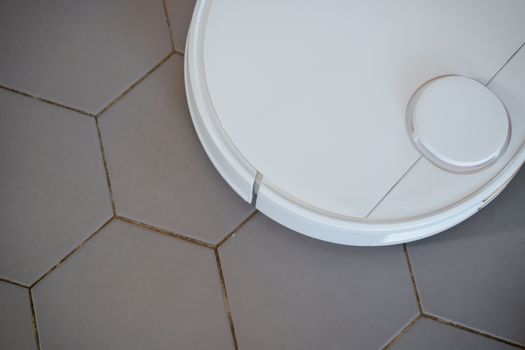
Matic, the maker of our top-rated robot vacuum and mop, will increase the price of its flagship floor-cleaning robot by $250 on September 9, pushing the retail price from $1,245 to $1,495. The company confirmed the change to The Verge, attributing it to a dramatic rise in the cost of memory and other core components—costs it says have increased tenfold. In an industry where aggressive discounting and iterative hardware iterations are the norm, a straightforward price hike of this magnitude is highly unusual and signals mounting pressure on hardware startups relying on cutting-edge perception and computing stacks.
What the Price Increase Covers
For consumers who purchase directly from Matic before the September 9 deadline, the existing $1,245 price remains. Those buying after that date will pay the higher $1,495. To soften the impact, Matic is bundling a year's supply of replacement dirt-disposal bags—12 bags valued at $96 total—at no extra cost, with free shipping. Additionally, the company has extended its return window from 60 days to a full six months, giving buyers an unusually long trial period to evaluate the robot's performance in their own homes.
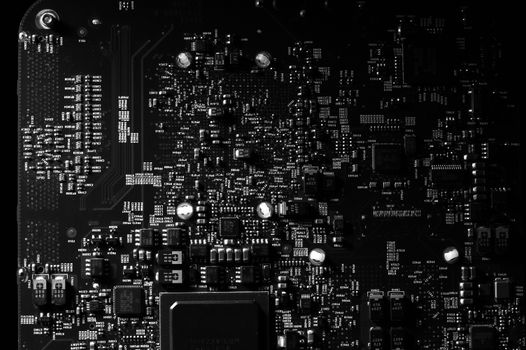
The move is striking because the robot vacuum segment has historically moved in the opposite direction: components like lidar sensors, brushless motors, and ARM-based processors have steadily dropped in cost, enabling ever-cheaper devices. Matic’s reported tenfold increase in memory and component costs suggests its BOM (bill of materials) is heavily exposed to specialized silicon—likely high-resolution vision processors and local AI inference chips that do not benefit from the same economies of scale as commodity smartphone parts.
Why Matic Stands Apart
The Matic robot vacuum, reviewed by The Verge earlier this year, earned praise for its “human-like navigation” and minimal maintenance. Unlike rivals that rely on lidar and cloud processing, Matic uses a vision-based system with on-device AI to map and navigate homes completely offline. It carries its own water tank, self-cleans its roller mop, and even drives itself to a sink to refill—eliminating the need for bulky multi-function docks. According to our six-month test, it got stuck only twice in a cluttered, multi-level home with pets and high transitions, a performance that few competitors can match.
That offline processing is the double-edged sword here. By eschewing cloud dependency, Matic gains privacy and reliability—it works even during internet outages—but the computational load shifts entirely to onboard hardware. If the cost of that hardware spikes, Matic cannot fall back on a recurring cloud subscription to subsidize the device; the entire business model hangs on the upfront unit economics. The company’s admission that memory and component costs have risen tenfold points to a possible supply crunch in the specialized vision-processing units or high-bandwidth memory it uses for real-time SLAM (simultaneous localization and mapping) and object recognition.
Market Timing and Competitive Landscape
The price hike lands in a fiercely competitive market. iRobot’s Roomba line frequently sees discounts of 30% or more, and Roborock, Ecovacs, and Dreame continue to release new models with ever-improving obstacle avoidance and mopping at sub-$1,000 price points. Even Samsung and LG have entered the space with AI-powered robots. By moving to $1,495, Matic positions itself well above the premium tier—nearly double the cost of a Roborock S8 MaxV Ultra at retail. The bet is that buyers who prioritize privacy, quiet operation, and genuinely autonomous maintenance will pay a premium that the broader market will not.

There is also a broader context: U.S. tariffs on Chinese electronics, while not directly cited by Matic, have indirectly raised supply chain costs for many hardware startups that manufacture in or source components from Asia. Even if Matic assembles domestically, the memory modules, processors, and image sensors likely originate from suppliers affected by trade policies. The tenfold cost claim, while startling, may reflect a compound impact of constrained supply, tariff expenses, and the move to higher-quality components after early production runs.
The extended six-month return policy is a clever counterbalance. It signals confidence in the product’s reliability—The Verge’s tester found the Matic required remarkably little intervention—while reducing purchase anxiety at a new, higher price point. If the robot performs as advertised, most buyers won’t return it, and Matic captures the full margin. If it doesn’t, the company absorbs the cost of refurbishment, but the long window may ultimately expand its addressable market to skeptics who would never try a $1,495 gadget without a safety net.
Implications for the Smart Home Robotics Sector
Matic’s move may be a canary in the coal mine for other premium robotics startups. Home robots that pack significant onboard AI—lawn mowers, security robots, companion bots—often rely on the same constrained supply of advanced systems-on-chip and high-bandwidth memory. If component costs continue to rise, we may see similar price adjustments or a shift toward subscription-based features that offset hardware losses over time. Matic’s decision to hold the line on a one-time purchase model, without cloud fees, is increasingly rare and may become unsustainable if component inflation persists.
For the developer and AI community, this announcement underscores the real-world cost of local inference. Training models is one expense; deploying them on-device with enough power to handle messy, unstructured physical environments is another. The Matic robot’s navigation stack, which parses visual data in real time and generates collision-free paths without cloud offload, represents a miniaturized autonomous driving problem. If memory costs for such systems are rising tenfold, it suggests demand for edge AI hardware is outpacing supply, a trend that could affect everything from wearables to augmented reality headsets.
Looking ahead, watch for Matic to potentially introduce a lower-cost model or a subscription option to offset future component volatility. The company told The Verge that the price reflects current costs, but it did not rule out further adjustments. In the near term, consumers interested in the most autonomous, privacy-respecting floor cleaner on the market have until September 9 to lock in the $1,245 price—after that, the cost of keeping your floors clean just got a lot more expensive.

Comments