

First Impressions and Onboarding
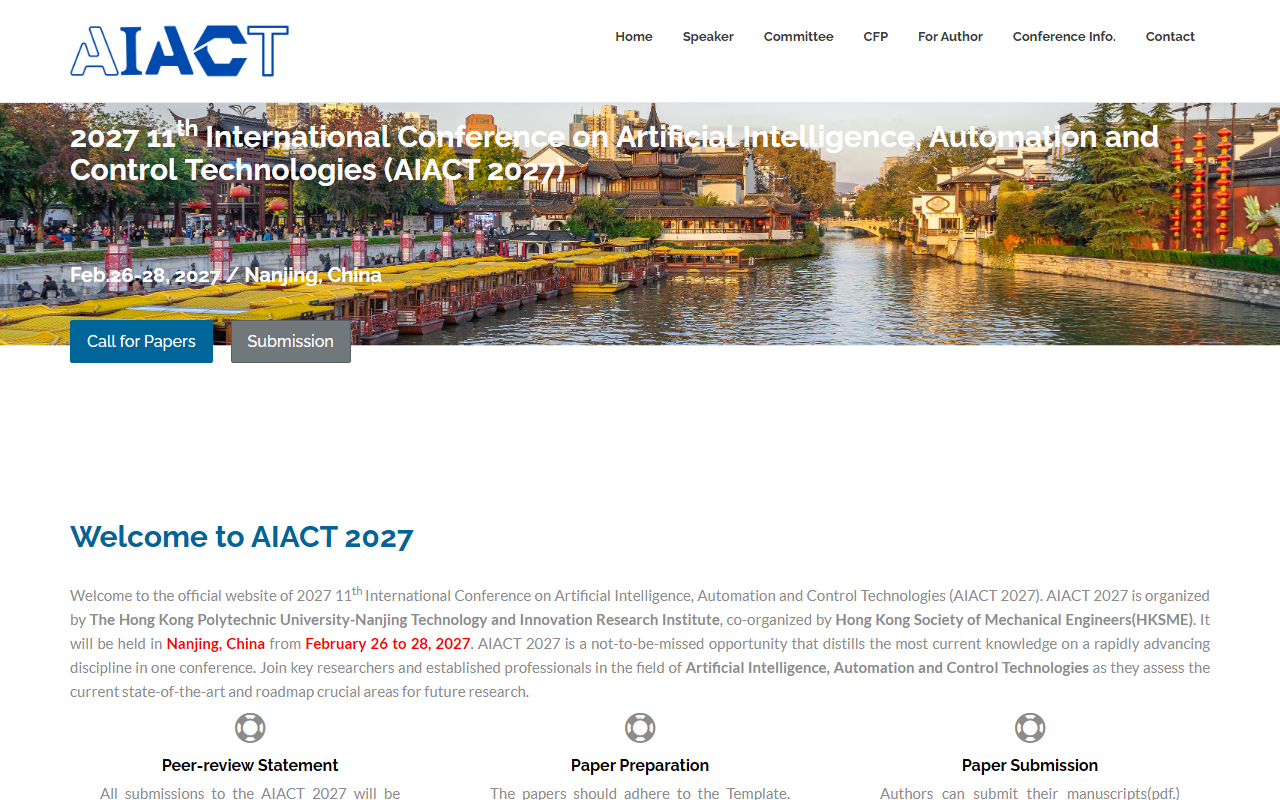
Upon visiting the AIACT website, I found a straightforward academic conference portal. The homepage clearly displays the event name, dates (Feb. 26-28, 2027), and location (Nanjing, China). The navigation is clean, with sections for call for papers, submission guidelines, and program overview. As a first-time user, I clicked the "Electronic Submission System" link, which leads to an external system requiring registration. The onboarding flow is typical for such conferences: you create an account, then submit your manuscript. I appreciated the clear manuscript requirements: English language, adherence to template, and originality. However, the website does not offer any AI-powered tools or interactive learning features—it's a static information hub. Compared to platforms like EasyChair or OpenReview, AIACT's interface is simpler but functional for submission management.
The Conference Experience and Academic Value
AIACT 2027 is the 11th iteration, organized by The Hong Kong Polytechnic University-Nanjing Technology and Innovation Research Institute and co-organized by HKSME. The conference focuses on Artificial Intelligence, Automation, and Control Technologies. It provides a venue for researchers to present papers, attend keynotes, and network. The peer review process involves 2-3 independent reviewers, ensuring quality control. Accepted papers are published in conference proceedings (submitted to Ei Compendex, Scopus, Web of Science). Selected high-quality papers may be recommended for journals like Modelling (ESCI indexed) or Sensors. This is a strong benefit for academics seeking publication. The program spans three days: registration, keynotes, technical sessions, and a technical tour. Past conferences (e.g., 2025 in Sapporo, 2026 in Sydney) have indexed proceedings, indicating reliability. However, unlike a learning platform with tutorials or courses, AIACT is purely event-based. For those seeking hands-on AI tools or interactive learning, alternatives like Coursera or Udacity offer structured courses. AIACT is best for researchers wanting to publish and present.
Pricing and Accessibility
Pricing is not publicly listed on the website. Typically, academic conferences charge registration fees covering attendance, publication, and social events. For AIACT, details like early bird rates or student discounts are absent. Interested participants must contact the committee via [email protected] for fee information. This lack of transparency is a limitation. Additionally, the conference requires physical presence in Nanjing, which adds travel and accommodation costs—a barrier for remote attendees. There is an option to participate as a presenter (abstract only) or listener, but no virtual attendance option is mentioned. Compared to fully online conferences, AIACT is less accessible. Still, for those who can attend, the networking and publication opportunities may justify the expense.
Strengths, Limitations, and Verdict
Strengths: Established track record (11 editions), rigorous peer review, publication in reputable databases, and opportunities for networking with experts. The special session proposals allow for emerging topics. Limitations: No pricing transparency, no virtual participation, and limited to a single annual event. It is not an AI tool but a conference, so it doesn't offer interactive learning or software access. Verdict: AIACT is ideal for academics and industry professionals in AI, automation, and control who wish to publish and present research. Graduate students seeking publication credits will also benefit. If you need an online learning platform or hands-on AI tool, look elsewhere. For conference participation, AIACT is a credible option—just be ready to email for essential details.










Comments