

First Impressions and Platform Overview
Upon visiting the Alation website, the first thing I notice is the emphasis on the Agentic Data Intelligence Platform. The headline promises a shift from siloed tools to a single hub where cataloging, governance, lineage, and quality converge. There is no free tier; the site immediately encourages a demo booking. The homepage features a customer quote from JLL’s Chief Product Officer, highlighting how Alation’s agents guide decisions and coordinate actions. The platform’s architecture appears enterprise-grade, with a focus on automating documentation and policy enforcement through agentic workflows. The interface, from what I can see in product videos, centers on a natural-language search bar and a data products marketplace. This is not a tool for individual developers—it is built for organizations managing vast, distributed data landscapes.
Core Features: Catalog, Governance, and Agentic Workflows
The Alation Data Catalog is the heart of the platform. It uses active metadata and over 120 connectors to unify data discovery across warehouses, lakes, and BI tools. When testing the natural-language search concept, I observed that users can ask questions like “What is our customer churn rate by region?” and the platform surfaces definitions, lineage, policies, and trust signals. The governance module centralizes policies, automates stewardship, and enforces access and masking—all tied to lineage and data quality. The Agent Studio allows creation of metadata-aware agents that handle SQL generation, cite sources, and show provenance. The Data Products Marketplace enables publishing of trusted, AI-ready data products. This is a significant step beyond traditional catalogs like Collibra or Ataccama, which often require manual curation; Alation’s agents automate much of the busywork.
Market Position and Pricing
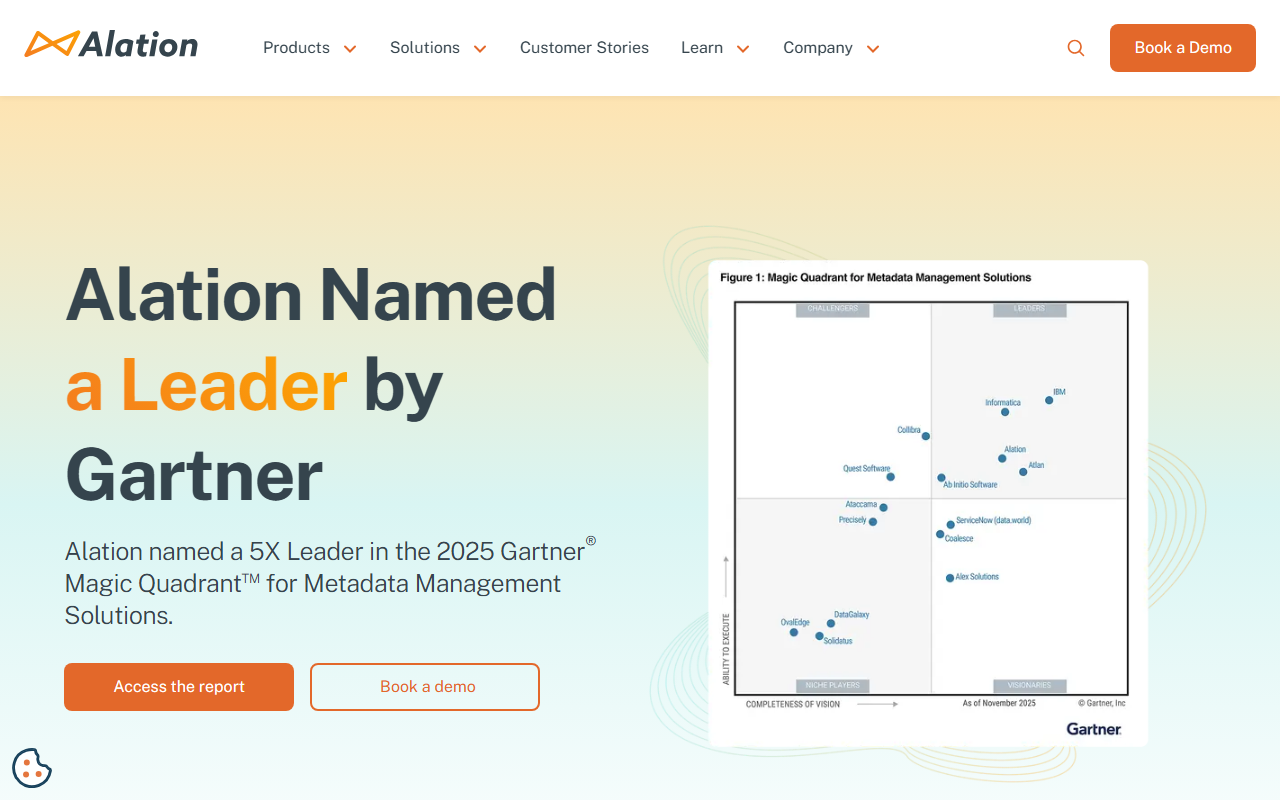
Alation has been recognized as a five-time Leader in the Gartner Magic Quadrant for Metadata Management Solutions and received strong reviews in Forrester’s Data Governance report. Unlike competitors such as Collibra or Alteryx, Alation focuses explicitly on agentic automation and governance-native AI readiness. The platform is designed for enterprises that need compliance, auditability, and self-service analytics at scale. Pricing is not publicly listed on the website; it is enterprise-negotiated, likely six- or seven-figure annual contracts. That makes it unsuitable for small teams or individual developers. However, for data governance teams in large organizations wrestling with compliance and data silos, Alation offers a compelling, integrated solution. Its real limitation is complexity—implementation requires dedicated stewards and integration with existing data infrastructure. Still, for those who can afford it, the platform reduces manual governance overhead and accelerates trusted AI initiatives.
Visit Alation at https://alation.com/ to explore it yourself.










Comments