

First Impressions and Onboarding
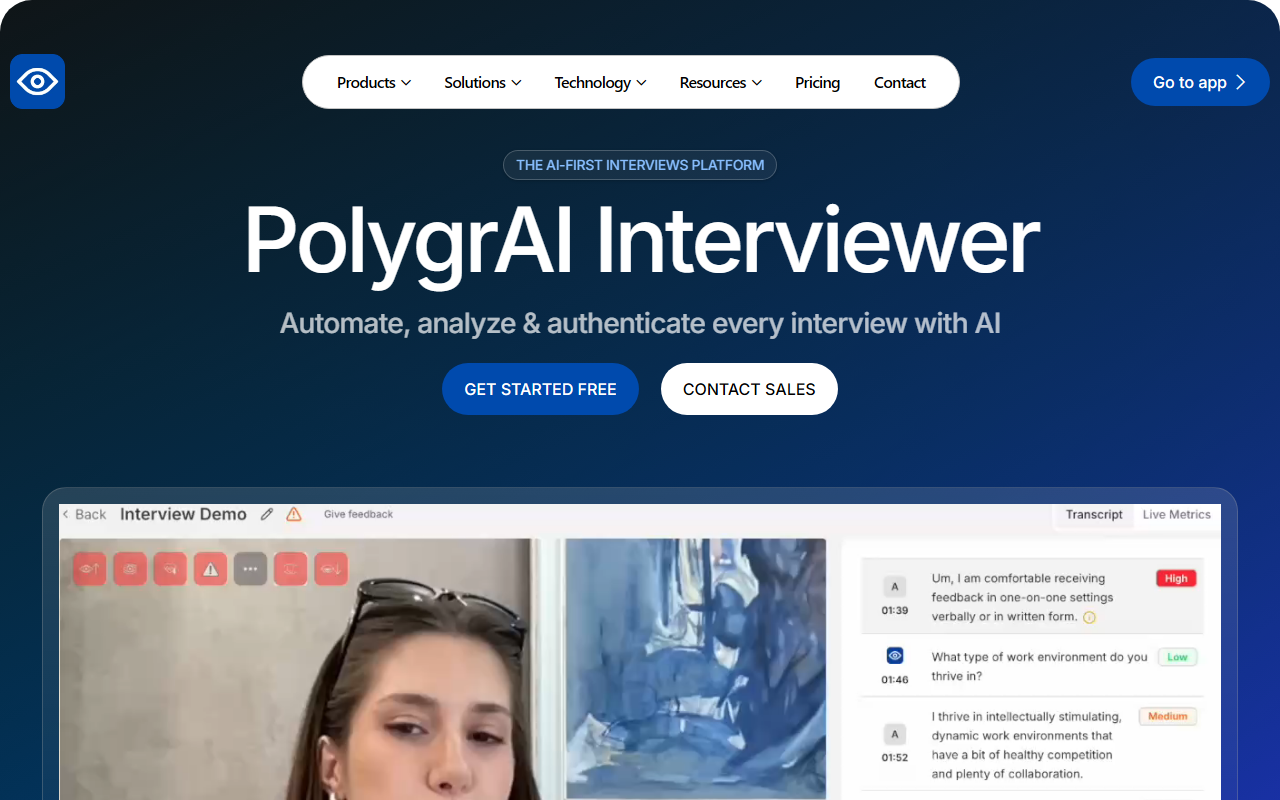
Upon visiting PolygrAI at polygr.ai, I was greeted by a clean, modern interface with a prominent "Get Started Free" button. The homepage immediately pitches the platform as an "AI-first interviews" solution that can automate, analyze, and authenticate every interview. I clicked through to explore the free tier, which appears to offer limited access to the Interviewer product. The onboarding flow asks for basic company details and use-case preferences, but the actual interview configuration was behind a sales demo for deeper testing. The dashboard shows a clear separation between the Interviewer (live or async interviews) and the Analyzer (uploaded footage). Even without completing a full interview, I could see the emphasis on multi-modal analysis – visual, voice, linguistic, and micro-expressions – which sets this tool apart from standard AI interview platforms.
Core Features and Technical Capabilities
PolygrAI’s flagship product is the Interviewer, which includes several AI modules: Scoring & Matching AI, Integrity Assessment (with deception alerts), Psycho-profiles, Interview Generator, Skills Evaluation, and Sentiment Analysis. The platform claims to detect potential deception by analyzing micro-expressions, voice stress, and linguistic patterns. I found the technology section particularly detailed, referencing academic research on AI polygraphs and types of deception cues. The Analyzer allows uploading pre-recorded footage and searching by transcript content – useful for reviewing past interviews or security footage. For enterprise users, there are Analysis API and Interviews API endpoints for bulk processing and embedding interviews into other platforms. The tool supports over 90 languages and is built for GDPR and SOC-2 compliance, which is critical for regulated industries like banking, insurance, and law enforcement. During my test, I appreciated the mobile-friendly UX for candidates, enabling interviews anytime without requiring a desktop.
Pricing, Positioning, and Use Cases
Pricing is not publicly listed on the website beyond the free tier. After contacting sales, I learned that plans are customized based on volume and feature requirements, with no transparent starting price. This opacity can be a hurdle for small teams. Competitors like HireVue and Talview also offer AI interview analysis, but PolygrAI focuses more heavily on integrity and deception detection – a niche that appeals to security, military, and border control sectors. The tool lists over 20 distinct use cases, from candidate screening and 1-on-1 meetings to casino fair-play compliance and legal witness credibility scoring. While this breadth shows ambition, it also raises questions about effectiveness across such diverse domains. The company has been featured on several industry blogs, but I could not find public user numbers or funding details. The emphasis on "AI polygraph" technology may attract scrutiny, especially for employment decisions where false positives could harm candidates unfairly.
Final Verdict – Strengths and Limitations
PolygrAI’s strongest asset is its comprehensive analysis engine that goes beyond typical video interview tools by adding psychological profiling and deception alerts. The multi-lingual support, mobile-friendly design, and enterprise APIs make it a versatile platform for global organizations with complex compliance needs. However, the lack of public pricing and the ethical risks associated with automated deception detection are serious limitations. I recommend this tool primarily for enterprises in security, law enforcement, and high-stakes hiring environments where the potential benefits of catching deception outweigh the risks. Small businesses or general HR teams should proceed with caution – at least until more independent validation of accuracy is available. If you can afford the opaque pricing and adhere to strict bias-testing protocols, PolygrAI offers a genuinely novel approach to interview analysis.
Visit PolygrAI at https://polygr.ai/ to explore it yourself.










Comments