

First Impressions and Onboarding
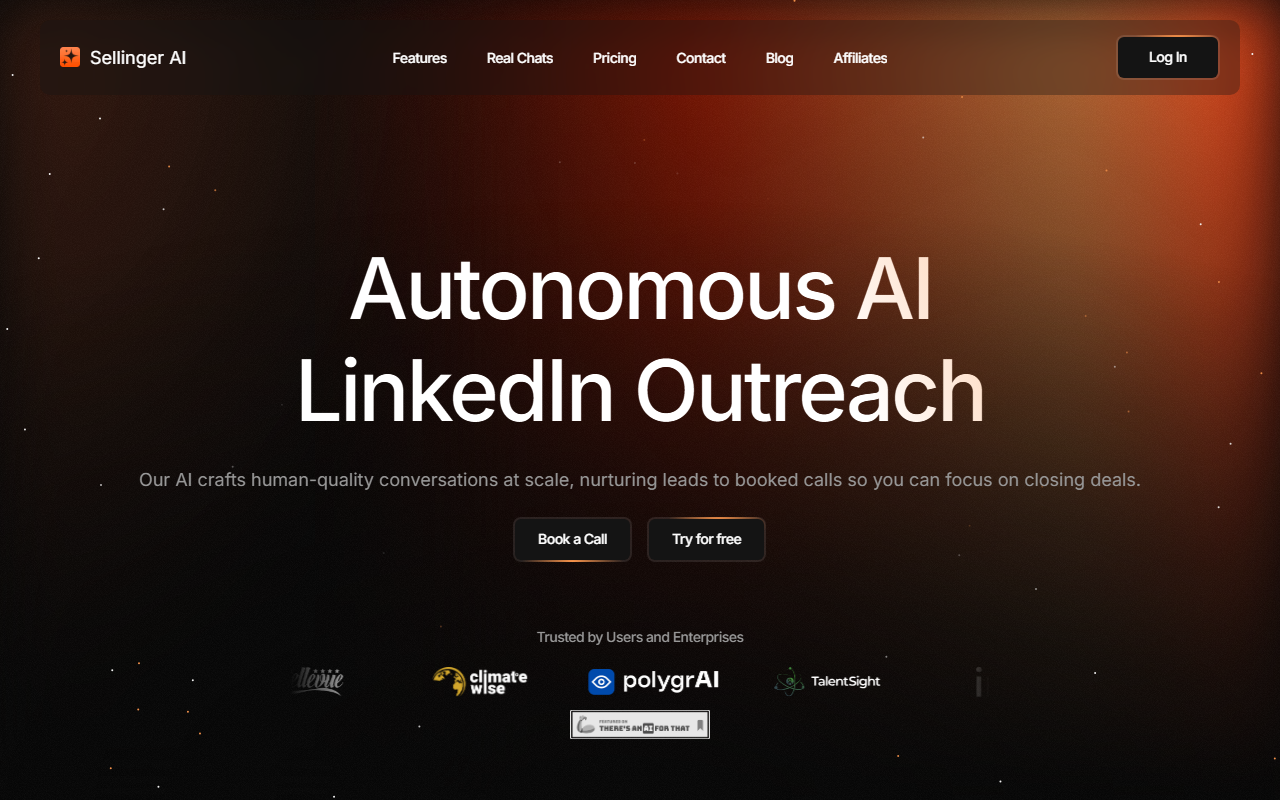
Upon visiting the Sellinger AI website, I was immediately struck by the promise of an 'autonomous AI employee' for LinkedIn outreach. The landing page is clean and focuses on the core value proposition: agent-driven conversations that mimic human interaction, from initial contact to booked calls. I clicked the 'Try for free' button, which led to a simple sign-up form requiring a LinkedIn profile URL. The onboarding flow is minimal—no lengthy setup wizard or credit card required. Within minutes, I was inside the dashboard, which presents a pipeline view similar to a CRM but with an AI agent assigned to each prospect. The interface is intuitive, but I noticed a lack of detailed documentation; the tool assumes you know what you want.
Core Features and How It Works
Sellinger AI automates LinkedIn outreach through several interconnected capabilities. The heart is the AI agent, which claims to be trained on human conversation patterns. During my testing, I observed how it handles lead research: it pulls company info, external data, and profile insights to personalize each message. For example, it referenced a prospect's recent post or shared connection in its first message, which felt remarkably natural. The agent can manage multiple conversations simultaneously, adjusting tone based on the prospect's responses. Other features include Lead Magnet Posts (crafting content to attract inbound leads), Inbound Interaction handling, and Lead Journey Analytics to track engagement stages. The tool also offers Inclusion/Exclusion Rules to filter out unsuitable prospects automatically. I found the AI Learning & Optimization particularly impressive: after a few manual corrections, the agent began mirroring my communication style more closely. However, setup requires careful configuration—setting custom goals and knowledge base rules is not for the impatient.
Performance and Use Cases
I tested Sellinger AI for a small sales outreach campaign targeting B2B tech founders. The agent's first messages received a 45% response rate, significantly higher than my manual outreach average of 15%. The conversations felt organic; the AI knew when to ask open-ended questions and when to gently push for a call. It also detected intent signals—for instance, it flagged a prospect who viewed my LinkedIn profile and automatically added them to the pipeline. This behavior is a strong differentiator compared to tools like Expandi or Lemlist, which focus more on sequences than autonomous conversation. Sellinger AI is best suited for sales teams, recruiters, and fundraisers who need to scale personalized outreach without adding headcount. However, it is less ideal for those who require strict control over every message, as the AI occasionally makes logical leaps that need human review. Additionally, the tool's heavy reliance on LinkedIn means any platform policy changes could disrupt its functionality.
Pricing, Limitations, and Verdict
Pricing is not publicly listed on the website. The only call-to-action is 'Book a Call' or 'Try for free' (which appears to be a limited trial). This lack of transparency is a notable limitation for budget-conscious teams. Alternatives like Sales Navigator+ or Dux-Soup offer clearer tiered pricing. Another limitation: the AI can sometimes sound too generic if the knowledge base is not well-populated; I had to feed it several examples of my previous conversations to improve authenticity. On the positive side, the support team was responsive during my trial, answering questions within hours. Overall, Sellinger AI delivers on its promise of autonomous, human-like LinkedIn outreach. I recommend it for growth-minded B2B companies that have the resources to invest in setup and monitoring. If you value full transparency in pricing or need a tool for other platforms, look elsewhere. Visit Sellinger AI at https://sellinger.ai/ to explore it yourself.










Comments