

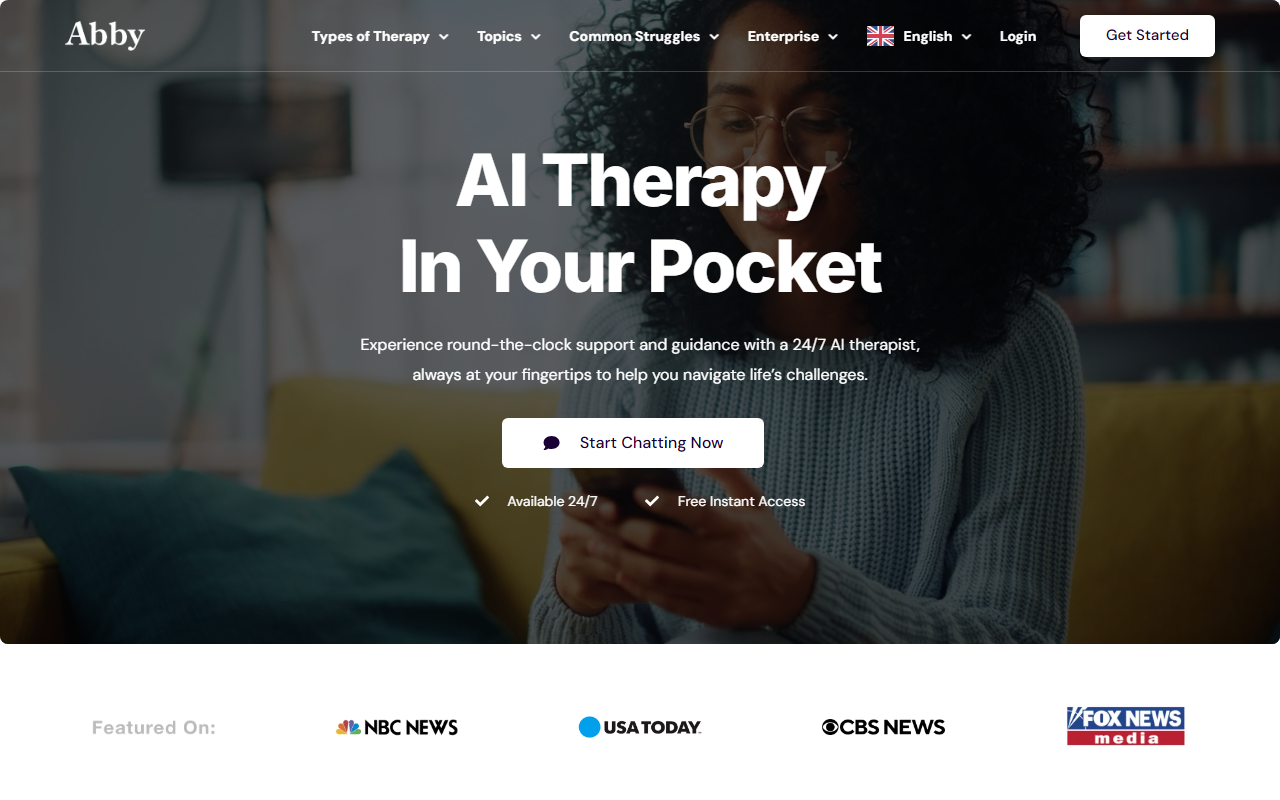
First Impressions: What Abby Actually Offers
Upon visiting the website at https://abby.gg/, the tagline "Your AI Therapist. 100% Free Trial, Available 24/7" immediately sets expectations. The landing page is clean, with a prominent "Start Chatting Now" button and testimonials from over 250,000 users. Abby is positioned as a judgment-free, always-available companion for everyday mental health struggles—stress, relationship issues, or simply needing someone to listen. The FAQ clarifies it is not a replacement for professional therapy and cannot diagnose conditions, which is important context.
During my test drive of the free tier, the onboarding flow asked minimal personal information—just a name and a brief reason for chatting. This aligns with the promise of anonymity. The chat interface is straightforward: a messaging window with no frills. Responses came quickly, and Abby used natural language processing to ask follow-up questions based on my inputs. It felt conversational, not robotic. The tool claims to learn over time, using machine learning to remember key details and emotional patterns. I noticed the assistant offered coping strategies like breathing exercises when I mentioned stress—a practical touch.
Pricing is not publicly listed on the website beyond the mention of a "100% Free Trial." There is no clear indication of a paid tier, which makes it accessible but also raises questions about long-term business model sustainability. For now, it is completely free to try without commitment.
How Abby Works and What Sets It Apart
Abby uses advanced natural language processing to understand and respond to emotions. It is not built on a specific publicly named model, but its conversational quality feels comparable to GPT-based mental health chatbots like Woebot or Wysa. However, Abby differentiates itself by focusing on being a 24/7 companion rather than a structured therapeutic program. It offers unbiased advice, anonymity, and availability in 88+ languages—a global reach that few competitors match.
The tool remembers details from previous sessions, which creates a sense of continuity. For example, when I mentioned work stress early in the chat, later sessions referenced that same issue to check progress. This personalization is a genuine strength. Additionally, Abby is recommended by therapists (per the site, though no specific credentials are linked), adding a layer of trustworthiness. Integrations are limited; there is no API or app mentioned, though the web-based interface is responsive on mobile.
Strengths and Limitations I Observed
Abby’s greatest strength is accessibility. It is free, requires no appointment, offers instant access, and is completely anonymous. For people who are hesitant to seek professional help or need support outside office hours, this is invaluable. The non-judgmental tone and empathetic phrasing genuinely made me feel heard during the trial. The 88-language support is also a standout feature for non-English speakers.
However, limitations are significant. Abby explicitly states it cannot replace therapy, diagnose, or handle crises—and my interaction confirmed it should not be relied upon for severe mental health conditions. While responses are empathetic, they lack the depth a trained therapist provides. There is also a risk of over-reliance: users might delay seeking real help because a chatbot feels supportive. Furthermore, without a paid plan visible, long-term viability is uncertain; the service could change or disappear. The website also does not disclose data privacy details beyond promising anonymity, which privacy-conscious users may want to investigate.
Final Verdict: Who Should Try Abby?
Abby is best suited for individuals dealing with mild to moderate everyday stress, loneliness, or wanting a safe space to reflect. It works well as a supplement to therapy—a 24/7 journal with a responsive listener. Students, remote workers, or anyone with irregular schedules will benefit from its instant availability. However, if you are experiencing serious mental health issues, suicidal thoughts, or need professional diagnosis, look elsewhere—consult a licensed therapist or crisis helpline immediately.
In a market of AI companions and therapy bots, Abby is a promising, free entry point. Its anonymity and language diversity give it an edge, but its lack of medical authority and unclear pricing model are caution points. I recommend trying it for a week to see if the conversational style fits your needs—just keep realistic expectations. Visit Abby at https://abby.gg/ to explore it yourself.


Comments