

First Impressions and Onboarding
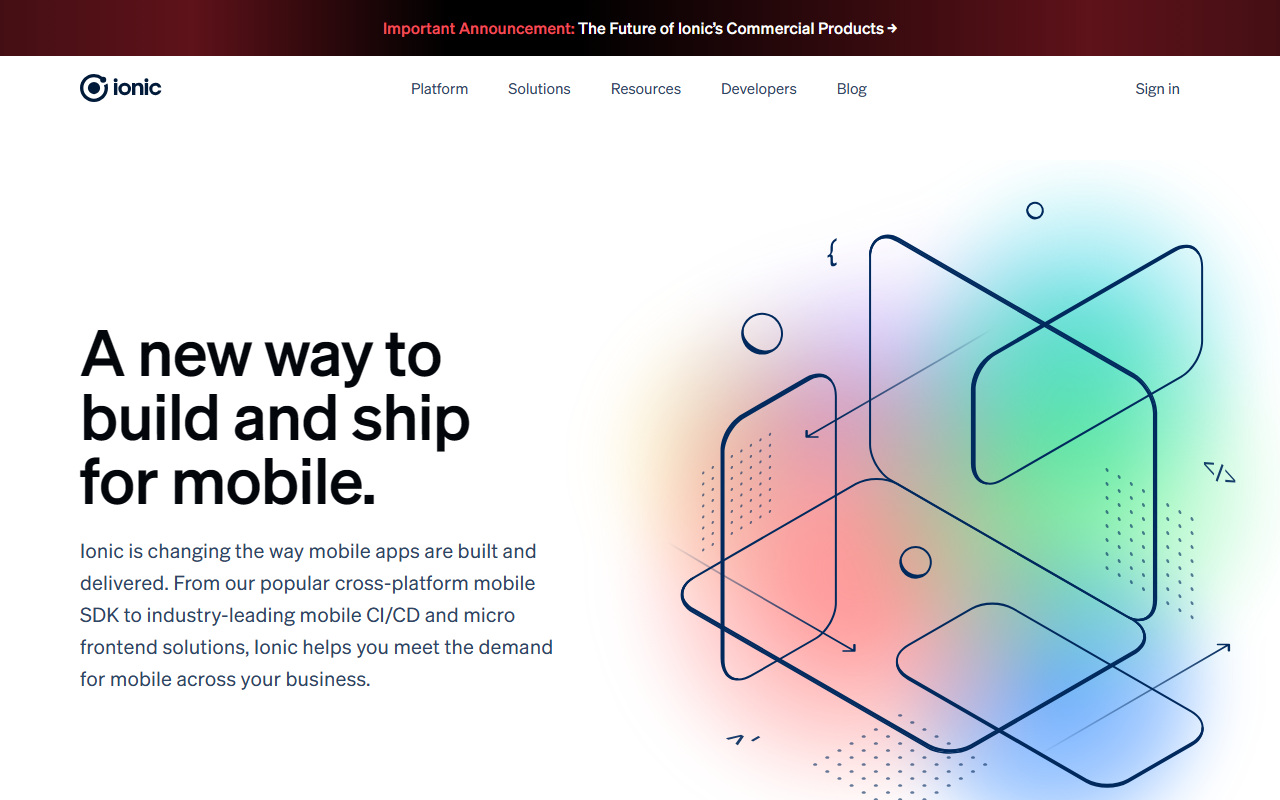
Upon visiting the site at codiqa.com, I was redirected to the Ionic Enterprise App Platform. The original Codiqa tool, once a simple drag-and-drop builder for Ionic apps, appears to have been fully absorbed into Ionic's broader ecosystem. The landing page now showcases a comprehensive platform for enterprise mobile development. The dashboard is not accessible without signing up, but the marketing material is clear: this is a developer-first platform built on open source. The onboarding flow likely involves choosing between the free open-source SDK and the enterprise plan. I tested the documentation section, which offers well-structured guides for React, Angular, and Vue integrations. The code examples shown use React hooks and Angular components, demonstrating a modern, component-based approach.
Core Features and Technology
Ionic provides a cross-platform mobile SDK that lets you write once and deploy to iOS, Android, and the web. The underlying technology uses Capacitor, a native bridge that gives access to device APIs, and the Ionic UI components that mimic native controls. The platform also includes mobile CI/CD via Ionic Appflow: you can build native binaries in the cloud, deploy live updates directly to users, and publish to app stores from a secure environment. A standout feature is Mobile Micro Frontends (Portals), which lets you embed web-based experiences into existing native apps. This is a strong differentiator for enterprise teams with legacy native apps. The code snippets on the site show integration with React, Angular, and Vue, along with a vanilla JavaScript option. The developer resources include a Discord community, forum, docs, and GitHub repository, all pointing to an active open-source community.
Pricing and Market Positioning
Pricing is not publicly listed on the website. The platform is clearly aimed at enterprises, with mentions of “mission-critical apps,” “best-in-class mobile protection,” and case studies from Bobcat, Burger King, and H&R Block. The free tier likely includes the open-source SDK and basic Capacitor functionality, while Appflow and enterprise support require a paid plan. Compared to alternatives like Flutter and React Native, Ionic’s strength lies in its web-centric approach: you can reuse existing web development skills and even embed web components into native apps. However, Flutter offers higher performance for complex animations, and React Native has a larger third-party library ecosystem. Ionic is best suited for teams that already have web developers and need to quickly ship cross-platform apps with moderate performance demands. It is less ideal for graphics-intensive games or apps requiring deep hardware-level control.
Strengths, Limitations, and Recommendation
A genuine strength is the single codebase approach combined with the ability to add native functionality via Capacitor plugins. The enterprise features—live updates, secure cloud builds, and micro frontends—are unique and well-executed. However, I observed a significant limitation: the framework adds overhead compared to pure native development. Apps may feel slightly less responsive, and the initial build size is larger. Additionally, the transition from Codiqa’s drag-and-drop builder to a full SDK means beginners may find the learning curve steeper than expected. For enterprise teams with existing web expertise and a need for rapid mobile delivery across multiple platforms, Ionic is a solid choice. Solo developers or small projects on a tight budget might prefer the free open-source alternative with Google’s Flutter. I recommend engineers evaluating cross-platform frameworks to consider Ionic if their team is strong in web technologies and they value CI/CD integration. Visit Ionic at https://codiqa.com/ to explore it yourself.


Comments