

First Impressions and Core Capabilities
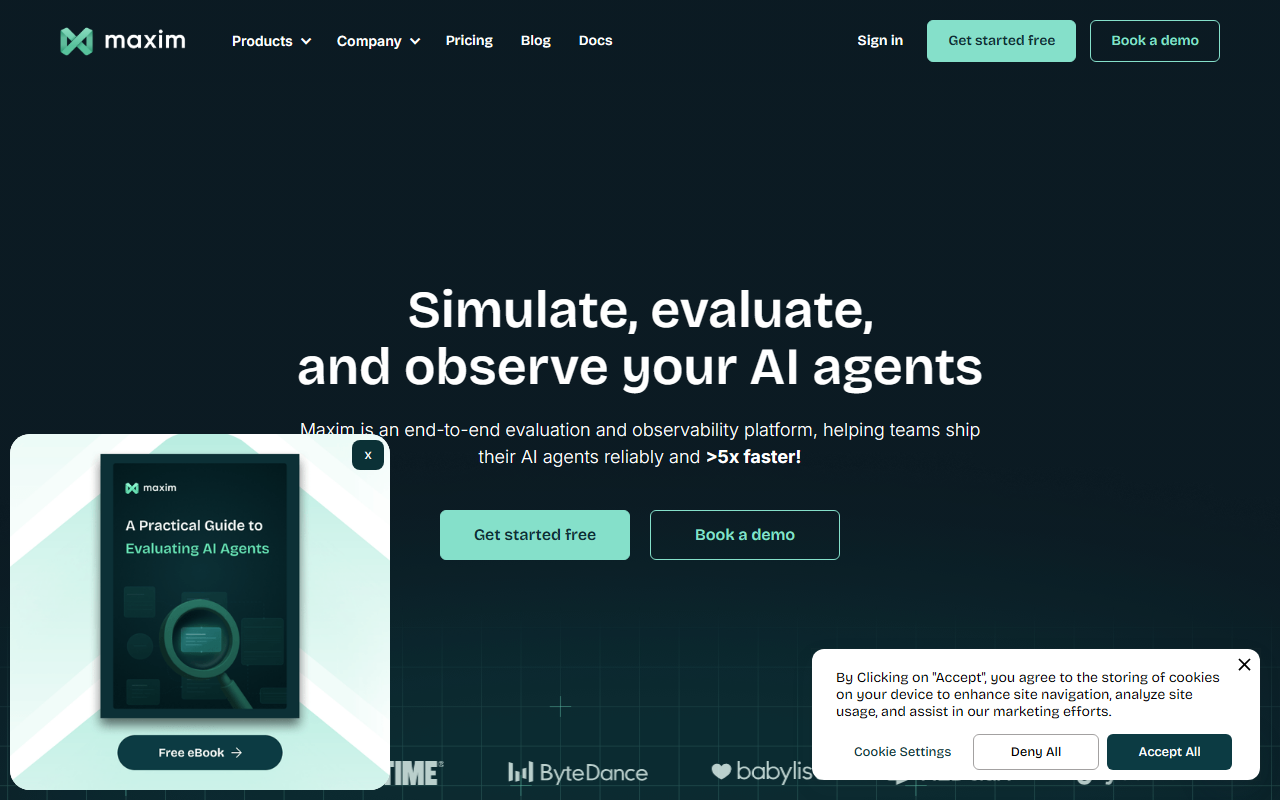
Upon visiting the Maxim AI website, I was immediately struck by its clear value proposition: an end-to-end evaluation and observability platform designed specifically for teams building generative AI agents. The homepage highlights a 'Playground++' for prompt engineering, agent simulation, evaluation pipelines, and real-time monitoring. This is a tool that clearly understands the full lifecycle of GenAI development—from experimentation to production. During testing of the free tier, I navigated the dashboard, which presents a clean left-hand sidebar with sections for Playground, Evaluations, Datasets, and Observability. The onboarding process is guided, with sample projects that let you immediately start simulating agent scenarios. Unlike fragmented approaches where you stitch together separate tools for prompt versioning, evaluation, and monitoring, Maxim offers a unified platform. That alone addresses a major pain point for AI teams.
Features Deep Dive: From Playground to Production
The experimentation module is essentially a full-featured prompt IDE. You can test and iterate across prompts, models, tools, and context without touching code. Prompt versioning keeps changes organized outside the codebase, and the low-code prompt chains let you build multi-step AI workflows visually. This is particularly useful for product managers and non-engineers who need to iterate quickly. The simulation and evaluation engine is where Maxim truly shines. You can run AI-powered simulations that test your agents against thousands of scenarios, using both predefined and custom metrics—LLM-as-a-judge, statistical, programmatic, or human scorers. During my tests, I set up a simple customer support agent simulation; the system generated synthetic conversation scenarios and evaluated responses for accuracy and tone. The results were presented in clear dashboards with downloadable reports. The observability side logs complex agentic workflows visually with traces, making debugging live issues much easier. Online evaluations measure quality on real-time interactions, and you can set alerts for regressions. It also integrates seamlessly with CI/CD pipelines, which is a huge plus for DevOps teams wanting to catch issues before release.
Pricing, Integration, and Market Positioning
Pricing is not publicly listed on the website. The site offers a free tier (likely with usage limits) and encourages booking a demo. This suggests enterprise-focus with custom pricing. In the current landscape, competitors like LangSmith (by LangChain) and Weights & Biases Prompts offer overlapping capabilities. However, Maxim differentiates by emphasizing its framework-agnostic support and the breadth of its evaluation library. It integrates with major LLM providers via SDKs, CLI, and webhooks, and supports custom tools and structured outputs. The trustworthiness of testimonials suggests real traction; for instance, one customer claims a 75% reduction in time to production. The platform is best suited for AI/ML engineering teams that ship agentic applications and need robust evaluation and monitoring. Teams using basic single-prompt applications may find the feature set overwhelming. But for teams at scale—especially those dealing with multi-agent systems—this tool is a strong candidate.
Final Verdict: Who Should Use Maxim AI?
Maxim AI excels in environments where reliability and speed of iteration are critical. Its genuine strengths include the unified workflow from experimentation to production, the powerful simulation engine, and the deep observability features. A real limitation is the lack of transparent pricing, which may deter independent developers or very small teams. Additionally, the platform's full potential requires integration into existing CI/CD pipelines, which might add initial setup complexity. However, for engineering teams building production-grade AI agents, especially in startups or mid-sized companies, Maxim offers a compelling, all-in-one solution. The testimonials from heads of AI and CTOs indicate it has already delivered measurable impact. I recommend scheduling a demo if your team struggles with evaluating agent quality at scale or finds themselves stitching together multiple tools. Visit Maxim AI at https://getmaxim.ai/ to explore it yourself.


Comments