

First Impressions and Onboarding
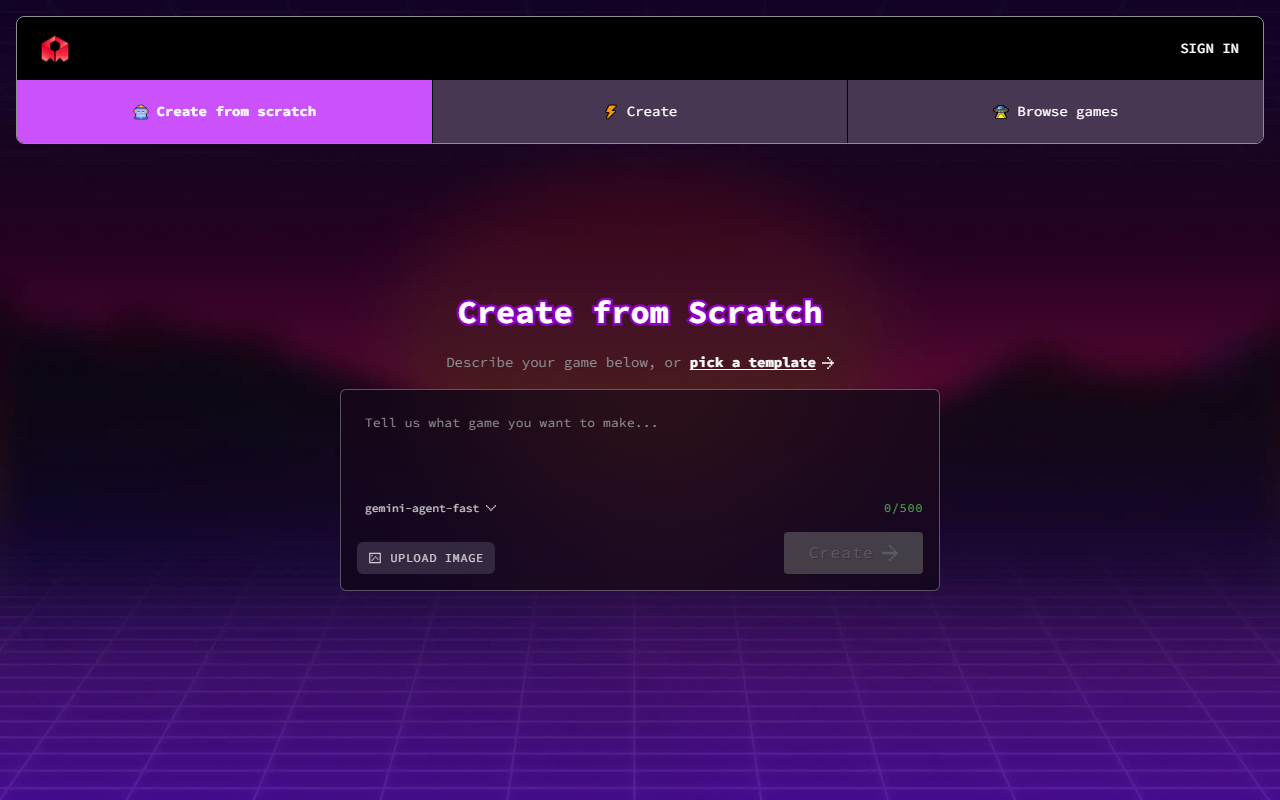
Upon visiting Rosebud.ai, I was greeted with a clean, two-column dashboard. The left side features a large prompt box that reads "Describe your game below, or pick a template," complete with a 0/500 character counter and options to upload an image. The right side immediately showcases a gallery of community games, each with play counts and fork counts. Numbers like 8,109 plays for one template and 34,067 for another suggest a lively user base. Below the prompt, a "Create Games with AI" section walks users through Step 1: choose a game type or describe your own. A loading spinner appeared briefly before the template selection panel loaded. I tested the free tier by typing "a 3D racing game with neon roads and power-ups" and clicked Create. Within around 20 seconds, the browser tab refreshed into a live, playable game. The process felt akin to a no-code game jam—no downloads, no terminal, just pure browser-based generation.
How Rosebud AI Works: Vibe Coding in Practice
Rosebud AI brands its approach as "vibe coding." From what I observed, the tool interprets natural language descriptions and generates a fully functional 3D (or 2D) game project. The underlying technology appears to blend template-based asset libraries with procedural generation and, likely, large language models to translate text into game logic. The dashboard shows multiple templates—3D Multiplayer, Shader Base, Voxel Forest, and even an integration with World Labs for immersive environments. Users can fork existing projects (e.g., "Ant Necromance" or "Bridgerton – Realistic Full Game") and remix them. Each game lists its base template and creator, indicating a strong community-driven remix ecosystem. Importantly, no coding or local software is required; everything runs in the browser. The AI handles physics, lighting, and even basic multiplayer networking, as seen in templates tagged "Multiplayer." I noticed that many top-played games include gem-based monetization systems, suggesting the platform supports in-game economies. However, I found no clear documentation about which AI models power the generation or whether an API is available for developers.
Pricing, Limitations, and Who Should Use It
Pricing is not publicly listed on the website. I searched the homepage, the creation flow, and several community pages but found no pricing tiers, subscription plans, or credits system. This is a notable gap for potential power users. Limitations are also evident. While the generated games are impressive demos, the quality varies: many titles are derivative clones (survivor-likes, obstacle courses) and lack deep gameplay. The AI's ability to handle complex logic or custom physics is unproven. Additionally, the platform's reliance on templates means original mechanics are often surface-level. Competitors like Luma AI (for 3D asset generation) or Unity Muse (for AI-assisted development) offer more control, but require coding or subscription fees. Rosebud fills a unique niche: it is arguably the most accessible tool for non-programmers to create a playable 3D game in minutes. It is best suited for hobbyists, educators, and game jam enthusiasts who want rapid prototyping or a sandbox for ideas. Professional game developers will find the output too simplistic for commercial use.
Verdict: A Bold Experiment in AI Game Development
Rosebud AI succeeds in making game creation frictionless. The "from scratch" prompt and template library lower the barrier to entry nearly to zero. The community gallery is both inspiring and overwhelming, showing both polished experiments and raw sketches. However, the lack of transparent pricing and the uneven quality of generated games remain real concerns. For a tech journalist, this tool is fascinating to observe—it exemplifies the promise and current limits of AI-driven design. If you want to prototype a game idea without learning code or investing in heavy tools, Rosebud AI is worth testing. If you need production-ready assets or advanced scripting, look elsewhere. Visit Rosebud AI at https://rosebud.ai/ to explore it yourself.


Comments