

The IPO Milestone
Artificial intelligence chip maker Cerebras has gone public, debuting on the stock market with a valuation soaring to $60 billion. According to the announcement from AIbase, the company's successful listing marks one of the largest AI hardware IPOs in recent years. While the exact exchange and date were not disclosed in the brief report, the valuation alone signals powerful investor appetite for alternatives to Nvidia's dominant GPU lineup. Cerebras specializes in building extremely large, wafer-scale processors designed specifically for training massive AI models, a niche that has attracted both cloud giants and research institutions.
The Wafer-Scale Advantage
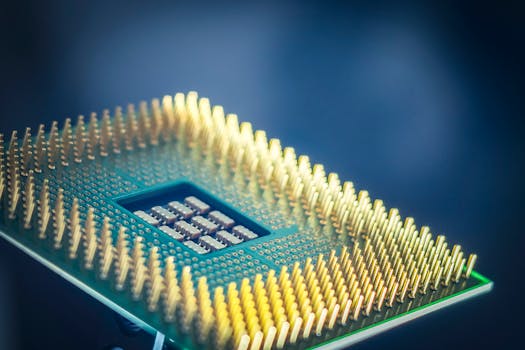
Cerebras is best known for its CS-2 system, which houses the largest chip ever built—a single silicon wafer that acts as one enormous processor. Unlike traditional GPUs that link many smaller chips together, Cerebras' approach minimizes data transfer bottlenecks by keeping all compute units on a single die. This architecture yields high memory bandwidth and low latency for dense matrix operations, crucial for training large language models and scientific simulations. The company's technology has been adopted by customers such as the National Energy Research Scientific Computing Center (NERSC) and pharmaceutical firms for drug discovery. By going public, Cerebras gains the capital to scale manufacturing and bring next-generation wafer-scale chips to market.
Market Context: Challenging Nvidia's Dominance
The IPO arrives at a time when demand for AI compute is soaring, yet supply constraints persist. Nvidia controls an estimated 80-90% of the AI training chip market, making any viable competitor a focus for investors and enterprises seeking to diversify their hardware stack. Cerebras offers a radically different compute paradigm, and its public listing provides a benchmark for independent AI chip valuations. The $60 billion market cap positions Cerebras as a serious challenger, though still far behind Nvidia's trillion-dollar valuation. Still, the IPO validates that institutional investors see long-term potential in specialized AI silicon beyond GPUs.
Financial Implications for the AI Hardware Sector
The successful listing provides Cerebras with fresh capital to expand production capabilities and accelerate its R&D roadmap. The company had previously raised over $700 million in private funding from backers including Sam Altman, but the public offering unlocks broader access to investment. With the funds, Cerebras can invest in new fabrication partnerships, perhaps with TSMC or Samsung, to produce its next-generation chips at scale. The IPO also pressures other AI chip startups like Graphcore, SambaNova, and Groq to move toward public markets or secure additional funding. The $60 billion valuation sets a high bar for what investors are willing to pay for AI compute startups, potentially influencing future private rounds.
What This Means for Developers and the AI Community
For developers building and deploying large AI models, Cerebras' public listing signals more options in the hardware ecosystem. The company's architecture has been shown to deliver linear scaling for training on massive datasets, which can reduce time-to-experiment for research teams. Cerebras also provides software integration via its own compiler framework and compatibility with popular deep learning frameworks like TensorFlow and PyTorch. A publicly traded Cerebras may be more willing to invest in developer tools, documentation, and community support to attract a broader user base. However, developers should note that Cerebras' hardware is currently limited to high-end data center deployments, not accessible to individual practitioners via cloud services at the same level as GPU instances.
Looking Ahead: Risks and Opportunities
Despite the IPO euphoria, Cerebras faces significant challenges. The company must prove it can win large contracts against Nvidia's entrenched ecosystem and CUDA software moat. Additionally, wafer-scale manufacturing yields are inherently riskier than standard chip production, and any manufacturing defects can cripple entire processors. Cerebras will need to demonstrate reliable supply chain management and consistent performance gains with each new generation. On the opportunity side, the push for AI sovereignty—countries wanting their own AI infrastructure—could drive demand for non-U.S. chip suppliers, and Cerebras' technology is architecture-agnostic. Investors and developers should watch for the company's first quarterly earnings report to gauge adoption metrics and roadmap milestones.

Comments