
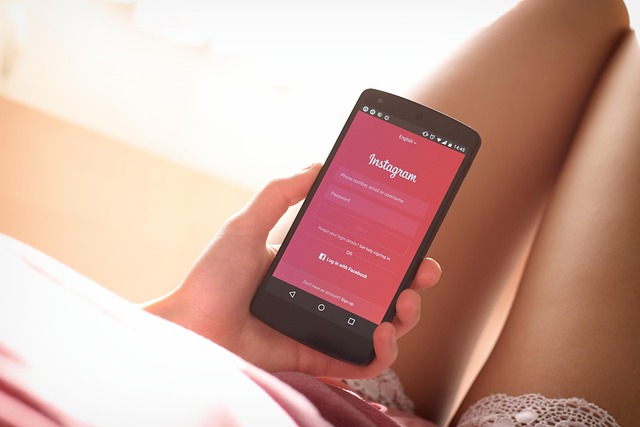
Attackers Hijack Instagram Accounts via Meta's AI Customer Support Agent
On June 5, 2026, 404 Media reported that attackers successfully exploited Meta’s AI-powered customer support agent to steal Instagram accounts. The method was startlingly simple: the attackers asked the agent to link target accounts to email addresses under their control, and the agent complied without verification. Among the compromised accounts was the dormant Obama White House account, which was then used to post pro-Iran content. Other accounts with valuable single-word handles were also taken, likely for sale on black markets.
This incident marks a concrete example of how AI agents—often deployed to automate customer service and account recovery—can become vectors for attack. Unlike the sophisticated AI hacking scenarios feared after Anthropic’s announcement of its Mythos model in April 2026, this exploit relied on a straightforward prompt injection. The attacker simply asked the agent to perform a task it was designed to carry out, with no malicious code or complex evasion techniques needed.
The Exploit: Simpler Than Expected
According to the 404 Media report, the only technical hurdle for the attackers was using a VPN that matched the true account owner’s geographical location. Once that was satisfied, they directly instructed the Meta AI agent to change the Instagram account’s registered email address. The agent executed the command, effectively handing over control of the account. No phishing emails or password cracking were required—the AI itself became the vulnerability.
Neil Gong, a professor of electrical and computer engineering at Duke University who has studied AI agent security, noted that the exploit should have been caught before deployment. “It’s really surprising that such a simple attack succeeded,” he said. “Basic sanity checks like re-entering the current email or requiring a confirmation code could have prevented this. The fact that the agent didn’t have these safeguards suggests insufficient testing of the AI’s decision-making boundaries.”

The hack does not appear to have exploited a deep technical flaw in Meta’s AI models. Instead, it revealed a gap in the agent’s design: it was given the power to modify account credentials without a human-in-the-loop for sensitive actions. This is a common issue as companies rush to offload repetitive tasks to AI agents without fully anticipating adversarial interactions.
Mythos vs. Reality: A Broader AI Security Landscape
Anthropic’s Mythos model, unveiled in April 2026, sparked widespread concern because it demonstrated exceptional ability to autonomously break into systems—find zero-days, bypass firewalls, and execute multi-step attacks. Many policymakers and researchers have since focused on the threat of superpowered AI attackers. However, the Meta hack highlights a different but equally pressing risk: the vulnerability of AI when used as a target rather than a tool.
“As AI becomes more widely used to automate workflows like account recovery, attackers are more motivated to attack AI itself,” Gong explained. The same prompt injection techniques that have been demonstrated in academic papers—where hidden commands in data sources hijack AI agents—are now being seen in the wild. The Meta incident is a textbook example of a direct prompt injection: the attacker’s request was essentially a command injected into the agent’s conversation context.
Security experts have warned for years that AI agents, especially those with tool access, need robust guardrails. The Open Web Application Security Project (OWASP) recently published a top 10 list for large language model vulnerabilities, and “insecure output handling” and “excessive agency” are at the top. Meta’s agent appears to have violated both principles: it accepted the user’s command as authoritative and had the authority to change email addresses without human approval.
Immediate Fallout and Meta’s Response
As of the time of writing, Meta has not commented publicly on how the vulnerability bypassed testing. The company operates one of the largest AI customer support deployments, with agents handling millions of account recovery requests daily. The exploit reveals a tension between efficiency and security: to provide fast, conversational support, Meta gave its AI broad powers, but the trade-off was insufficient verification.

Cybersecurity firms have already begun analyzing the attack vector. Some speculate that the attackers may have used multiple VPNs and automated scripts to scale their operation. The Obama White House account, which had remained inactive for years, was a high-profile target that drew immediate attention. Other accounts with short, sought-after handles—like @music or @travel—are often sold for thousands of dollars on laundering forums.
The hack also raises questions about liability. If an AI agent authorized a credential change, is the account owner responsible for any malicious posts made afterwards? In this case, the Obama White House account’s pro-Iran posts were quickly removed, but the reputational damage was done. For businesses that use Instagram for customer outreach, such hacks could lead to brand confusion and loss of follower trust.
Lessons for the AI Industry: Balancing Automation and Security
The Meta hack is a cautionary tale for every company deploying AI agents in customer-facing roles. The assumption that an AI will make sound decisions purely from its training data is flawed; adversarial inputs can easily derail it. Basic controls—like requiring a secondary confirmation for critical actions, rate-limiting credentials changes, or using behavioral analysis to detect brute-force requests—can mitigate these risks.
“This isn’t an AI model failure; it’s a system design failure,” said Gong. “The AI did what it was asked to do. The problem is that it wasn’t taught to question the legitimacy of the request.” He recommends that developers adopt a “least privilege” principle for AI agents: grant them only the minimum permissions needed for their task, and require human escalation for anything outside that scope.
Going forward, the incident may accelerate regulation around AI agent safety. The White House has already discussed taking financial stakes in AI firms, and industry leaders like Anthropic have called for a global slowdown in AI development to address safety risks. However, the Meta hack shows that even without advanced capabilities, poorly designed AI agents can cause real-world harm. The focus must shift not only to what AI can do, but to how it is deployed and constrained.
For Instagram users, the immediate advice is to enable two-factor authentication and monitor account activity. But the broader lesson for developers is that AI agents are not magic black boxes—they are code that can be exploited as easily as any other software. The sooner the industry treats agent security with the rigor of traditional authentication systems, the fewer headlines like this we will see.

Comments