

First Impressions and Onboarding
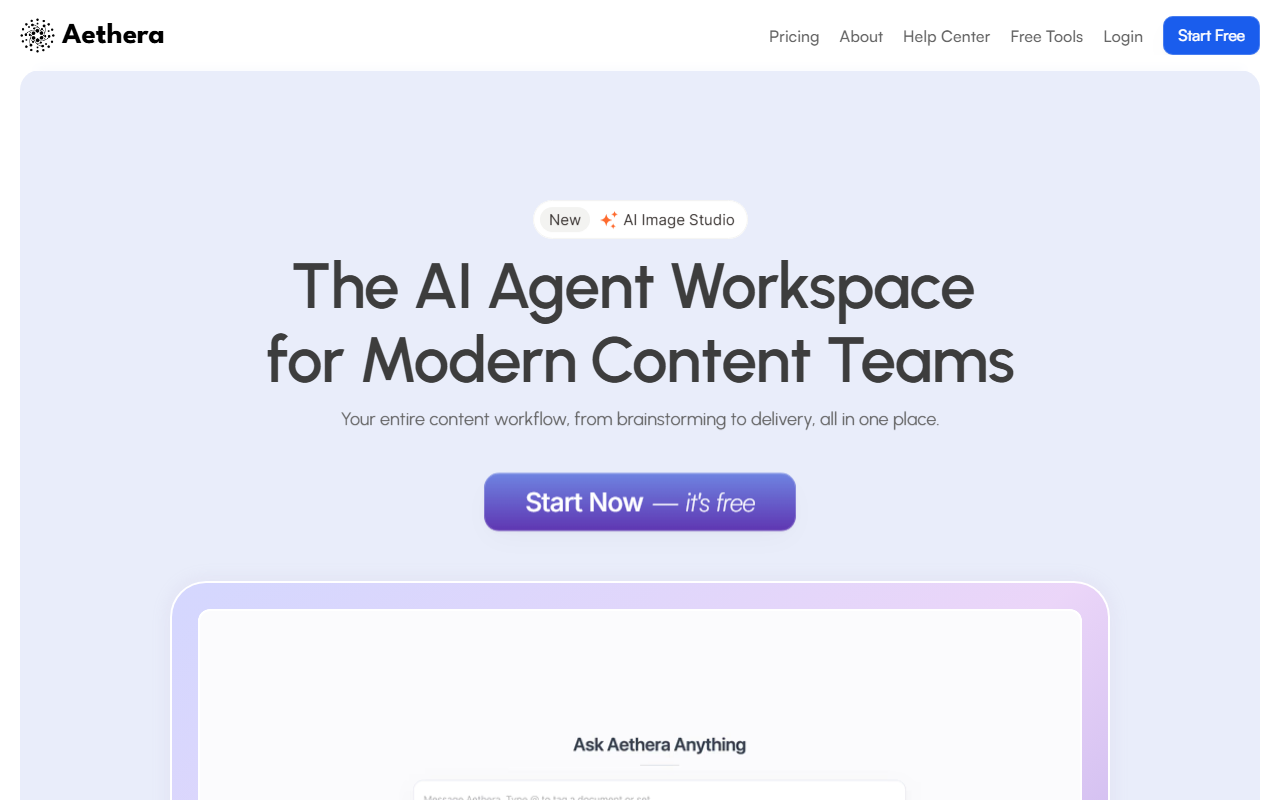
Upon visiting the Aethera site, I was greeted with a clean, modern interface that immediately pitches the tool as an antidote to fragmented AI subscriptions. The tagline—"Stop duct-taping your AI tools together"—resonated with me given how many tools I've juggled. The homepage walks you through a workflow: receive project details, analyze and brainstorm strategy, generate example images, then generate a proposal. It claims this cycle can happen in under ten minutes. I clicked "Start Now" and was prompted to create a free account (no credit card required). The onboarding flow guided me to create my first project. I uploaded a sample client brief, and the platform automatically parsed it. I was impressed by how quickly I could jump into the assistant chat with full context already loaded.
Core Features and Performance
The centerpiece is the Aethera Assistant, which supports knowledge tagging. I tried typing @ProjectX to attach my uploaded documents, and the AI immediately referenced them in its responses. This is a huge time-saver for content teams who need to maintain consistent brand guidelines across multiple pieces. The assistant also offers web search for up-to-date facts. Beyond chat, the toolkit includes image generation (using 15 models), editing tools, and a proposal generator. When I requested a campaign outline, the text output was coherent and included specific strategies. The real strength is the model flexibility: you can switch among over 30 language models mid-conversation. However, I noticed that switching models can sometimes reset the conversation context, which was a minor frustration. The image generation is solid but not groundbreaking—similar in quality to what Midjourney offers, but conveniently integrated.
Pricing and Comparisons
Pricing is not publicly listed on the website. The only option visible is a "Start Now — it's free" button, which led me to a free tier with limited usage. For detailed pricing, you must contact sales or view the pricing page after login (not shown in the scraped content). This lack of transparency is a drawback when comparing to competitors like Jasper or Copy.ai, which clearly list monthly plans. Unlike Jasper, which focuses primarily on copywriting, Aethera aims to be a broader workspace covering images, proposals, and research. It also differentiates itself by offering multi-model access, whereas many alternatives lock you into a single provider. For a content team that values flexibility, Aethera offers a compelling value proposition—if the pricing is competitive. Until pricing is revealed, budget-conscious teams may hesitate.
Who Should Use Aethera?
Aethera is best suited for content teams that regularly create varied assets—blog posts, social images, client proposals—and want a single platform to manage the entire lifecycle. The knowledge-tagging feature is a standout for teams with large document repositories. However, individual freelancers or those who only need basic writing may find the tool overkill. Its reliance on a unified workflow means you must commit to using Aethera as your central hub, which may not fit teams deeply embedded in other ecosystems (e.g., Google Docs, Figma). For now, the free tier is worth exploring to see if the integrated workflow saves you time. If Aethera delivers on its promise of end-to-end efficiency and its pricing aligns with the value, it could become a staple in the content tech stack.
Visit Aethera at https://aethera.ai/ to explore it yourself.









Comments