

First Impressions and Onboarding
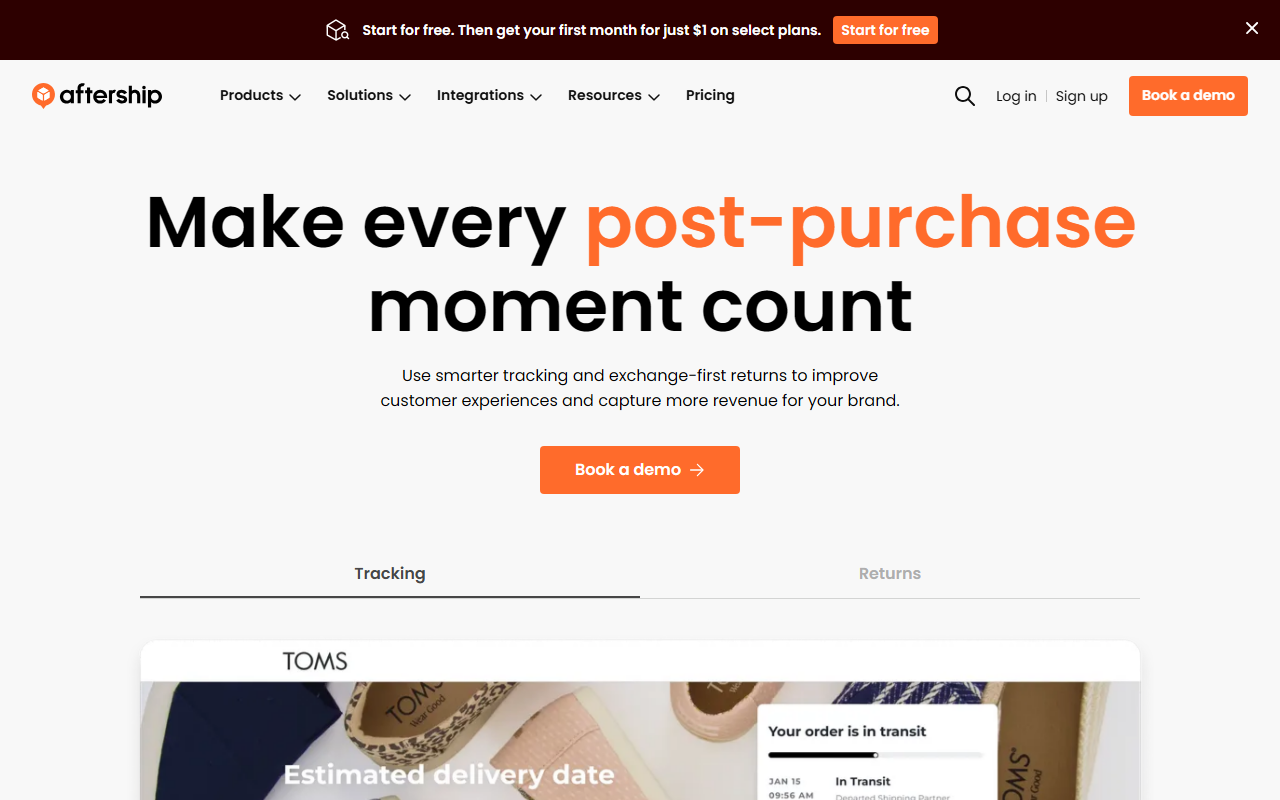
Upon visiting the AfterShip website, I immediately noticed its clean, brand-focused design. The homepage pitches a compelling value proposition: "Make every post-purchase moment count." AfterShip positions itself as an all-in-one post-purchase platform that combines shipment tracking and returns management. The dashboard is not visible to public visitors, but the landing page clearly outlines three core problem statements: fragmented tracking, missed engagement opportunities on tracking pages, and refunds that drain profits. A prominent "Book a demo" call-to-action suggests the tool is aimed at mid-market to enterprise brands. When I clicked through to the sign-up flow, I could register for a free account, though the free tier's capabilities are not detailed until after login. The onboarding appears to guide users through carrier integration and branded page setup, but without a paid account, I couldn't test advanced features like AI-powered delivery date predictions. The website also features a lot of statistics—95% delivery date accuracy, 50% revenue recovery through exchanges—which are clearly marketing claims, but they set high expectations.
Core Features and AI Technology
AfterShip's primary offering is split into two pillars: Tracking and Returns. The tracking module leverages integrations with over 1,200 global carriers to provide real-time shipment status updates. What sets it apart is the claim of "AI-powered delivery dates" that predict when a package will actually arrive, using machine learning to account for carrier delays and route complexities. This is a genuine AI application in a logistics context, not just a buzzword. The branded tracking pages are designed to be a marketing asset—turning a mundane status check into an opportunity for upsells or loyalty engagement. The returns module uses an "exchange-first" flow that AI nudges customers toward store credit or exchanges instead of refunds, protecting margins. AfterShip claims this drives a 50% revenue recovery rate. Under the hood, the platform likely uses a combination of historical data and real-time carrier APIs to generate predictions. The tool integrates with major ecommerce platforms like Shopify, WooCommerce, Magento, and marketplaces like TikTok Shop. There's a social commerce focus, which is timely. I did not find any mention of a public API for developers, but enterprise clients likely get API access. The analytics dashboard offers order-level insights and revenue attribution, which is useful for proving ROI.
Pricing and Market Positioning
Pricing is not publicly listed on the AfterShip website. The sign-up process leads to a free trial or demo request, indicating a sales-led model with custom quotes. This is common for enterprise-grade logistics software. Competitors include ParcelLab (strong on branded tracking and communication) and Loop Returns or Returnly (focused on returns exchange optimization). AfterShip differentiates by combining both tracking and returns in one platform, plus heavy emphasis on AI predictions and social commerce integrations. The company claims to be trusted by 20,000 brands across fashion, beauty, and home, suggesting a robust user base. The tool appears best suited for ecommerce brands with significant order volume (100+ orders per day) that want to reduce support tickets, improve LTV, and protect margins. Small businesses may find the pricing prohibitive, but AfterShip does offer a free tier with basic tracking (likely limited to a few carriers or orders). The lack of transparent pricing is a limitation for initial evaluation.
Verdict: Strengths and Limitations
Strengths: AfterShip excels in unifying post-purchase workflows. The AI-driven delivery date predictions and exchange-first returns are genuinely valuable. Branded tracking pages double as a marketing channel, which is smart. The integrations are extensive, and the analytics provide clear attribution. The platform is mature with a large user base. Limitations: The lack of publicly listed pricing makes it hard for small businesses to assess feasibility. The AI claims, while plausible, are not independently verified. The tool also focuses heavily on North American and European carriers—global coverage may vary. Additionally, the returns module might not suit businesses with complex fulfillment workflows or custom returns policies. Who should try it: Mid-to-large ecommerce brands already using Shopify or TikTok Shop and wanting to reduce refund losses while improving customer experience. Who should look elsewhere: Very small shops or those needing a simple free-only solution. AfterShip is a powerful but investment-heavy tool. If you're serious about post-purchase revenue optimization, book a demo. Visit AfterShip at https://aftership.com/ to explore it yourself.







Comments