

First Impressions and Onboarding
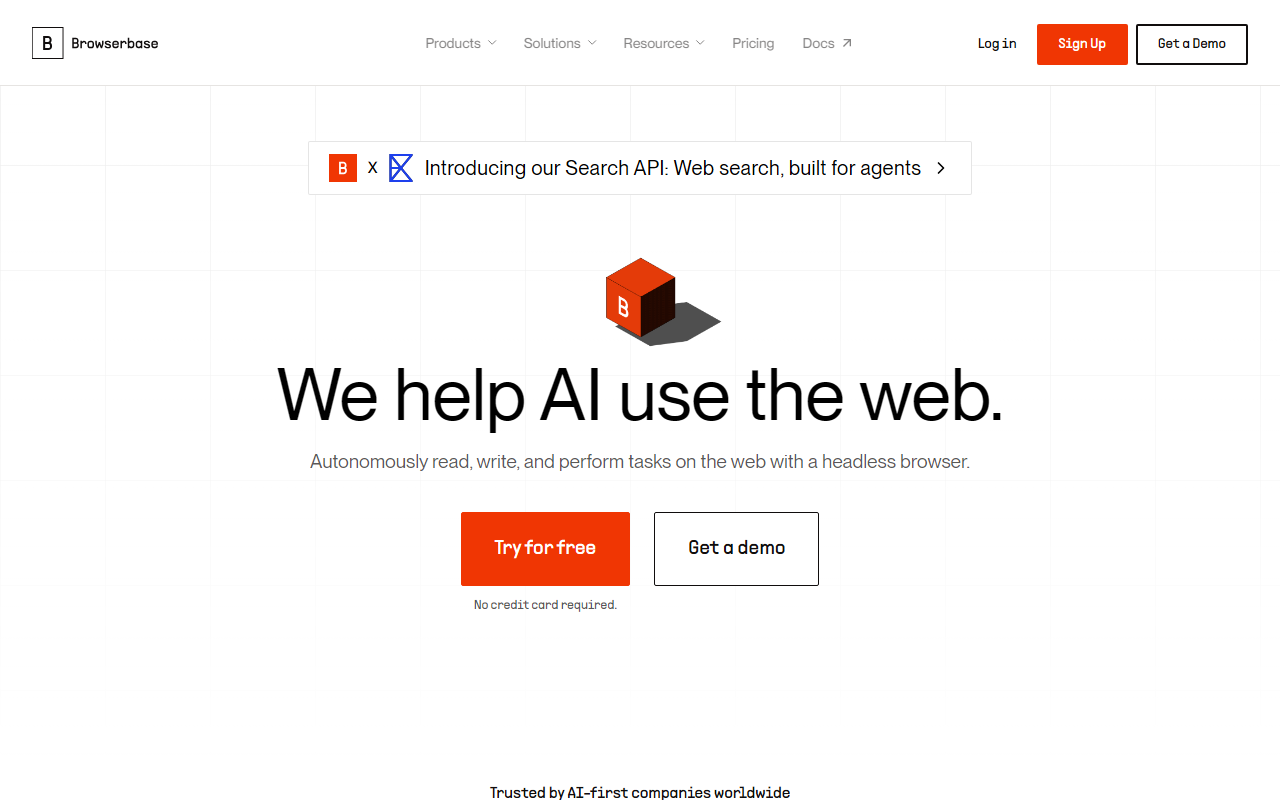
Upon visiting Browserbase's site, the messaging is immediately clear: this is a platform built for developers who want their AI agents to interact with the web as seamlessly as humans do—but at machine scale. The landing page is crisp, with a prominent "Get API key" call to action and a collection of templates that showcase real-world workflows, such as monitoring Google keyword trends or applying to jobs automatically. I signed up for a free tier to test the onboarding flow. The process is straightforward: create an account, generate an API key, and choose between three core primitives—Search API, Fetch API, and Browser-as-a-Service. Within minutes, the dashboard presents a clear interface for spinning up a browser session, connecting a model, and executing a task. The inclusion of open-source components like Stagehand SDK and Browser CLI tells me that Browserbase prioritises developer flexibility, allowing users to run locally or use the hosted cloud.
Core Capabilities and Use Cases
Browserbase solves a specific pain point: traditional web scraping with headless browsers (Playwright, Puppeteer) requires managing infrastructure, handling logins, CAPTCHAs, and dynamic content. Browserbase abstracts this into API calls that any agent can use. The Search API lets agents find relevant websites from a query; the Fetch API converts any URL into structured HTML, JSON, or Markdown; and the Browser-as-a-Service gives agents a full browser controlled via WebSocket or the Stagehand framework. I tested the Fetch API by converting a login-protected page into markdown—it handled the session persistence automatically. The platform claims it can handle authentication flows, form submissions, and even download files. For developers building autonomous agents, this removes the need to write brittle selectors or manage proxy pools. Browserbase also advertises concurrent scaling to thousands of sessions, which is critical for large-scale research or monitoring tasks. The templates page provides pre-built scripts that wire these APIs together, and the open-source SDK (Stagehand) lets developers integrate with frameworks like LangChain or Claude Code.
Pricing and Market Position
Pricing is not publicly listed on the website. The company offers a free tier with limited usage—enough to experiment—and directs users to contact sales for enterprise plans. This suggests pricing is usage-based and customised. Browserbase competes with solutions like Apify (managed browser automation focused on scraping) and Playwright Cloud (Microsoft's offering), but Browserbase differentiates by targeting AI agents specifically, with native support for LLM-driven interactions. The company claims 10,000+ companies use the platform and reports over 800,000 weekly SDK downloads, which indicates strong adoption among developers. The platform is best suited for AI engineers building autonomous bots, web researchers, and SaaS products that need to monitor public data behind login walls. It is less appropriate for simple static scraping tasks where a basic HTTP client would suffice, and its reliance on a real browser means higher latency compared to direct API calls.
Strengths, Limitations, and Final Verdict
Strengths: Browserbase's managed infrastructure handles all the messy parts of web interaction—CAPTCHAs, login flows, dynamic JavaScript rendering—so developers can focus on agent logic. The combination of search, fetch, and full browser APIs covers both reading and acting on the web. The open-source Stagehand SDK is a genuine asset, letting users run locally without a subscription. The platform has clearly been designed with AI agents in mind, offering simple primitives that are composable into complex workflows. Limitations: Because it provides a real browser session, each action takes longer than a simple API call. Pricing obscurity may frustrate small teams or indie developers. Non-developers will find the steep learning curve prohibitive, as the tool requires coding with SDKs or APIs. Additionally, the platform's reliability depends on Browserbase's infrastructure; during heavy use, session management can introduce overhead. Who should use it: Developers building production-grade browser agents, SaaS companies needing to integrate data from inaccessible websites, and researchers conducting large-scale web monitoring. Who should look elsewhere: Casual users wanting a no-code scraper or those needing extremely low-latency data retrieval. Overall, Browserbase is a powerful enabler for the next generation of autonomous web agents. Visit Browserbase at https://browserbase.com/ to explore it yourself.













Comments