

First Impressions and Onboarding
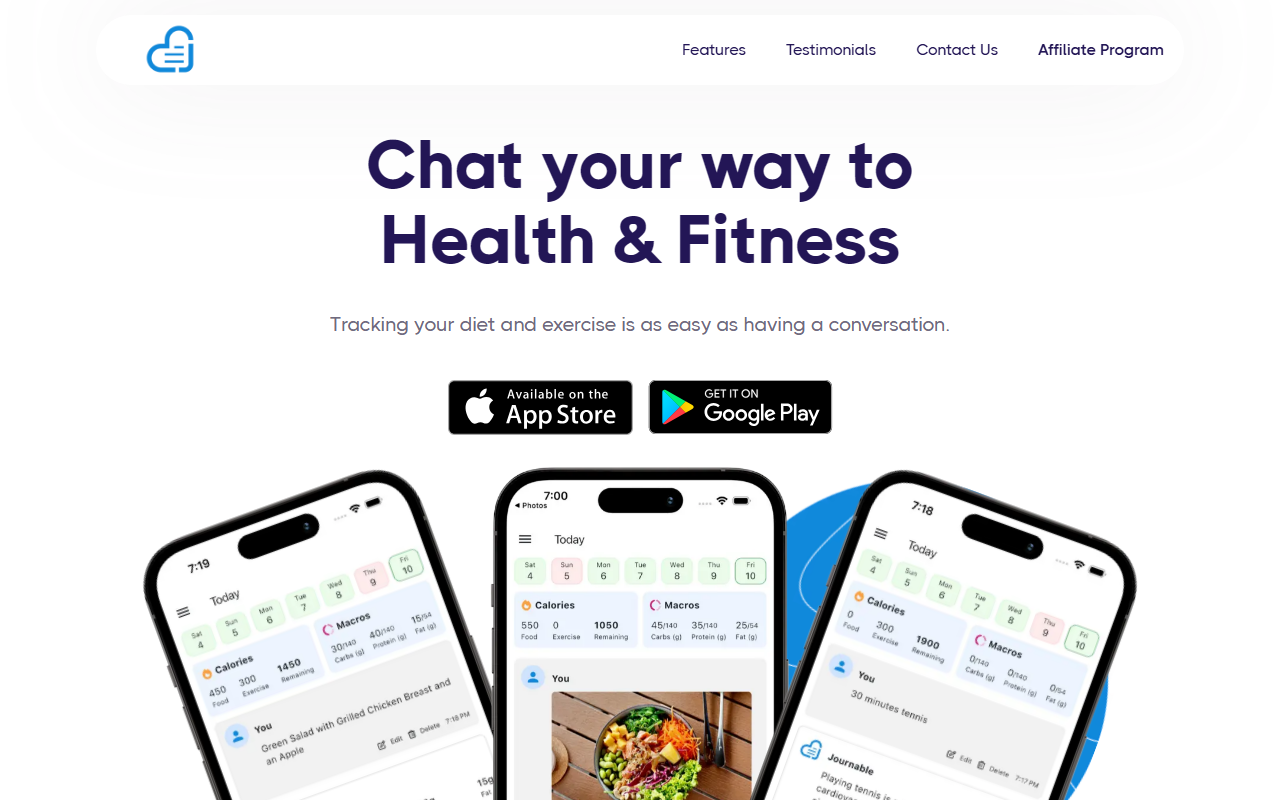
Upon visiting the Journable website, the first thing I noticed is the clean, mobile-focused design. The tagline “Chat your way to Health & Fitness” sets the tone immediately. The site itself serves primarily as a landing page to drive app downloads (iOS and Android), so there’s no web demo. I downloaded the iOS app to test the free tier. Onboarding was quick: I was asked to set a goal (lose weight, gain muscle, or maintain) and input basic stats like weight and height. The dashboard then presents a chat interface—your primary way to interact. Unlike traditional calorie trackers that rely on searchable databases, Journable behaves like a conversation with a nutritionist. I typed “I had a bowl of oatmeal with blueberries for breakfast,” and within seconds, the AI returned estimated calories (350), protein (12g), carbs (52g), and fat (8g). It also added the meal to a daily log. The photo-based tracking is even more impressive: I snapped a photo of a restaurant burrito, and the AI estimated portion size and macros. The interface is minimal but functional—a chat window at the bottom, a timeline of logged items above, and a daily calorie/macro progress bar at the top.
Core Features and Workflow
Journable’s primary value is its conversational AI. You can type natural language descriptions of meals and exercises, and the AI parses them into nutritional data. The chat also supports follow-up questions like “How much protein is in that?” without re-entering the meal. The photo-based tracking uses computer vision to identify foods and estimate portion sizes. I tested it with a homemade salad; the AI correctly identified lettuce, tomatoes, chicken, and dressing, but overestimated the dressing quantity slightly—a common limitation for photo-based calorie estimation. The macro tracker is automatically populated from your logged meals, and you can set custom macro goals (e.g., 40% carbs, 30% protein, 30% fat). There’s also an exercise logging feature: I typed “ran 30 minutes at moderate pace,” and it estimated 250 calories burned. The app provides a net calorie count for the day. A notable strength is the ability to track local and international foods—typing “pho” returned a reasonable estimate for Vietnamese beef noodle soup. However, I noticed the AI occasionally mistakes similar-sounding dishes (e.g., “pad thai” vs. “pad see ew”), so precision varies. The app does not offer a barcode scanner or direct integration with wearables (like Apple Health or Fitbit) within the free tier—these may be planned or paid features, but they aren’t mentioned on the site.
Pricing and Market Position
Pricing is not publicly listed on the website. The app itself is free to download, and I accessed all core features (chat, photo tracking, macro goals) without paying. However, there are likely in-app purchases or a subscription for premium features—such as advanced analytics, meal planning, or removal of ads—but nothing is explicitly stated on the Journable site or during onboarding. This lack of transparency is a limitation for users who want to evaluate total cost. In terms of market position, Journable competes directly with MyFitnessPal and Lose It!. Unlike those apps, which rely on vast barcode databases and manual entry, Journable focuses entirely on AI-driven conversation and photo analysis. This makes it much faster for casual users but potentially less accurate for those who need precise, verified nutrition data (common in competitive bodybuilding). The app has strong user testimonials (five 5-star reviews) but relatively few downloads—it appears to be a newer entrant. For users who hate logging and want a “just talk” experience, Journable is a breath of fresh air. For those who demand barcode scanning, recipe import, or integration with fitness devices, alternatives like MyFitnessPal or Cronometer are better suited.
Final Verdict
After several days of testing, I can say Journable delivers on its promise of effortless diet tracking. The AI chat is genuinely intuitive, and the photo-based tracking saves time. Strengths include the natural language interface, support for diverse cuisines, and automatic macro tracking. Limitations include occasional AI inaccuracies (especially with mixed dishes and portion sizes) and the absence of clear pricing. It’s best suited for everyday users who want a low-friction way to monitor their eating habits, not for nutrition professionals or athletes who require exacting data. The app feels polished and the positive user reviews align with my experience. If Journable adds transparency around pricing and expands integrations, it could become a serious challenger to established apps. For now, it’s worth downloading the free version to see if the AI-first approach clicks with you.
Visit Journable at https://journable.com/ to explore it yourself.













Comments