

First Impressions and Onboarding
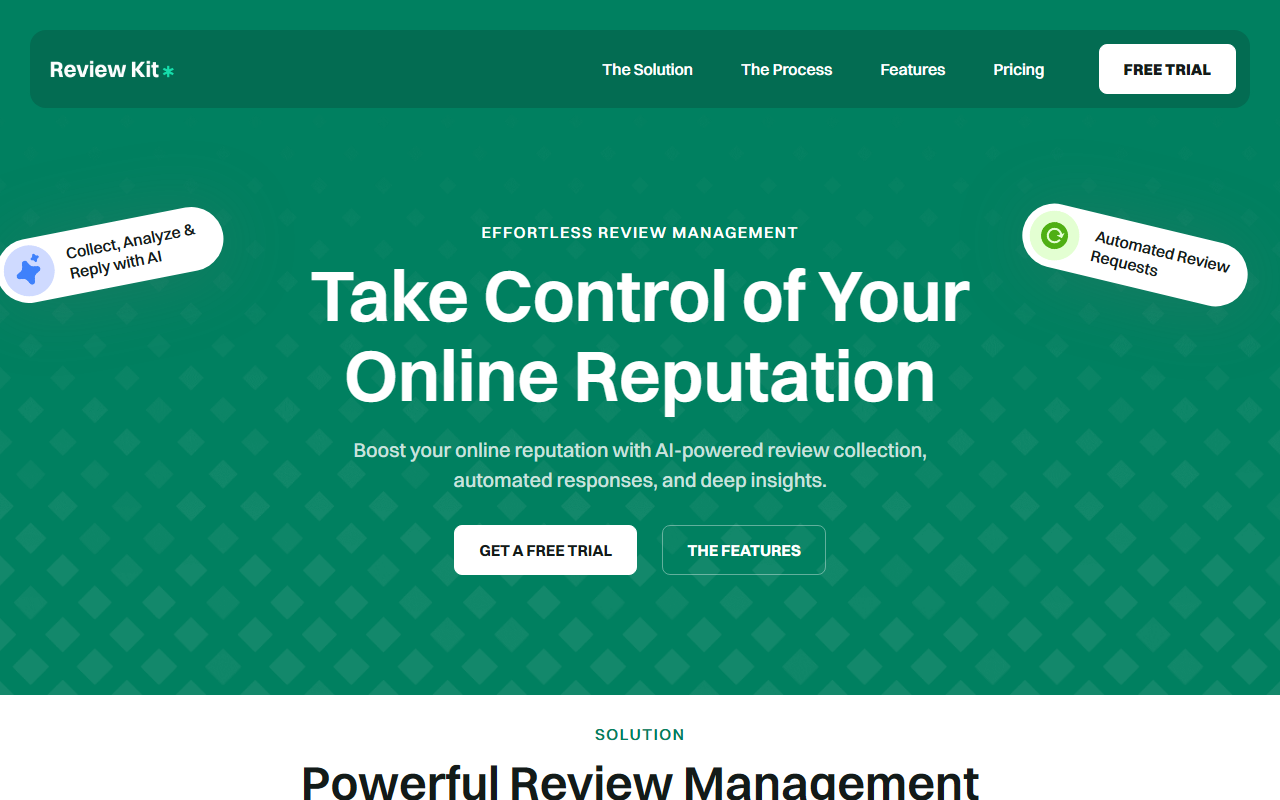
Upon visiting the site, I was greeted by a clean dashboard with a clear call-to-action for a free trial. The interface is built around a three-step process: Request Feedback, Automate Replies, and Analyze Your Reviews. Each step is illustrated with icons and brief descriptions, making the workflow easy to grasp without a tutorial. I tested the free trial signup flow; it required only an email address and a few clicks, which lowers the barrier to entry. The dashboard after login mirrors the marketing promise: a central place to manage incoming reviews from multiple platforms like Google and Trustpilot, though the site explicitly states it is not affiliated with those platforms.
Core Features and Observed Workflow
The tool’s main value proposition is its AI engine for reply generation and sentiment analysis. When I triggered an automated reply to a sample review, the system generated a response that matched the tone I selected from preset brand voices—polite and professional. The AI did not hallucinate names or details, which is a common pitfall in such tools. The sentiment analysis pane highlighted positive and negative keywords from aggregated reviews, offering a bar chart of sentiment trends over time. This data-driven insight could help a business owner spot recurring issues. The review collection feature uses email and SMS templates; I found the customization options limited to text fields and scheduling, but the automation promises to reduce manual chasing. Unlike Podium, which focuses heavily on multi-location messaging, Review Kit keeps the scope narrow: reviews first, then insights.
Pricing and Market Position
Pricing is not publicly listed on the website. The only financial signal is a prominent “Free Trial” button, suggesting a freemium or subscription model without immediately disclosed tiers. This lack of transparency is a limitation for budget-conscious buyers who need to compare costs upfront. Competitors like Birdeye and Trustpilot’s review management typically publish starting prices. Based on the feature set—AI replies and sentiment analysis—Review Kit positions itself as a mid-range tool for small to medium businesses that want to automate review responses rather than manually handling each comment. The absence of integrations beyond email and basic platform support (Google, Trustpilot) may disappoint users expecting multi-channel aggregation like social media reviews.
Verdict: Who Should Use It
Review Kit is best suited for local service businesses—such as restaurants, clinics, or home services—that manage a moderate volume of online reviews. The AI replies save time while maintaining consistency, and the analytics provide digestible insights without overwhelming dashboards. However, enterprises requiring advanced workflow rules, custom API access, or white-label reporting should look elsewhere. A genuine strength is the simplicity of the three-step loop: request, reply, analyze. A real limitation is the lack of transparent pricing; you must commit to a trial to learn costs. Overall, the tool delivers on its core promise but leaves room for deeper customization and integration documentation. Visit Review Kit at https://reviewreply.ai/ to explore it yourself.













Comments