

First Impressions: Exploring Temi’s Robot-as-a-Service Platform
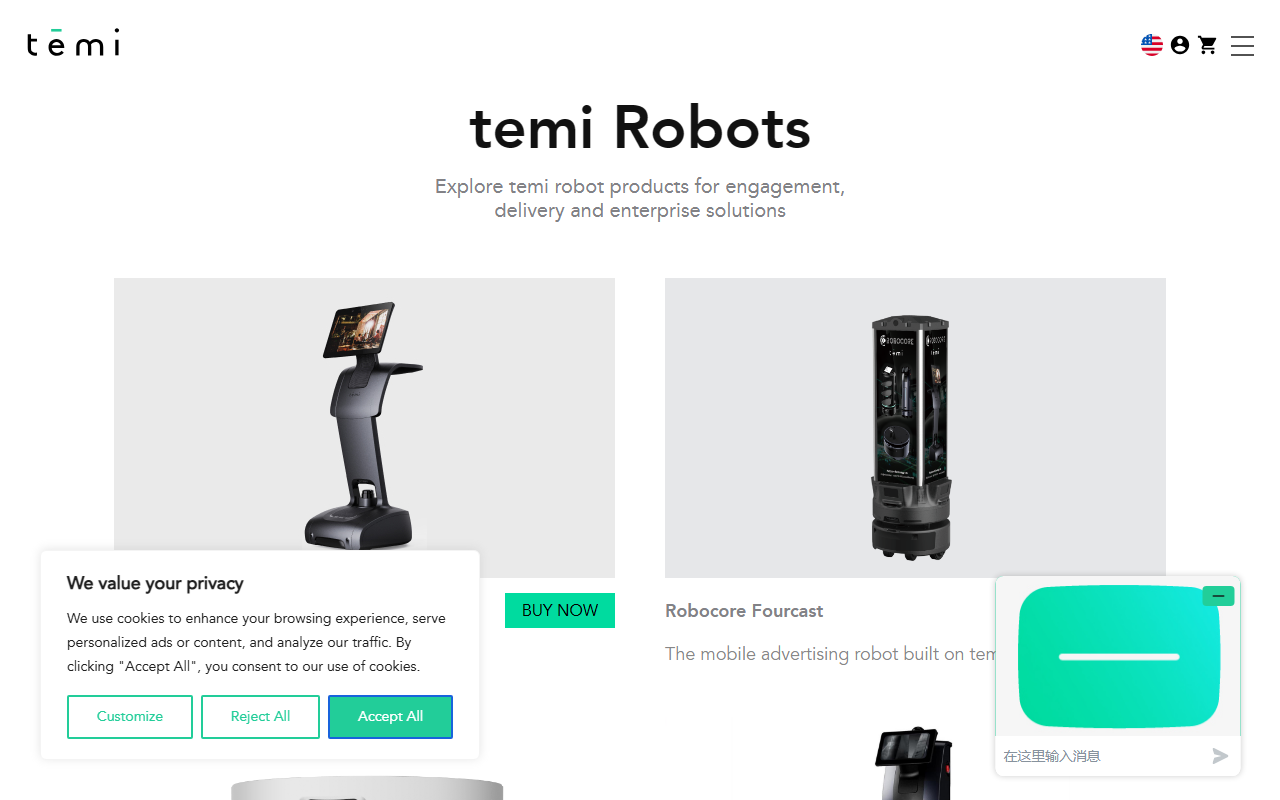
Upon visiting Temi’s website, I was immediately struck by the polished, professional layout that centers on a single message: “Where Intelligence Serves.” The homepage presents a clean, modern interface with clear navigation to verticals like healthcare, retail, hospitality, and education. Temi is not a software-only tool—it’s a physical robot designed to function as a 24/7 autonomous staff member. The company brands itself as a multinational provider of Robot as a Service (RaaS) solutions, emphasizing a combination of hardware, AI, and cloud-based services. While I couldn’t test the robot directly in my workspace, the website provides detailed specs, partner logos (including Foxconn as strategic investor and exclusive manufacturing partner), and a range of use-case videos. The “temi App Store” suggests a developer ecosystem, and the phrase “temi the personal robot keeps us present anywhere” hints at telepresence capabilities. Notably, the site includes a clear call to action to purchase the robot platform itself, with a listed price of $3,999 for the hardware, including free shipping and returns.
Technical Capabilities and Use Cases
Temi’s robot is built around autonomous navigation, dynamic video/audio, and advanced AI. The spec sheet mentions a 360-degree lidar sensor, a 10.1-inch touchscreen, and a motorized head that allows the screen to tilt. The robot runs on a proprietary operating system and supports integration with third-party applications through the temi App Store. During my exploration, I watched the “Watch Movie” video which demonstrates the robot following a user through a home while video calling—a clear telepresence scenario. The website also highlights “temi Meetings” and “Realtime Fleet Analytics,” indicating enterprise fleet management capabilities. The AI assistant can handle commands like “Take me to the meeting room” or “Send my vitals to Dr. Penn,” showing applications in hospitality, enterprise navigation, and healthcare monitoring. What sets Temi apart from simpler telepresence robots is its “flawless autonomous navigation”—the robot can map environments, avoid obstacles, and navigate to points of interest without manual control. This is backed by lidar and depth cameras, similar to autonomous vacuum cleaners but applied to human interaction. The platform also supports cross-border AI deployment, which matches the listed category “Cross-border AI”—likely referring to its ability to operate across different languages and regions via cloud services.
Pricing, Value, and Market Position
Temi’s pricing model is transparent to a point: the robot hardware is listed at $3,999. However, the full RaaS package—including software subscriptions, fleet analytics, and cloud services—is not clearly priced on the website. A potential buyer would need to contact sales for a quote on enterprise plans. This places Temi in a mid-to-high price bracket compared to simpler telepresence robots like the Double 3 (which costs around $3,999 as well) or the Ohmni Ultra (around $4,000). Temi’s advantage is its stronger autonomy and Foxconn-backed manufacturing scale. Significant limitations: the hardware purchase is upfront, and ongoing costs for the RaaS subscription are opaque. Additionally, the robot’s 10.1-inch screen and 30-minute battery life (based on specs) may not suit all environments. For healthcare or hospitality, the ability to run 24/7 with charging stations is critical—Temi claims autonomous charging, but battery life details are scarce. The website boasts strong customer base with blue-chip clients across tech, healthcare, and telecom, and has received awards like “Best Robotic Platform of CES 2019” and recognition from TIME Magazine. This adds credibility but doesn’t replace hands-on testing.
Who Should Use Temi?
Temi is best suited for organizations that need a reliable, autonomous platform for telepresence, wayfinding, or remote monitoring in industries like healthcare, hospitality, and retail. For example, a hospital could use it for remote patient rounding, or a hotel for automated concierge services. Enterprise teams looking to pilot fleet management of robots with real-time analytics will find the RaaS model appealing. However, individual consumers or small businesses seeking a low-cost home robot should look elsewhere—Temi’s $3,999 entry price and enterprise focus make it overkill for casual use. Alternatives like Amazon’s Astro (currently invite-only, around $1,000) or the cheaper Temi clone robots from Chinese OEMs may be more accessible. The main strength of Temi is its polished autonomy and app ecosystem backed by strong manufacturing partnerships. The main limitation is the lack of transparent, tiered SaaS pricing and the need for a significant upfront hardware investment. If your organization values a turnkey robotic assistant that can navigate complex indoor spaces and integrate with custom apps, Temi is worth a demo. Otherwise, consider whether a simpler telepresence robot or a software-only AI agent meets your needs. Visit temi at https://robotemi.com/ to explore it yourself.










Comments