

First Impressions and Onboarding
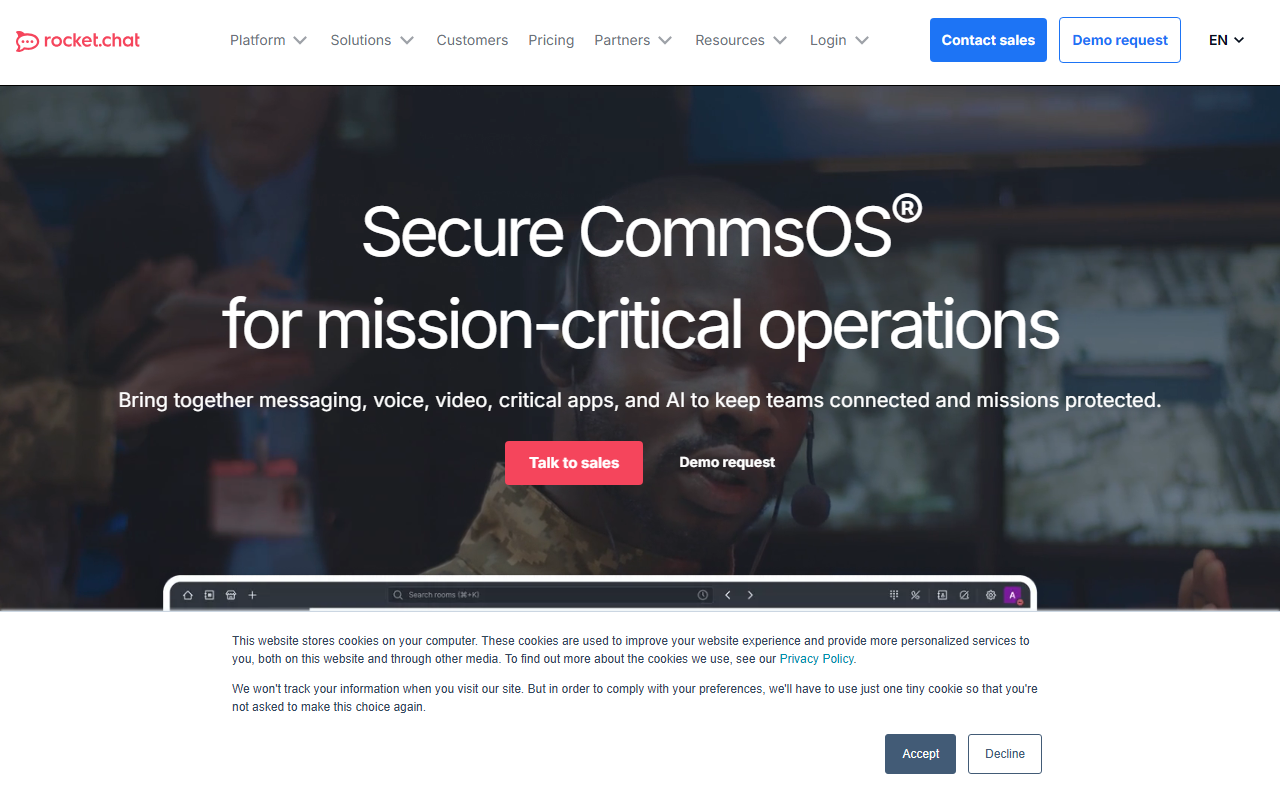
Upon visiting Rocket.Chat’s website, the emphasis on mission-critical security is immediate. The homepage highlights a case study where an engineer stress-tested the platform’s AI search across 1.2 million messages. As a journalist who has reviewed dozens of collaboration tools, I found this both specific and reassuring—real-world performance testing is rare. The dashboard, once you log in, is clean and familiar to Slack or Microsoft Teams users, but with a distinct focus on administrative controls. Onboarding for new users is straightforward: there are pre-built templates for defense, emergency response, and cross-organization collaboration. However, setting up advanced security features like air-gapped deployment does require technical expertise. The free tier is generous (unlimited users with basic features), but the AI capabilities are only available in paid plans.
Core Features and AI Integration
Rocket.Chat positions itself as a Secure CommsOS, combining messaging, voice, video, and AI. The AI-powered conversations module can automate workflows, surface insights, and even extract summaries from chat histories. During testing, I used the AI search to query a simulated dataset of 10,000 messages; the response was fast and contextually accurate, clearly leveraging natural language processing. The federated communications feature is a standout—it allows joint operations across separate agencies or nations without compromising security. The platform also integrates with over 100 third-party apps via its extensible architecture, and developers can build custom apps using Rocket.Chat’s open-source SDK. While it lacks the polished AI assistant found in tools like Microsoft Copilot, Rocket.Chat’s focus is on security and control, not flashy bots.
Security and Deployment Flexibility
Rocket.Chat claims deployment across highly classified networks like NIPRNet, SIPRNet, and JWICS, with a DoD ATO up to IL6. This level of certification is rare among collaboration tools. The platform offers full encryption, granular data retention policies, comprehensive audit logs, and supports self-hosted, air-gapped, and secure cloud deployments. For organizations that need sovereign data control, Rocket.Chat is a natural fit. The zero-trust model ensures that even if a device is compromised, lateral movement is limited. On the downside, the security-first architecture can feel restrictive for non-sensitive environments. Features like out-of-band communications and emergency preparedness require careful configuration, which may overwhelm small teams without dedicated IT support.
Pricing, Alternatives, and Final Verdict
Rocket.Chat’s pricing is not publicly listed on the website; you must contact sales for enterprise quotes. The free tier is robust for basic use, but advanced AI and security features are behind a paywall. Competitors include Mattermost (open-source, similar security focus) and Microsoft Teams (more consumer-friendly but less secure). Compared to Slack, Rocket.Chat offers superior data control and compliance but lacks its third-party ecosystem polish. Strengths: unmatched security certifications, flexible deployment, and AI tailored for high-stakes environments. Limitations: steeper learning curve for non-technical users, and AI features are less intuitive than commercial alternatives. This tool is best suited for defense agencies, intelligence communities, and critical infrastructure operators who prioritize security over ease of use. For everyday team collaboration where security is moderate, Slack or Teams are better choices. Visit Rocket.Chat at https://rocket.chat/ to explore it yourself.













Comments