

First Impressions: A Conference Disguised as a Learning Platform
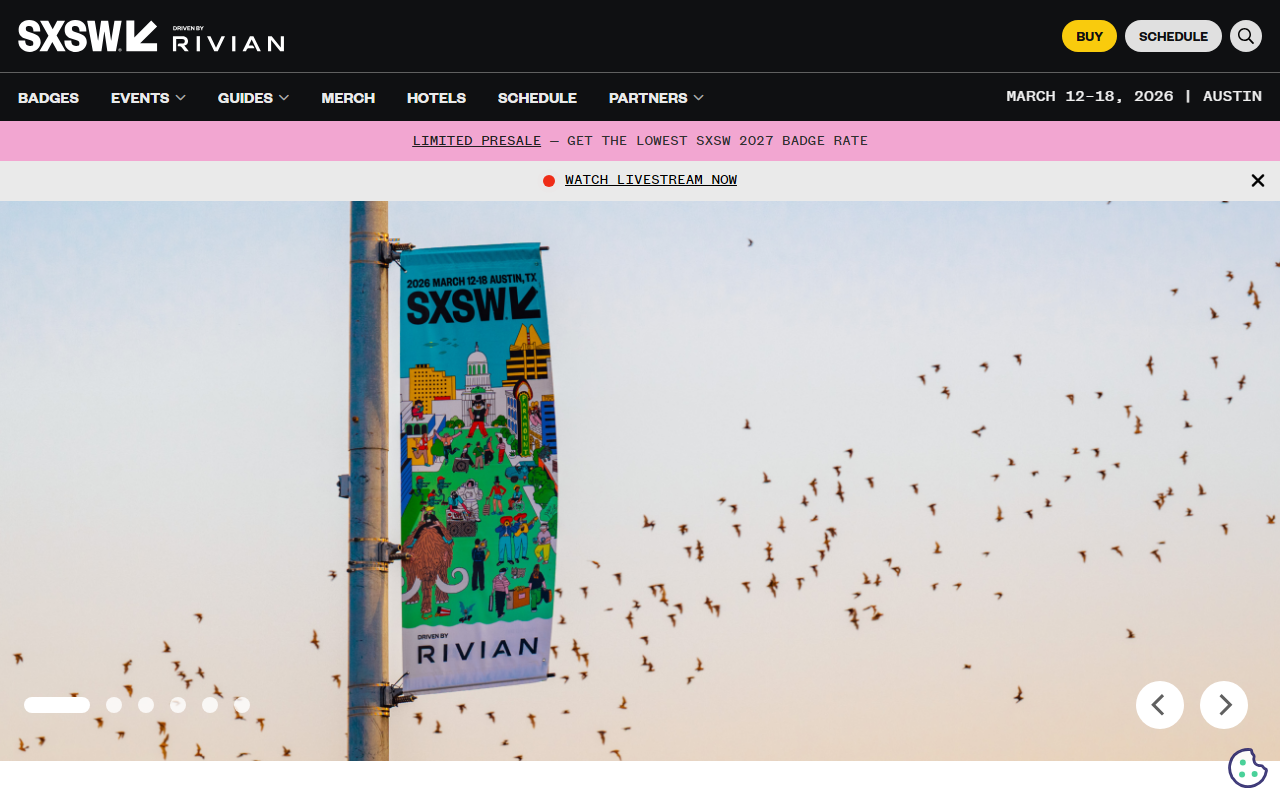
Upon visiting SXSW’s website, I was expecting a sleek AI-powered learning dashboard. Instead, I landed on a full-throttle event portal for the South by Southwest (SXSW) Conferences & Festivals. The site is clearly built around the annual March gathering in Austin, Texas—850+ sessions, 4,400 musicians, 375+ film screenings, and 450 brand activations. So why is it listed under “Text AI > Learning Platform”? The disconnect is immediate. This is not a tool you “use” in the traditional sense; it’s a real‑world event that happens once a year. Yet if we stretch the definition, SXSW does function as a massive, curated learning ecosystem for emerging technologies, including AI. The website itself, however, is pure event promotion: countdown timers, badge sales, and session recaps. There is no interactive AI, no model to query, no API to integrate.
What It Actually Offers: A Real‑World AI Education
SXSW’s value as a learning platform comes from its conference tracks. In 2026 alone, there were “Keynotes and Featured Sessions” on topics like AI ethics, generative creativity, and machine learning regulation. The website archives these sessions on YouTube (a “Watch Live” section and a “Catch Up On Sessions” link). The “2026 Insights Report” is a downloadable PDF summarizing trends. For someone who cannot attend in person, these archives are the closest thing to a “platform.” But here’s the rub: the site does not provide structured courses, interactive AI labs, or any text‑based learning tools. It is a static brochure for a live event. The only “AI” aspect is the content of the sessions themselves—speakers from OpenAI, Google, Meta, and startups pitch their latest advancements. If you want to learn about AI, SXSW is a fantastic conference because the world’s leading AI minds show up. But as an online learning tool, it fails the basic test of being a tool.
When I tested the “free tier” (the free YouTube session recordings), I found high‑quality video talks on AI policy, generative audio, and responsible design. The user experience is passive: you browse a chronological list of talks and press play. There is no adaptive learning, no quiz, no certification. The only “interaction” is clicking a video. Contrast this with true AI learning platforms like DataCamp or DeepLearning.AI, which offer hands‑on coding environments, progress tracking, and community forums. SXSW is more like a Netflix documentary collection on tech—valuable but not a training tool.
Strengths and Real Limitations
Strengths: If you attend in person or consume the recorded content, you gain unparalleled access to industry leaders. The breadth of AI‑related talks is massive—from ethics panels to startup pitches (e.g., the “SXSW Pitch” winners). The atmosphere encourages networking and serendipitous learning. For a company or individual seeking to understand the zeitgeist of AI, SXSW is a goldmine. The 2026 Insights Report is a well‑curated summary that can inform product strategy.
Limitations: The website itself is not a learning platform. There is no AI model to test, no personalized recommendations, no interactive exercises. The cost is prohibitive (badges start around $1,500 for the full conference; presale rates are available but not explicitly listed on the page). You cannot learn AI “on demand” beyond the recorded sessions, which lack structure. The target audience is limited to professionals who can afford and travel to Austin. For a budget‑conscious learner or someone needing a self‑paced curriculum, SXSW is a poor fit. Also, the website is clone‑heavy with repetitive sections (e.g., “Catch Up On Sessions” and “Get the inside scoop!” appear twice).
Who Should (and Shouldn’t) Use This
Best suited for: C‑level executives, product managers, and startup founders who want to absorb the latest AI trends and network with peers. Also, journalists, investors, and academics who benefit from seeing demos and hearing discussions live. Anyone who needs to stay ahead of the curve in AI would find the conference valuable—as long as they have the budget and time.
Look elsewhere if: You need a hands‑on AI learning platform with code exercises, projects, or certificates. Tools like Kaggle (free, with competitions and notebooks) or Fast.ai (free courses with practical deep learning) are more appropriate. Or if you want a text‑based AI tutor, try ChatGPT or Claude for interactive learning. SXSW is not for daily practice or bite‑sized lessons.
Bottom line: SXSW is a world‑class conference that produces valuable AI‑focused content, but calling it a “Text AI > Learning Platform” is a category error. The website functions as a ticket portal and content archive, not an interactive tool. If you can attend or access the free YouTube archives, you will learn a lot—but don’t expect a traditional learning platform. Pricing is not publicly listed on the website beyond “lowest presale rates” and “Lock in your 2027 rate now” (likely $1,200–$1,800 for a badge). Visit SXSW at https://sxsw.com/ to explore it yourself.













Comments