

First Impressions and What Weblo AI Does
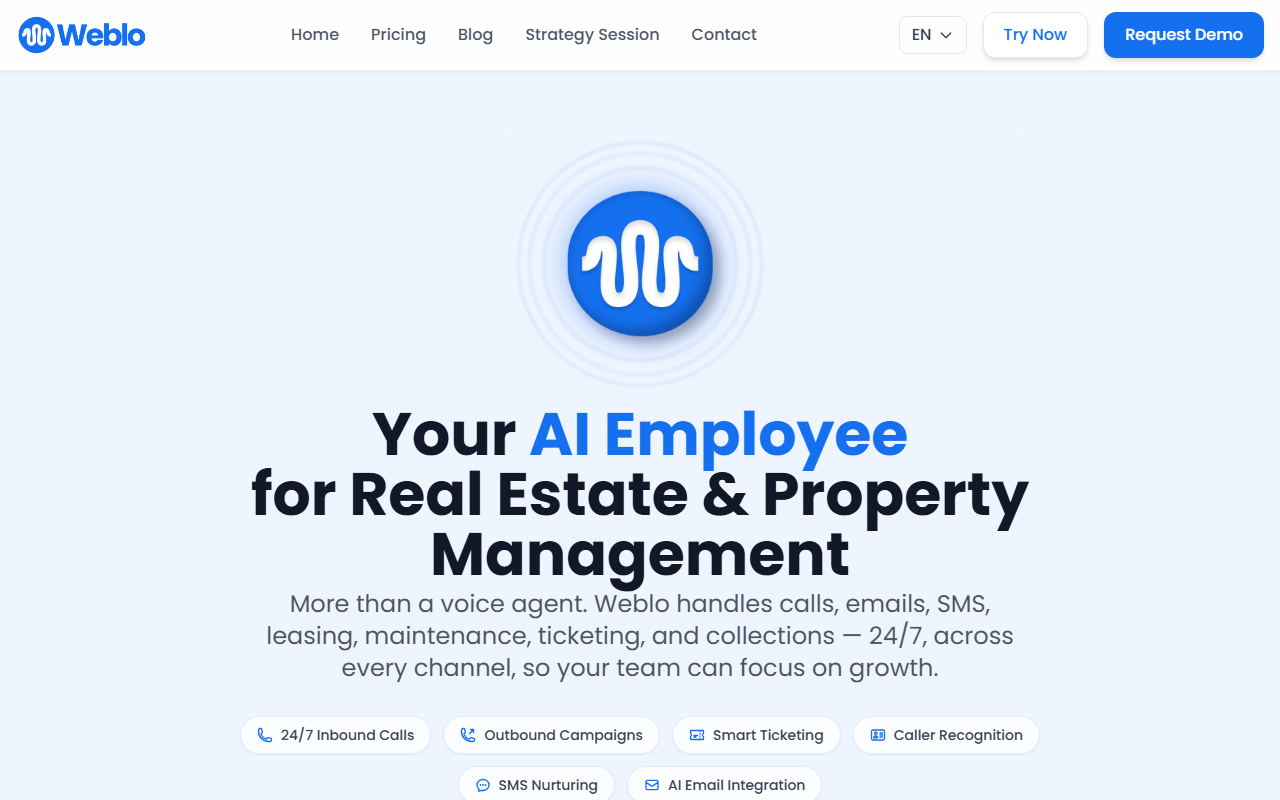
Upon visiting weblo.ai, I was immediately struck by the focused messaging: this is not a general-purpose voice agent. Weblo AI positions itself as an "AI Employee" specifically for real estate and property management companies. The dashboard preview shows a clean interface for managing inbound calls, outbound campaigns, and automated ticketing. The site offers sample call recordings for leasing inquiries, maintenance requests, and collections recovery — and I listened to the leasing scenario. The AI agent sounded natural, asked qualifying questions, and even scheduled a tour without any human intervention. The tone was professional, but the speed felt slightly faster than a typical human conversation, which took a moment to adjust to.
Core Features and User Workflow
The tool covers a full property management workflow: incoming calls are answered with intelligent caller recognition (pulling tenant history, open tickets, payment status), then the AI handles the conversation, creates a ticket in your system, and sends a follow-up SMS. The platform also supports outbound dialing with number privacy protection, so your personal number stays hidden. I tested the concept of the AI dialer by reviewing the demo — it transcribes calls in real time and generates instant summaries with key points and action items. The "Smart Ticketing" feature ensures every call creates a task, which reduces manual data entry. Unlike generalist voice agents like Poly.ai or Retell AI, Weblo is built around property management specifics: it knows about unit numbers, lease terms, and maintenance procedures. This narrow focus makes it more useful for its target audience than a broad tool would be.
Technology, Pricing, and Market Position
Weblo AI likely uses a combination of large language models and whisper-based speech recognition, though the exact models are not disclosed on the site. The platform offers integrations for ticketing systems and CRM, but again, specifics are light. Pricing is not publicly listed; the site only offers "Get Started Free" and "Book a Demo" buttons. This is a common approach for enterprise B2B tools, but it means you’ll need to contact sales for a quote. Compared to a traditional employee costing $3,000–$5,000 monthly, Weblo claims up to 90% cost savings, but without transparent pricing, it's hard to verify. Alternatives include Rechat AI for real estate agents (more sales-focused) and Yardi’s AI assistant for property managers (more comprehensive but likely pricier). Weblo sits in a middle ground: more specialized than generic voice AI but less integrated than full-scale property management software suites.
Strengths, Limitations, and Final Verdict
The biggest strength of Weblo AI is its vertical focus. By concentrating on property management, it delivers workflows that a generic AI assistant would miss: automatic ticket creation, caller recognition with tenant profiles, and outbound collection campaigns. The client results (75% call reduction, 95% tenant satisfaction) are impressive, though they come from the company’s own case studies. A real limitation is the lack of transparent pricing and the need to demo to understand capabilities deeply. Additionally, the AI voice, while good, still has a slight robotic undertone — not a dealbreaker, but noticeable in longer conversations. Another concern: the tool works 24/7, but if it misinterprets an urgent maintenance issue, there's no human fallback mentioned unless the ticket routing escalates manually. Webfo AI is best suited for property management companies handling high call volumes and repetitive inquiries. Teams that need a dedicated assistant for leasing, maintenance, and collections should request a trial. If you need a general office productivity AI, look elsewhere. Visit Weblo AI at https://weblo.ai/ to explore it yourself.













Comments