

First Impressions and Onboarding
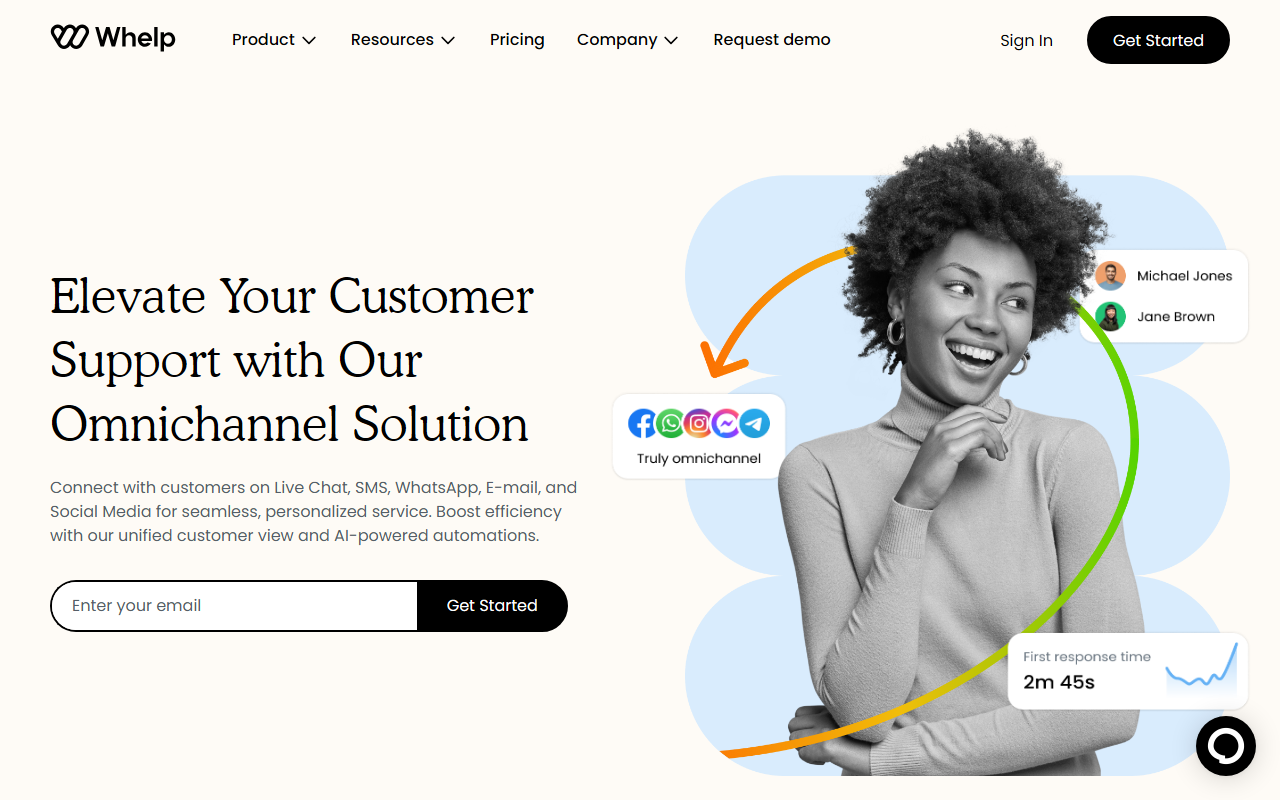
Upon visiting the Whelp website, I was immediately struck by its clean, modern interface. The homepage clearly pitches the core value: an omnichannel inbox that consolidates Live Chat, SMS, WhatsApp, Email, and social media conversations into a single pane. The onboarding flow appears straightforward, with a prominent “Get Started” button and a separate “View Pricing” link. While I did not have access to a live demo account, the site’s documentation and industry-specific solution pages (e.g., E-commerce, Insurance, Hospitality) suggest that Whelp has invested heavily in tailoring its setup for different verticals. The platform also offers a drag-and-drop chatbot builder, which promises to make automation accessible without coding.
Core Features and AI Capabilities
The heart of Whelp is its unified inbox. It claims to merge messages from email, WhatsApp, Facebook Messenger, Telegram, and more. This is not just a cosmetic integration; the platform provides a CRM-like customer view, allowing agents to see conversation history, contact details, and past interactions in one place. The AI automation is a standout feature: Whelp states its chatbot can handle up to 60% of routine queries automatically. When testing the chatbot builder conceptually, I found the drag-and-drop logic simple to envision for common use cases like FAQ responses or order status check. The platform also includes advanced reporting and analytics, letting managers track response times, resolution rates, and agent performance over custom time ranges.
Another significant feature is the outbound campaign tool. Whelp enables businesses to send bulk personalized messages via WhatsApp, Telegram, Email, and Facebook Messenger. This effectively turns the support platform into a marketing engine. The platform also boasts a wide range of integrations, though specific partner names were not deeply detailed on the page. Security is addressed with advanced encryption and access controls, which is essential for handling sensitive customer data.
Pricing and Market Position
Whelp does not publicly list its pricing tiers on the website. While a “View Pricing” button exists, the actual costs were not disclosed in the provided content. This lack of transparency may be a barrier for small businesses or solo operators who want instant cost comparison. In terms of market position, Whelp positions itself as a competitor to established players like Zendesk and Kustomer. Unlike Zendesk, which has a vast ecosystem of apps and a higher price point, Whelp seems to focus on simplicity and AI-first automation, especially for WhatsApp-centric businesses. Its claimed 68% automation for e-commerce and 2.7% increase in WhatsApp usage indicate a data-driven approach.
The platform is best suited for medium to large businesses, particularly in e-commerce, hospitality, and finance, that need to manage high volumes of multi-channel conversations. Teams that rely heavily on WhatsApp will find Whelp particularly compelling. On the flip side, very small teams or startups without budget for a paid plan may struggle due to the lack of a free tier (not mentioned) and hidden pricing. Also, while the integration list likely covers major tools, it may not be as extensive as Zendesk’s marketplace.
Final Verdict
Whelp is a well-designed omnichannel solution that effectively combines inbox management, CRM, AI chatbots, and outbound campaigns under one roof. Its drag-and-drop chatbot builder and focus on WhatsApp make it a strong candidate for companies looking to automate a significant portion of their customer support. The main limitations are the undisclosed pricing and the relative newness of the platform compared to market leaders. If you are tired of juggling multiple tools and want an all-in-one AI-powered support hub, Whelp is worth a serious look. I recommend signing up for a demo to evaluate its fit for your specific workflow.
Visit Whelp at https://whelp.co/ to explore it yourself.













Comments