

First Impressions and Onboarding
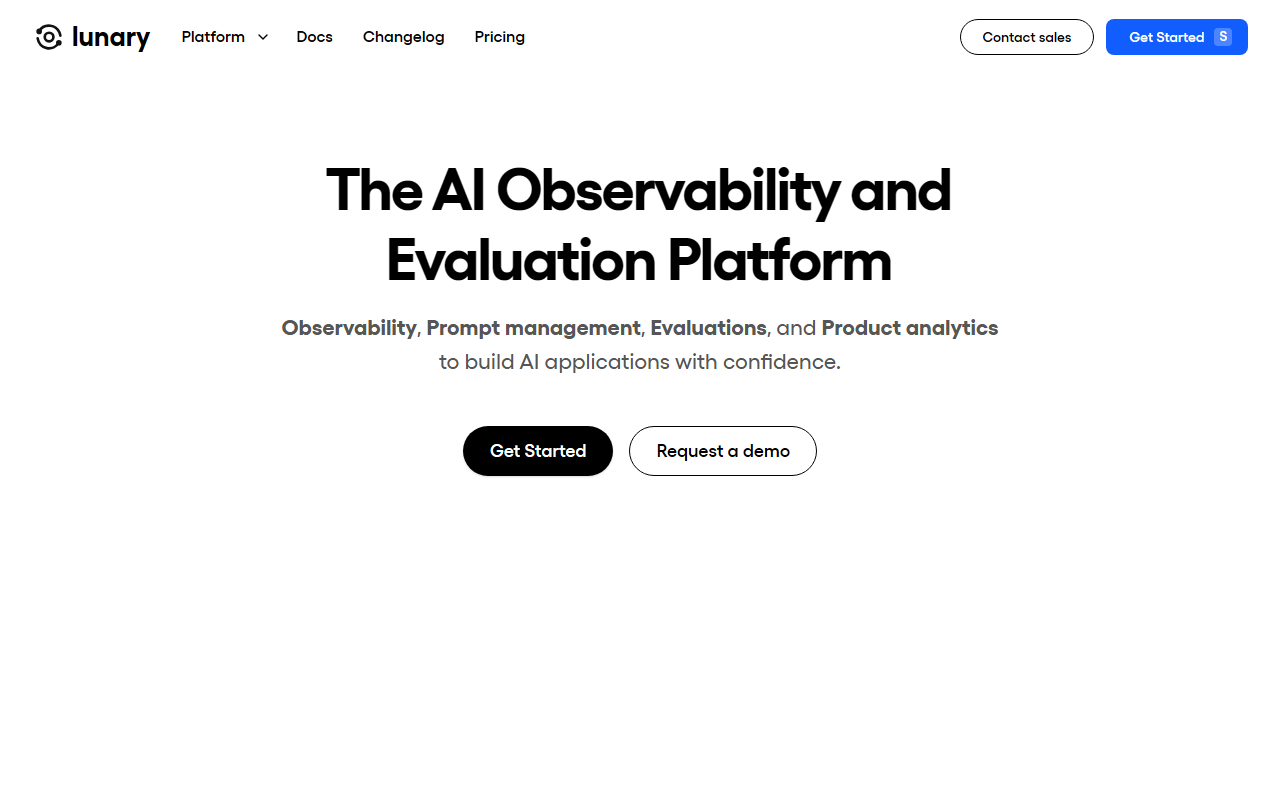
Upon visiting Lunary’s website at https://llmonitor.com/, the tagline “The AI Observability and Evaluation Platform” immediately sets expectations. The landing page is clean, with a video demo and a clear call to action: “Get Started (it’s free)”. I clicked through to the sign-up flow and was prompted to create an account using either email or GitHub—took under a minute. After logging in, the dashboard appears sparse but well-organized: a left sidebar with links to Traces, Analytics, Prompt Templates, and Settings. The platform offers a 1-line integration for Python, and I tested the provided code snippet that uses lunary.monitor(client) with the OpenAI SDK. It worked seamlessly; within seconds, my test chat completion appeared in the traces panel, complete with latency, token count, and cost estimates. The onboarding wizard then suggested creating a prompt template, walking me through saving a versioned prompt. The whole experience felt polished, especially the way the SDK automatically captures LLM calls without manual instrumentation.
Core Capabilities: Observability, Evaluations, and Prompt Management
Lunary is not just a logging tool—it’s a full lifecycle management platform for LLM applications. The observability layer records every prompt, response, and error stack trace. During testing, I filtered traces by user session and saw real-time agent execution flows, including sub‑task calls and tool outputs. The built‑in evaluation framework allows you to score LLM responses manually or via LLM‑as‑a‑judge. I set up a simple “correctness” rubric, and within minutes I could review a list of past generations with scores and human feedback. Prompt management is another strong pillar: you can create templates with versioning and variables, then deploy them without touching source code. The A/B testing feature—where you can run two prompt variants side‑by‑side and compare performance metrics—is particularly useful for non‑technical team members. For analytics, the dashboard shows model usage, cost breakdowns, topic classification (using LLM‑driven clustering), and user satisfaction scores. The chatbot examples on the site (internal knowledge, customer support, agents) illustrate realistic workflows, and I appreciated the ability to replay entire chat sessions to debug poor responses.
Pricing, Security, and Deployment Options
Lunary offers a generous free tier that includes 50,000 events per month and basic analytics. For higher volume and enterprise features, pricing is customized and not publicly listed—you need to contact sales. This is a common pattern among B2B observability platforms. According to the website, Lunary is SOC 2 Type II and ISO 27001 certified, which instills confidence for enterprises dealing with sensitive data. The platform can be self‑hosted via Docker or Kubernetes, allowing you to keep all data within your VPC. PII masking is built‑in and can be configured to redact email addresses, phone numbers, and custom patterns before logs leave your infrastructure. Role‑based access control (RBAC) and single sign‑on (SSO) are available on paid plans. These features make Lunary a strong contender for regulated industries. However, the lack of transparent pricing for larger plans may frustrate smaller teams who want to budget upfront.
Who Should Use Lunary?
Lunary is best suited for engineering teams building production‑grade LLM applications—whether it’s a customer‑facing chatbot, an internal knowledge assistant, or an autonomous agent. The combination of real‑time observability, prompt versioning, and automated evaluations speeds up debugging and iteration. Compared to alternatives like LangSmith or Weights & Biases, Lunary offers deeper focus on chat replay and user satisfaction tracking, plus a more integrated prompt template workflow. The self‑hosting option is a clear differentiator for companies that cannot send logs to a third‑party cloud. That said, if you need extensive fine‑tuning dataset management or model comparison dashboards, you might miss some features that competitors provide. Also, the free tier’s 50k events per month can be consumed quickly in high‑traffic apps. Overall, Lunary is a polished, developer‑friendly platform that delivers on its promise of “minutes to magic.” I recommend trying the free tier first; you can have it running in your development environment in less than an hour.
Visit Lunary at https://llmonitor.com/ to explore it yourself.




Comments