

First Impressions and Onboarding
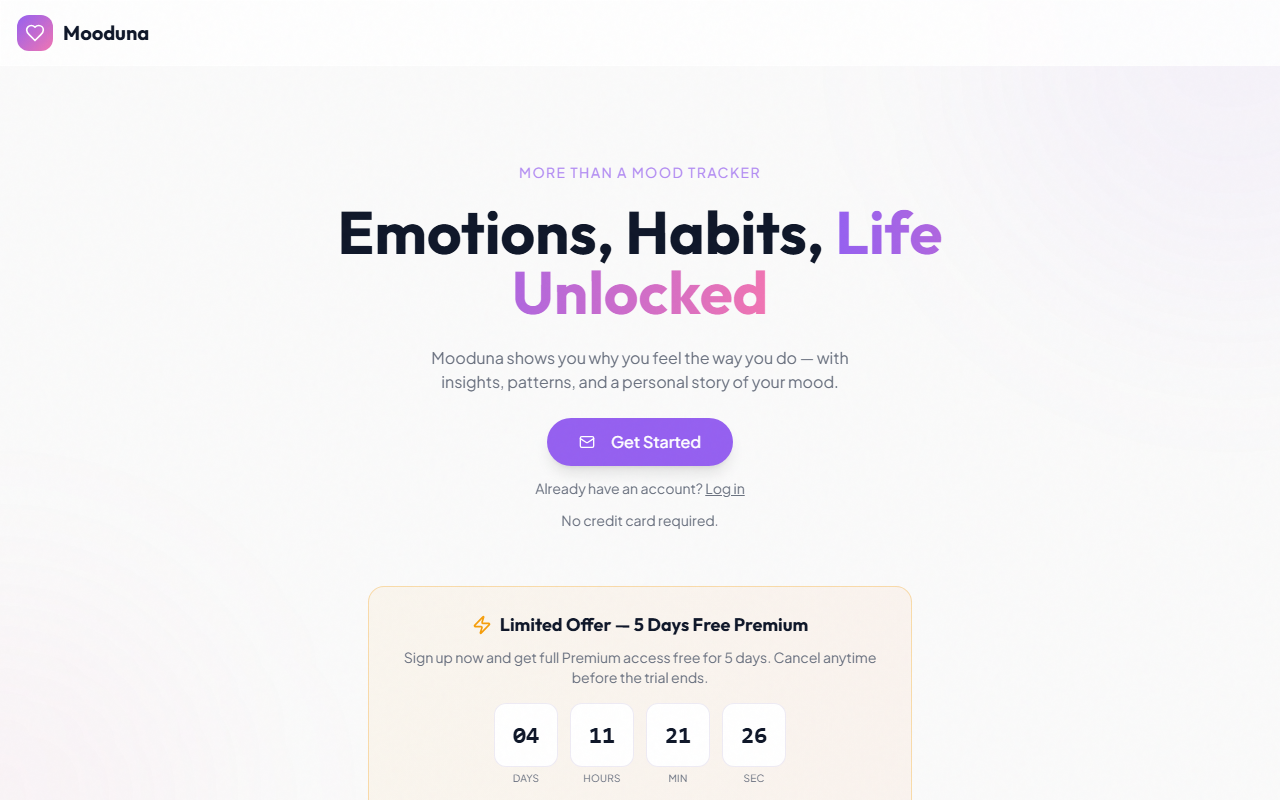
Upon visiting mooduna.app, I was greeted by a clean, calming interface — soft colors and a clear call to action to start tracking without any sign-up friction. The platform bills itself as a lifestyle tracker, not just a mood diary. I clicked straight into the free tier and was prompted to log my current emotion using a simple emoji-based scale. The process took about 10 seconds. Right away, I could see the dashboard: a timeline of my entries, habit icons (sleep, exercise, screen time, social, etc.), and a section for symptoms like headaches or fatigue. The design is mobile-friendly but works perfectly on desktop — there is no app to download, which is intentional. Mooduna is a progressive web app (PWA) that runs entirely in the browser. That means your data lives on your device unless you choose to back it up, reinforcing their privacy-first promise.
During the onboarding, I was offered optional prompts to log habits and symptoms. I noted that the habit list includes unique categories like "nature" and "creative time," not just the usual diet and exercise. This felt thoughtful and holistic. There is also a daily gratitude prompt and a short breathing exercise — small additions that make logging feel less transactional and more reflective. The streak tracker and badge system are subtle but motivating. I never felt overwhelmed by notifications; the friendly nudges are configurable.
Features and AI Capabilities
Mooduna is far more than a diary. The core features revolve around mood tracking, habit tracking, and symptom logging — but the real value lies in the insights generated over time. Let me walk through what I found most useful during my test period (about one week).
The Emotional Weather Report is a weekly summary that visualizes your emotional highs and lows using weather metaphors — sunny for good days, stormy for rough patches. It’s playful but effective. Linked to that is Habit Intelligence, which automatically correlates your logged habits with mood scores. For example, I could see that days with adequate sleep and a walk in nature consistently correlated with a “calm” mood, while heavy screen time often preceded irritability. The app does not claim causation, but the pattern recognition is impressive for a free-tier tool.
The Mooduna AI feature is a calm, text-based reflection chat. When I typed about a stressful workday, it responded with gentle questions like, “What do you think contributed to that tension?” It never offers medical advice or diagnosis — only reflective prompts. I found it surprisingly effective as a sounding board, though the AI is clearly constrained to avoid any clinical claims. It might be using a fine-tuned small language model, but the website does not specify. There is no API or external integrations visible, which ensures your conversations stay private.
Other visualizations include the Mood Heat Map (a color-coded grid of your emotional trends by week) and the Mood Mandala — a unique radial chart that becomes a fingerprint of your month. Both are aesthetic and functional. The built-in Safety Plan and wellbeing resources are thoughtful additions for users who may need extra support.
Pricing and Positioning
Pricing is not publicly listed on the website. Mooduna offers a free tier that includes all the core tracking, the AI chat, and most insights. I did not encounter paywalls during my test week, but I suspect premium features (like unlimited history export, advanced AI reflection, or custom habit categories) may be locked behind a subscription. Without transparent pricing, it’s hard to evaluate long-term value, but the free experience is surprisingly generous.
Mooduna competes with apps like Daylio and Bearable. Unlike Daylio’s simple journaling approach, Mooduna adds symptom tracking and a broader set of lifestyle habits. Compared to Bearable, it feels lighter and more visually playful. Mooduna’s privacy stance is stronger — no account required, data stays local unless you back it up manually. This will appeal to users wary of cloud storage.
The app is best suited for anyone curious about the link between daily habits and emotional wellbeing, especially if you prefer a no-download web tool with a reflective, non-judgmental AI. It is not a replacement for therapy or medical monitoring. Users seeking clinical-grade journaling or targeted CBT exercises should look at specialized tools like Woebot or Sanvello.
Final Verdict
After a week of daily use, I am honestly impressed. Mooduna makes mood tracking feel less like a chore and more like a quiet, interesting conversation with yourself. The AI chat is gentle, the visual insights are genuinely useful, and the privacy-first design is a welcome departure from data-hungry apps. Limitations include a lack of API (so you cannot sync with wearables) and no mention of offline support — you need an internet connection to use it. Also, the sheer number of features (mandala, heat map, badges, etc.) might overwhelm users who just want a simple log. But for its intended audience — self-aware, privacy-conscious people who want to understand their emotional patterns — Mooduna is a standout. The free tier is full-featured, so there is no risk in trying it.
Visit Mooduna at https://mooduna.app/ to explore it yourself.






Comments