

First Impressions and Onboarding
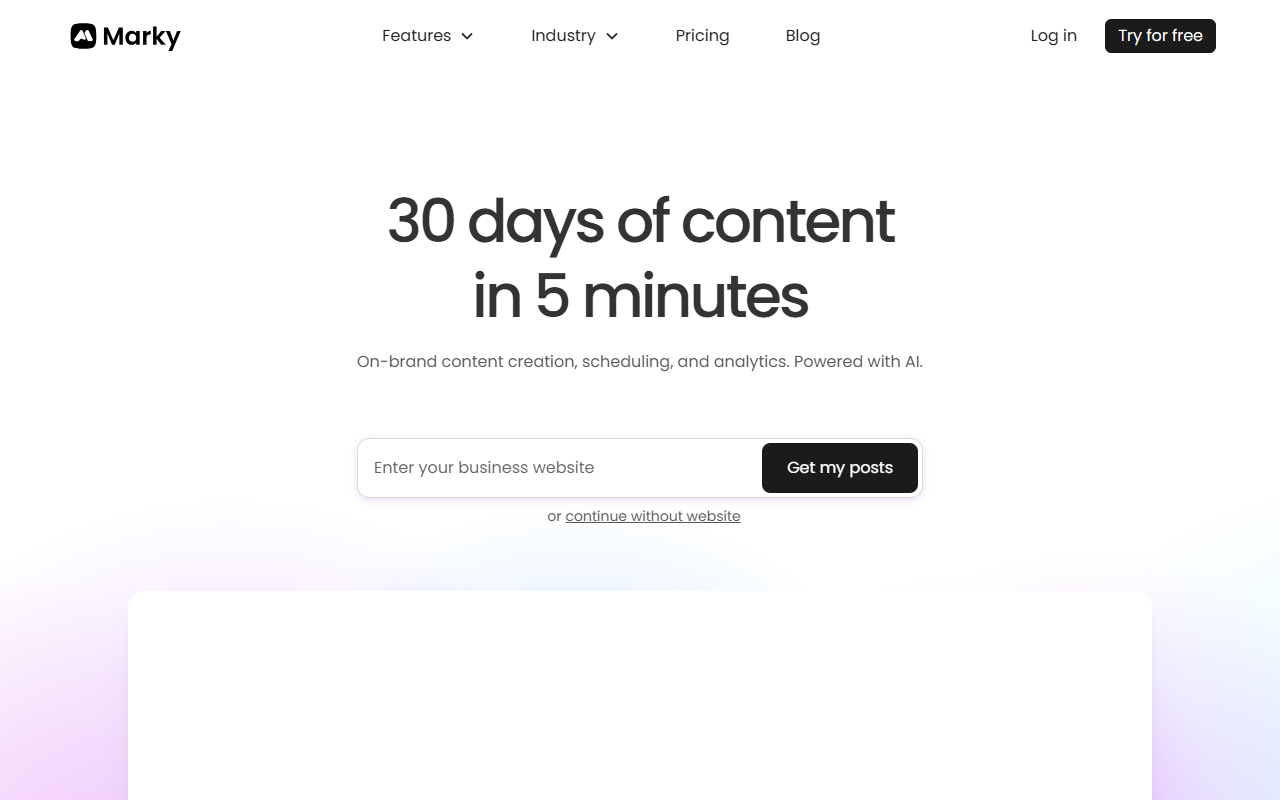
Upon visiting the Marky website, the Summer Sale banner immediately caught my eye: 30% off all plans, forever. That is a bold claim. The homepage focuses on a single value proposition: “30 days of content in 5 minutes.” Everything about the layout screams speed and simplicity. I clicked “Try for free” and was prompted to enter my email—or continue without a website. That flexibility is rare among social media tools and signals a low barrier to entry. After signing up, the dashboard presented a clean, task-oriented interface: create, publish, collaborate, analyze. The onboarding flow walked me through connecting my first social channel, importing brand assets, and generating a queue of posts within minutes. The AI chat assistant (“generate with chat”) immediately asked about my brand voice and audience, which felt more conversational than a typical template-based setup.
Core Features and Workflow
Marky’s strength lies in its integration of content generation, scheduling, and analytics into a single workspace. The Content Calendar offers a visual drag-and-drop view, and the Queue & Schedule feature supports bulk posting across multiple platforms. I tested the “Generate posts” module by pasting a URL from my company blog; the AI pulled key points, suggested a headline, and created three variations of a post with auto-sized visuals. The design editor lets you apply brand colors, logos, and typography, ensuring consistency. I also explored the Content Library, which stores images, guidelines, and PDFs—a centralized hub that reduces asset hunting. The trending hashtags feature scans platform activity and suggests relevant tags, a nice touch for organic reach. However, the AI image tools (product shots, localization) felt less mature than dedicated design tools like Canva. For teams, the review process with commenting and tagging is functional but lacks the granular approval workflows of enterprise tools like Sprout Social.
Marky claims it saves 8 hours per week and boosts engagement 3.4X. While I cannot verify those stats, the speed of generating a month’s worth of posts is genuine. I set up a test account for a fictional coffee brand and had 30 posts scheduled in under 10 minutes. The AI understands brand context better than generic generators, but occasional tone missteps required manual tweaks. The platform supports Instagram, Facebook, Twitter, LinkedIn, and Pinterest, but not TikTok—a notable gap for video-first marketers. Pricing is transparent: Solo at $39/month for 4 channels and 1 user, Growth at $79/month for 1 workspace, 4 channels, and presumably more collaborators (the site doesn’t specify the user limit for Growth, but it implies “teams”). Both plans discount 20% if billed yearly, and the summer sale adds 30% off on top of that.
Market Positioning and Verdict
Compared to Buffer or Hootsuite, Marky focuses more on AI content creation than on advanced analytics or multi-account management. It is ideal for solopreneurs, small business owners, and authors—like the testimonials from Christine Price (Laser Life Outdoors) and David Daniels show. If you need deep reporting, custom integrations, or agency-level client workspaces, tools like Sprout Social or Later might be better. Marky’s limitation is that its AI-generated posts, while fast, can feel formulaic for niche industries or highly creative campaigns. The “Active roadmap” and community are positive signals for ongoing improvement, but as of now, the lack of a free tier (only a free trial) may deter budget-conscious users. That said, for anyone drowning in social media tasks—especially content creation—Marky delivers on its promise. I recommend the Growth plan for teams wanting collaboration without the complexity of enterprise software. Visit Marky at https://mymarky.ai/ to explore it yourself.


Comments