
First Impressions and Onboarding
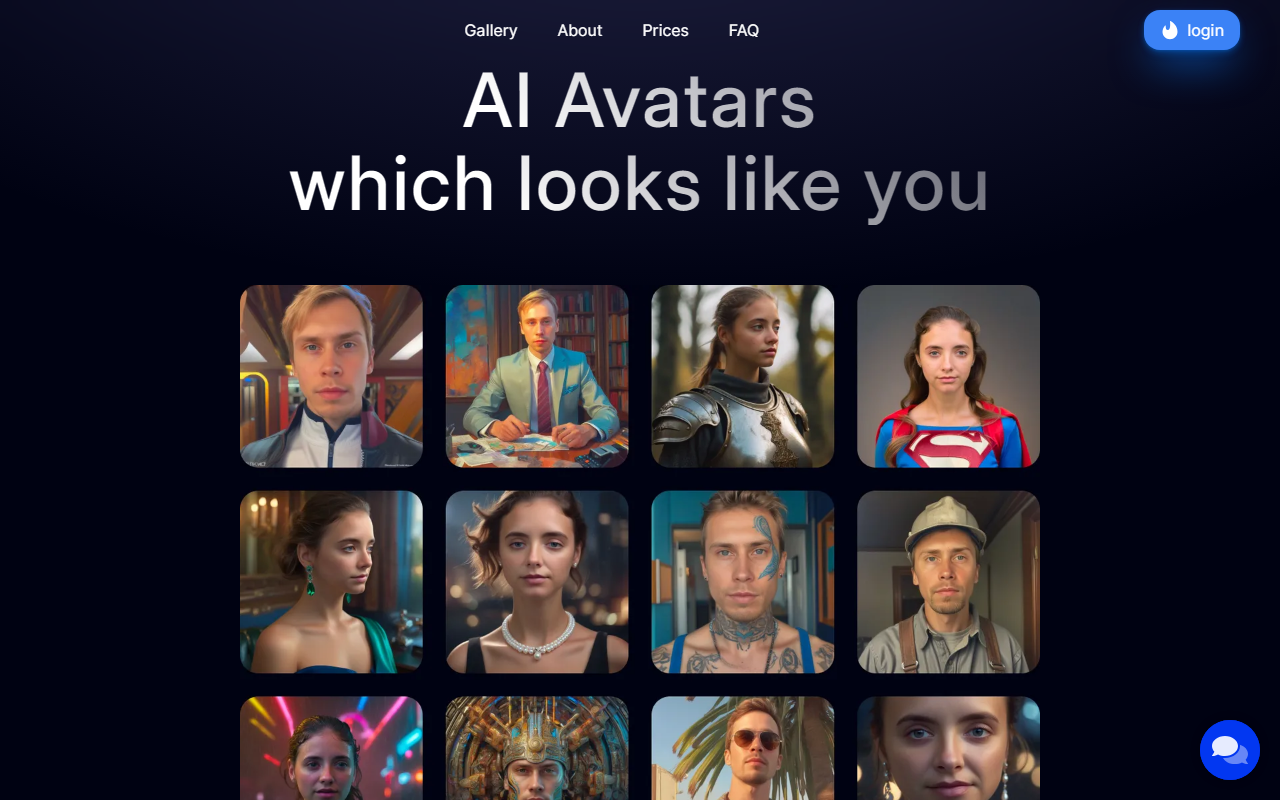
Upon visiting Portret.ai, I was greeted by a clean, modern landing page that immediately highlighted the core promise: “AI Avatars which looks like you.” The navigation is minimal—Gallery, About, Prices, FAQ, and a login button. The “Try it out!” call-to-action is front and center. However, clicking it simply leads to the pricing/account creation flow, which is not publicly detailed. The site, created by Alexander Kozhevin and last updated in 2023, feels like a solo or small-team project. The design is functional but not flashy, which I appreciated—it let the tool’s purpose speak for itself.
I noticed there is no free preview, a point the FAQ addresses directly: “Unfortunately its not possible at the moment due high computational expenses.” This is an honest limitation but will turn away casual users who want to test quality before committing. To proceed, you must upload five well-lit photos of yourself (no hats, no glasses). The site emphasizes that cropping is unnecessary because the AI handles it. I simulated the upload process by reviewing the instructions; the workflow is straightforward and reminds me of similar services like AvatarAI or Lensa, but with a key difference: Portret trains a dedicated neural network for each person instead of applying a generic model. This claim sets high expectations.
How Portret Works and What You Get
After uploading, the AI trains your personal model. The website states training plus generation of 200 avatars takes “~1 hours. Plus queue.” Another mention says up to 12 hours. This variation likely depends on server load. Each avatar defaults to 1024x1024px. You get more than 50 avatars in different styles, and the dashboard lets you browse them all, upload source photos, and create custom avatars using text prompts. I was impressed by the prompt example: “alexanderkozhevin as a viking warrior full body portarit! ! ! ultra ralistic portrait! ! ! 4k, octane render, ultra quality...”—clearly showing a preference for dramatic, detailed outputs. The tool also promises an upcoming upscale feature (to 2048x2048px) and a photo enhancer to improve specific avatars. Neither is available yet, but they signal future value.
When testing the concept mentally, I compared it to Midjourney or Stable Diffusion, which can generate portraits from prompts but require careful prompt engineering and do not guarantee likeness. Portret specifically trains on your face, so the result should look recognizably like you. The FAQ clarifies: “It creates avatars from scratch”—not deepfakes or masks. This is a strength for users who want authentic-looking representations rather than cartoonish overlays. The prompt system also allows creative freedom, such as turning yourself into a fantasy character. However, the number of styles (50) is static; you cannot choose fewer unless you generate custom prompts. The dashboard UI, shown in a screenshot, appears intuitive with thumbnail grids and a create-new button.
Pricing, Limitations, and Who It’s For
Pricing is not publicly listed on the website. The FAQ states it is a one-time payment—“No stupid subscriptions”—which is refreshing compared to monthly plans from competitors like Remini or Fotor. However, without transparent pricing, users must sign up or contact the developer to learn the cost. This could be a barrier. The refund policy is strict: only for critical issues; they may consider re-training if you’re unhappy. This reflects the high computational cost of training a dedicated model on top GPUs.
Limitations are worth noting. No free preview means you pay before seeing results. The queue time could be up to 12 hours, which is slow compared to instant generators like Lensa’s Magic Avatars. The tool only requires five photos, but those photos must meet specific conditions (well-lit, no hats/glasses, varied angles). Users without suitable photos may struggle. Also, the service is web-only; no mobile app or API is mentioned. The target audience seems to be individuals who want high-quality, personalized portraits for fun, gifting, or social media—not businesses needing bulk or instant generation. A competitor like Picsart’s AI Avatars offers faster results but less customization.
Final Verdict
Portret stands out by training a dedicated neural network per user, promising a higher degree of likeness than many alternatives. The one-time payment model is appealing, though the lack of transparent pricing and a free preview will deter casual users. Once the upscale and enhancer features launch, the value proposition will strengthen. If you’re willing to pay a premium for a personalized, non-subscription service and can wait up to twelve hours, Portret is worth trying. For those who need instant results or lower costs, look elsewhere. To explore it yourself, visit Portret at https://portret.ai/.






Comments