

First Impressions and Onboarding
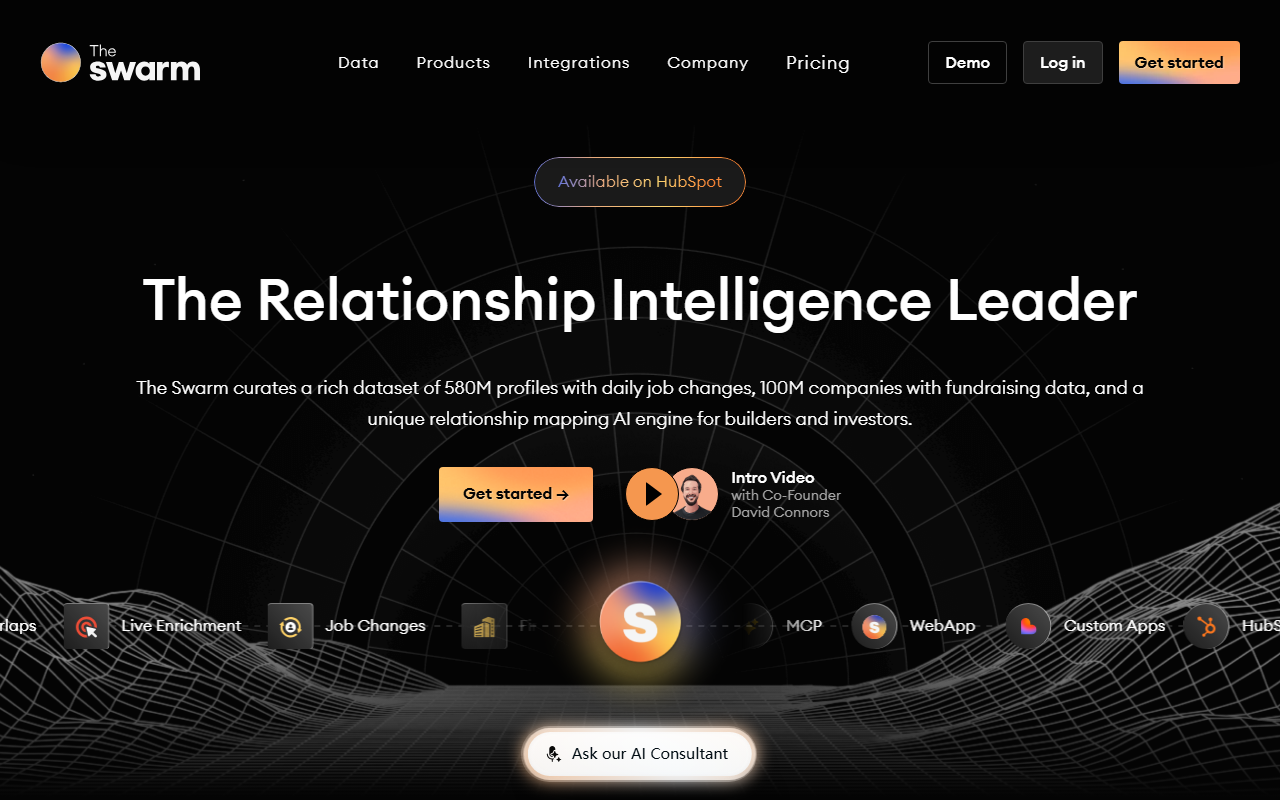
Upon visiting the site, I was greeted by a clean, modern landing page that immediately showcases the core value proposition: relationship intelligence. The navigation is straightforward—Products, Integrations, Company, Pricing—and a prominent “Get started” button leads to a free 30-day trial. The dashboard, after signing up, presents a central query bar labeled “Let's start with you. What would you like to explore?” Alongside, a video from co-founder David Connors explains the platform briefly. The interface feels like a hybrid between a data enrichment tool and a CRM-like network mapper. I tested the free tier by submitting a few company domains and my own LinkedIn profile. The system quickly surfaced shared connections, former colleagues, and mutual warm intro paths—all within seconds. The design is intuitive, but the sheer volume of data (580M profiles) can feel overwhelming without guided search options.
Data Capabilities and Technical Depth
The Swarm positions itself as “the Relationship Data Company,” and after a deep dive, that claim holds weight. The platform aggregates data from LinkedIn connections, email contacts, calendar events, public fundraising rounds, and social engagement. It boasts daily job change tracking across 100M+ companies and 580M profiles. The real differentiator is the Network Mapping AI engine, which calculates relationship strength scores, overlap start dates, shared employers, and portfolio companies. I tested the API endpoint for warm intro paths: given a target company domain, The Swarm returned a ranked list of mutual connections across my organization, annotated with connection_strength and overlap_start_date. This is leaps beyond basic “second-degree connections” seen in tools like LinkedIn Sales Navigator. The dataset also includes firmographic details (funding history, valuation, team growth) and real-time job change alerts. One limitation: I noticed some profiles from smaller companies (


Comments