

First Impressions and Onboarding
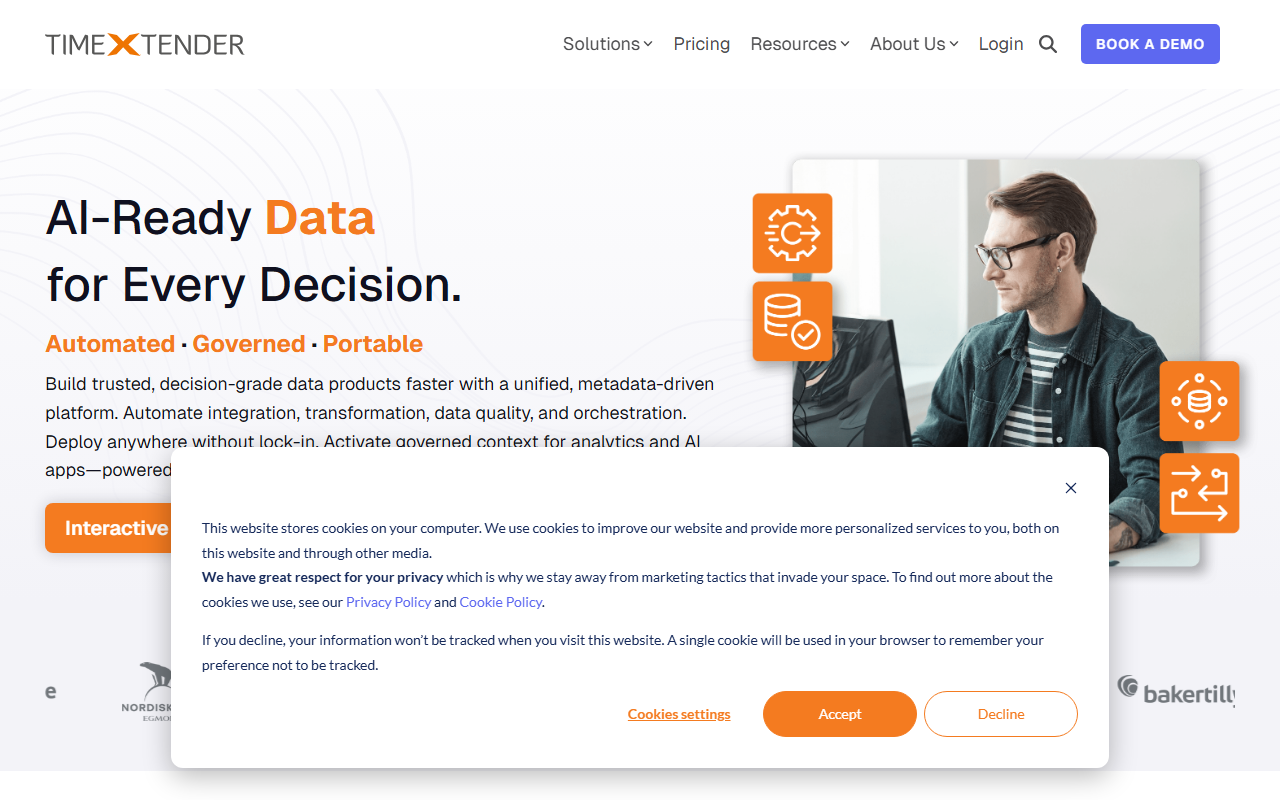
Upon visiting the TimeXtender website, I was greeted by a clean, modern interface that immediately highlights its core value proposition: AI-ready data built on metadata. The site offers an interactive tour, which I took to explore the dashboard. The onboarding flow is straightforward—users can book a demo or start with free online training. The platform promises to automate data integration, enrichment, quality, and orchestration under one unified metadata framework. I noticed the emphasis on deployment flexibility: Azure, Fabric, SQL Server, Snowflake, and AWS. The site uses real BARC survey statistics (e.g., 97% satisfaction) to build credibility. However, the tool is enterprise-focused, so individual users might find the initial learning curve steep.
Core Features and AI Capabilities
TimeXtender’s standout feature is its metadata-driven automation. Unlike traditional ETL tools that require manual scripting, it automates pipeline generation using a purpose-built metadata engine. The AI component is XPilot, powered by an MCP Server that provides a secure context layer for agentic workflows. When testing the free tier (via online training), I observed how XPilot accelerates ingestion and transformation by suggesting patterns based on existing metadata. The platform covers four key capabilities: Data Integration (ingest, prepare, deliver), Data Enrichment (unify and enrich), Data Quality (establish trust), and Orchestration (automate execution). It also offers a Community & Support portal, premium support tiers, and Xpert Services for expert-led projects. The technology relies on Microsoft and cloud platforms, but portability remains a core promise—design once, deploy anywhere without lock-in.
Pricing and Market Positioning
Pricing is not publicly listed on the website. TimeXtender appears to target larger organizations with dedicated data teams. For context, alternatives include dbt (open-core model for transformation) and Informatica (mature cloud data management). Unlike these, TimeXtender emphasizes a unified metadata and AI layer that couples automation with governance. The BARC survey scores suggest high user satisfaction. The tool is best suited for enterprises needing to standardize data operations across hybrid environments. It is less ideal for small teams or startups seeking a low-cost, lightweight solution. The absence of transparent pricing may frustrate some prospects, but the free online training provides a low-risk entry point.
Final Verdict and Recommendation
TimeXtender excels in providing a governed, automated data lifecycle for organizations that prioritize consistency and portability. Its strengths include metadata-driven automation, AI assistance via XPilot, and multi-cloud deployment without vendor lock-in. A notable limitation is the lack of public pricing, which can hinder evaluation. Additionally, the platform’s comprehensiveness may overwhelm users who only need simple data integration. I recommend TimeXtender for data leaders and engineering teams in mid-to-large enterprises who are ready to invest in a robust, AI-powered data platform. If you need a quick, free tool for basic tasks, look elsewhere. Visit TimeXtender at https://timextender.com/ to explore it yourself.






Comments