

First Impressions: A Creator-Centric Website Builder
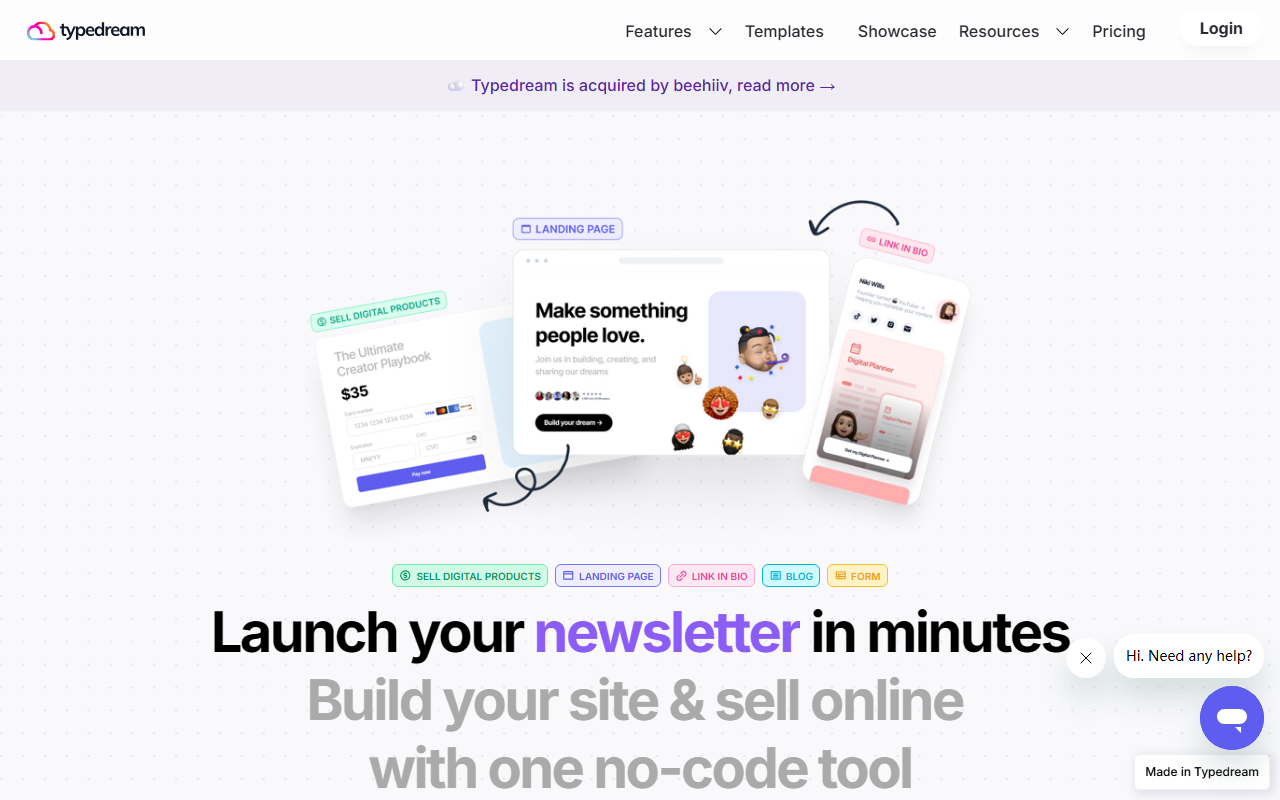
Upon visiting Typedream, I was greeted by a clean landing page that immediately announces its acquisition by beehiiv — a sign of strategic growth in the creator economy. The value proposition is clear: build a site and sell online with one no-code tool. Unlike generic site builders, Typedream targets creators selling digital products like e-books, courses, templates, and services. The interface emphasizes speed and simplicity, with a claim that you can launch a product in minutes. I noticed the prominent call-to-action "Get started for free" and a testimonial wall featuring creators like @chrisnotion and @Notion4Ts, highlighting conversion rates of 6-8% from custom landing pages — a compelling anecdote for anyone tired of Gumroad's boring templates.
Core Features: Building a Digital Storefront in Minutes
The dashboard is built around a block-based editor that uses slash commands — type "/" to add elements. This Notion-like approach makes it easy to drag and drop widgets, add videos, and design without coding or design skills. Key features include a product showcase with payment integration (accepting payments for services, freebies, or digital downloads), email signup forms with analytics, and a link-in-bio page that outperforms typical social media link tools. During my test of the free tier, I found the template library extensive, with categories for landing pages, blogs, and courses. The editor responded quickly, and I could publish a simple landing page in under ten minutes. The tool also claims SEO friendliness, though I did not fully test search rankings.
Market Position and Pricing
Typedream competes with tools like Carrd, Linktree, and Gumroad, but focuses on being an all-in-one solution: site builder + payment gateway + email capture. Unlike Carrd’s lightweight one-pagers or Linktree’s link-only approach, Typedream enables full product selling and audience ownership. The company has over 135,000 websites created and 800+ products sold according to their site, indicating moderate traction. Pricing is not publicly listed on the website — only a "Get started for free" option is visible, with a "Pricing" link in the footer. Based on typical SaaS models, I expect a freemium tier with paid upgrades for custom domains, more products, or advanced analytics. However, the lack of transparent pricing is a limitation for quick decision-making.
Verdict: Should You Use Typedream?
Typedream’s core strength is its creator-first design and rapid setup. The integration of sales, email capture, and beautiful templates removes the need for multiple tools. I especially liked the social proof from users claiming higher conversion rates compared to Gumroad. However, limitations exist: it may not suit complex e-commerce needs (no inventory management), and the recent acquisition by beehiiv might shift focus toward newsletter integration over standalone site building. Also, advanced customization is limited compared to Webflow. I recommend Typedream for solo creators, freelancers, and small businesses that want a quick, attractive digital product storefront. If you need heavy customization or large inventories, look elsewhere. Visit Typedream at https://typedream.com/ to explore it yourself.


Comments