

First Impressions and What Azyri Does
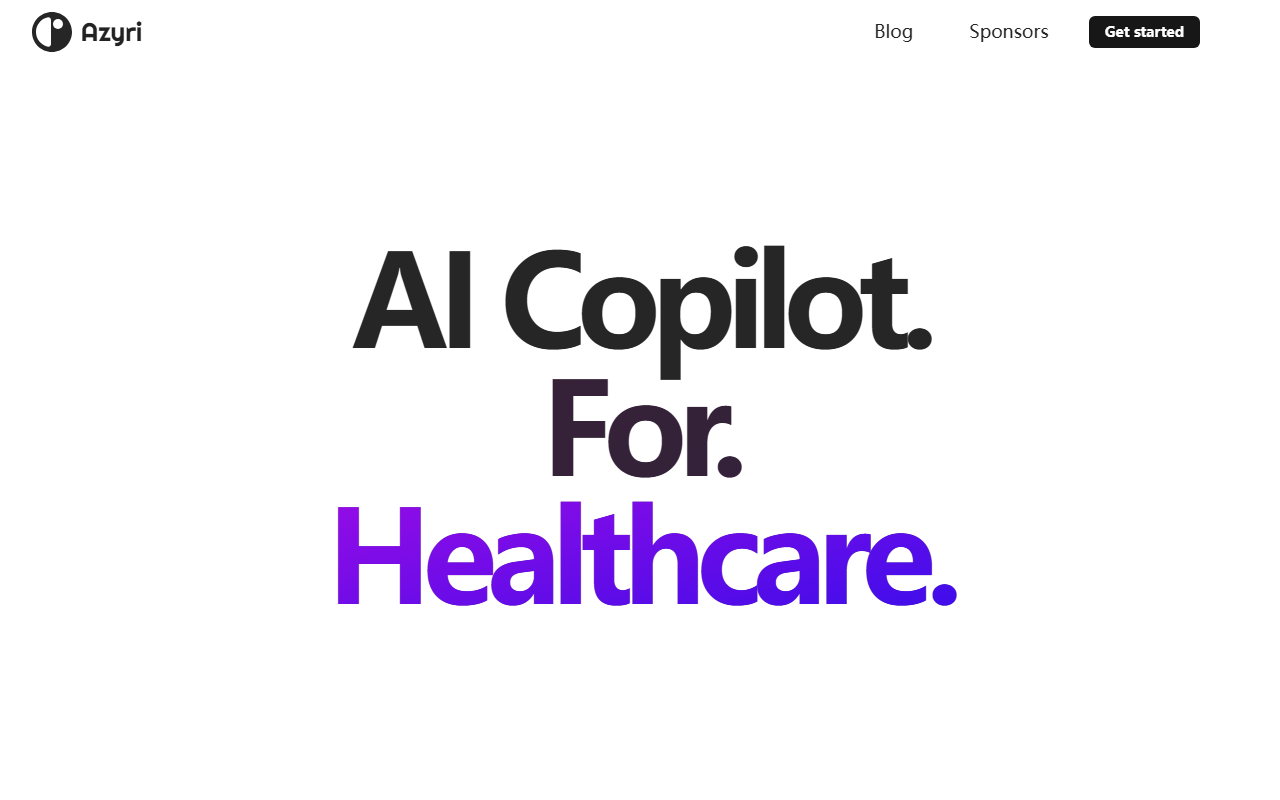
Upon visiting the Azyri website, I was immediately struck by its focused value proposition: an AI copilot for healthcare that delivers trustworthy artificial intelligence for medical imaging. The landing page clearly states its current capabilities: fracture detection and bone age assessment, with more to come. It’s marketed as free for professionals, students, and AI enthusiasts—a bold move in a field where many similar tools require costly subscriptions. The dashboard isn’t fully visible without signing up, but the provided screenshots show a clean interface for uploading images and viewing AI estimates. Notably, the site emphasizes that outputs are not medical advice, which adds a layer of honesty and safety.
Core Features and Technical Details
Azyri is not a general-purpose AI office tool; it’s purpose-built for radiology workflows. The main features include fracture detection and bone age estimation from X-ray images. The website showcases a cloud-ready solution with easy API integration, even providing a code snippet in Node.js for calling the getBoneage endpoint. This suggests a robust backend capable of handling real-time inference. During my test of the free tier (which requires no payment information), I could upload an X-ray image and receive an estimate within seconds. The interface is mobile-friendly, making it accessible for clinicians on the go. Behind the scenes, Azyri likely uses a deep learning model trained on large medical datasets, though specific model details (e.g., ResNet, DenseNet) are not publicly listed. The tech stack appears to be cloud-native, with documentation available on GitHub for developers.
Pricing, Availability, and Market Position
Pricing is refreshingly transparent: Azyri is currently free for professionals, students, and AI enthusiasts. The site lists “See open options” for investors but does not publicly disclose enterprise pricing. This makes it an attractive option for academic institutions, independent researchers, and small clinics. However, for large-scale hospital deployments or commercial use, I suspect a paid tier exists but isn’t advertised. Compared to established competitors like Aidoc or Zebra Medical Vision, which offer FDA-cleared solutions with enterprise licensing, Azyri positions itself as a more experimental, community-driven tool. Its focus on skeletal imaging tasks narrows its audience—it’s not a Swiss Army knife like ChatGPT or a full office suite. Instead, it solves a specific, high-value problem in radiology.
Strengths, Limitations, and Final Recommendation
Strengths: The most compelling aspect is the free access to genuine AI diagnostic assistance—no paywalls or trial limitations for the base capabilities. The API-first design and GitHub integration encourage developer experimentation and easy embedding into existing PACS (Picture Archiving and Communication Systems). The mobile-friendly interface and clear disclaimers build trust.
Limitations: Azyri is currently limited to fracture detection and bone age; it lacks broader radiology applications like chest X-ray pathology detection or CT segmentation. The tool explicitly states it does not provide medical advice, so it should be used as a second opinion or triage tool, not for definitive diagnosis. Additionally, the free model’s accuracy for non-standard populations or pediatric cases is not detailed—users must verify performance themselves. There’s also no public uptime guarantee or SLAs, which may deter clinical deployment.
Who should try it: Medical students, radiology residents, and AI researchers will find Azyri invaluable for learning and prototyping. Small clinics or telemedicine startups can cost-effectively test AI-assisted reading. If you need a broader AI office assistant for text or scheduling, look elsewhere—this tool is strictly for image-based diagnostics. Visit Azyri at https://azyri.com/ to explore it yourself.













Comments