

First Impressions and Onboarding
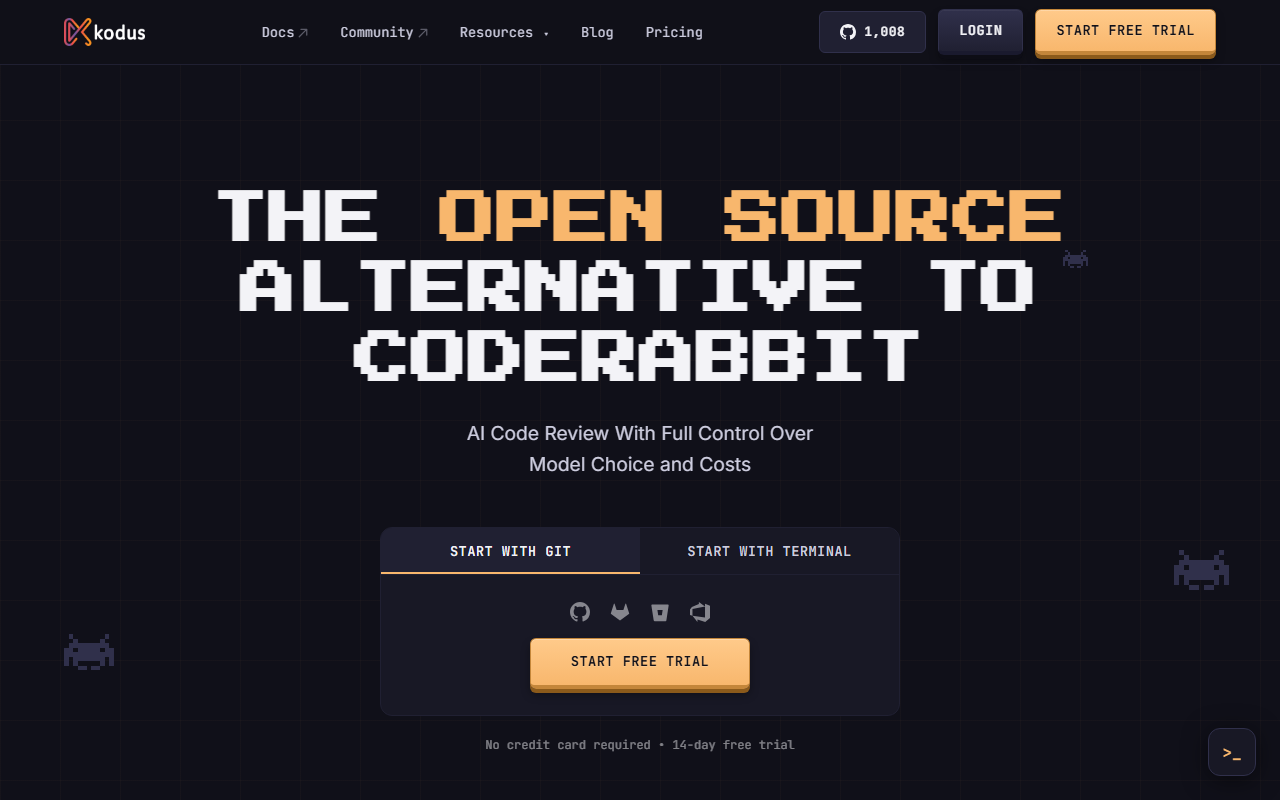
Upon visiting the Kodus website, I was immediately struck by its minimalist, developer-focused design. The homepage leads with a bold claim: it's the open-source alternative to CodeRabbit. The call-to-action is a terminal command: curl -fsSL https://review-skill.com/install | bash — a refreshing twist for engineers who prefer the command line over form sign-ups. There's also a "Start with Git" option. After clicking "Start Free Trial," I was prompted to connect a Git provider (GitHub, GitLab, or Bitbucket) without needing a credit card. The 14-day free trial includes the full feature set. The dashboard, once I authorized access, showed a simple repository list and a toggle to enable "Kody" — the AI reviewer — on selected repos. Right away, I created a test pull request in a sample repo. Within seconds, Kody posted a comment with code suggestions, highlighting a potential null reference and a style inconsistency. The response was relevant and concise, not overly verbose.
Core Features and Technical Depth
Kodus positions itself as "model agnostic" — you can bring your own LLM (OpenAI, Anthropic, Google, or any OpenAI-compatible endpoint) and pay zero markup. This is a major differentiator from competing tools that bundle model costs with a subscription fee. The platform also boasts a "zero markup" pricing model, meaning you only pay for the AI compute you use, plus a small platform fee. However, the exact pricing tiers beyond the free trial are not publicly listed on the website; you must contact sales or see the ROI calculator, which estimates a 20x return based on 500 PRs per month and 50 developers. The configuration depth is impressive: you can define custom review rules in plain language, sync existing rules from tools like Cursor, Copilot, or Windsurf, and connect external context via Model Context Protocol (MCP) servers (Jira, Notion, Linear). The technical debt tracking feature automatically converts unresolved suggestions into issues, and the "Cockpit" dashboard provides engineering metrics like deploy frequency and cycle time. On the security front, Kodus claims source code is never stored and never used for training, with SOC 2 compliance and self-hosted runners available for enterprise customers. I tested the rule syncing by importing a few rules from a local Copilot configuration file; the sync was seamless and the rules were applied to the next review.
Market Position and Alternatives
Kodus's primary competitor is CodeRabbit, which also offers AI-driven code review but is a closed-source SaaS product. CodeRabbit integrates directly with GitHub and offers a free tier but limits model selection. Another alternative is CodeClimate, which focuses on static analysis and code quality metrics rather than PR review. Kodus's open-source nature and BYOM (Bring Your Own Model) approach set it apart, especially for teams that need to control costs or adhere to strict data governance policies. The tool is best suited for engineering teams that already use AI coding assistants and want a review layer that aligns with their existing workflows. It's less ideal for individual developers or very small teams that may prefer a fully managed solution with fixed pricing. Notable community indicators: several large Brazilian tech groups (QuintoAndar, Doji, Lerian) are showcased as users, which suggests real-world traction in the Latin American market.
Strengths and Limitations
A clear strength is the flexibility: you can choose any AI model, set custom rules, and sync with your existing toolchain. The zero-markup approach to model costs is transparent and can lead to significant savings at scale. The generous free tier (14 days, no credit card) lets you fully evaluate the tool. The self-hosted runner option addresses enterprise privacy concerns. On the downside, the lack of publicly listed paid plan pricing may frustrate users who want to budget upfront. Additionally, while Kody's reviews are accurate, they can occasionally miss context that a senior human reviewer would catch — the tool itself acknowledges this by saying it's not meant to replace human review. The interface, while clean, feels a bit cluttered with terminal-themed aesthetics (e.g., "DEV_MODULE_V2" labels) that might not appeal to all team members. Finally, the claim "You'll hate us if you want a poem in every pull request" is a humorous reminder that this tool is purely functional — don't expect creative feedback.
Who should try it: Engineering teams that want open-source, flexible, and cost-effective AI code review without vendor lock-in. Enterprise teams with strict compliance needs will appreciate the self-hosting option. Who should look elsewhere: Solo developers or very small teams that prefer a simple, all-inclusive subscription with no setup overhead.
Visit Kodus at https://kodus.io/ to explore it yourself.













Comments