

First Impressions and Onboarding
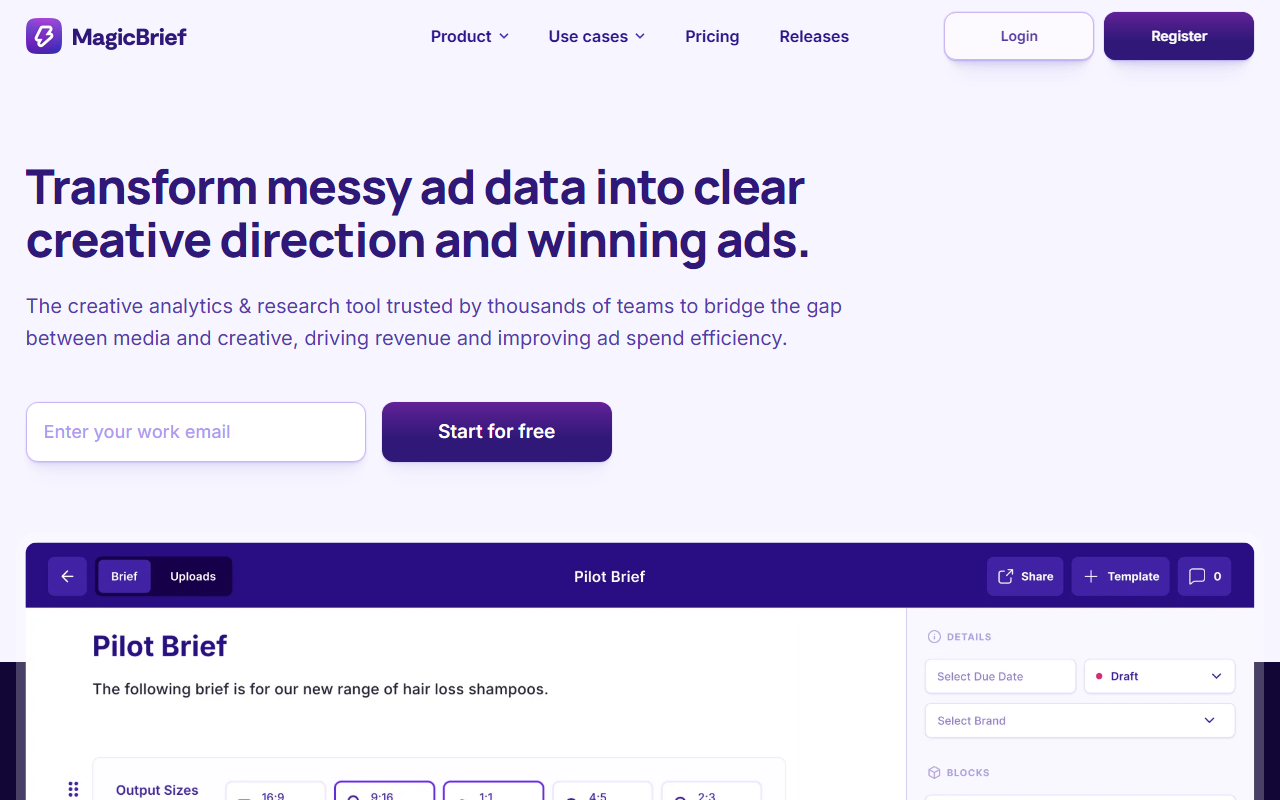
Upon visiting MagicBrief.com, I was greeted by a clean, modern interface that immediately positioned the tool as a bridge between data and creativity. The homepage features a bold header: "Transform messy ad data into clear creative direction and winning ads." There is no public self-serve signup; instead, the site funnels visitors to a "Book Demo" or "Get Started" form. This suggests a sales-led approach, typical of enterprise SaaS tools aimed at serious advertisers. I submitted the demo request and received an automated confirmation within minutes, with a promise of a 1:1 tour of reports. The onboarding process, according to the site, includes a live interactive session and aims to get teams "live in under 1 hour." While I haven't completed a full onboarding, the emphasis on Slack integration, dedicated account managers, and bite-sized video training indicates a high-touch, supportive experience. The website also claims that "5,000 leading brands and agencies" trust MagicBrief, which adds social proof. For a tool that handles sensitive ad spend data, this focus on guided setup makes sense.
Core Features: Analytics, Research, and Briefs
MagicBrief’s value proposition rests on three pillars: Creative Analytics, Creative Research, and Creative Briefs. I was able to explore these through the product tour described on the website. The analytics module claims to go beyond standard metrics by identifying which creative elements (e.g., format, creator, hook) actually drive performance. It integrates with Meta, TikTok, YouTube, and LinkedIn, syncing ad data into a single dashboard. The tool also offers AI-powered recommendations, which the site describes as an "always-on performance radar." During my exploration of the demo materials, I noticed a strong emphasis on automated Slack reporting—a feature that would appeal to remote teams wanting real-time updates without logging into a separate platform.The Creative Research feature centers on what MagicBrief calls "the world’s best ad search engine," with over 12 million ads indexed. Users can track competitors in real time and see which themes, hooks, and copy are working. This eliminates the need for expensive creative testing by letting teams learn from proven success. I was particularly impressed by the AI competitor summaries, which automatically distill competitor activity into actionable insights. For a media buyer juggling multiple brands, this alone could save hours of manual analysis each week.The Creative Briefs module unifies performance data, creative references, and specific recommendations into a single space. It includes modular brief templates and AI-script writing, which generates optimised scripts informed by what’s already working. This addresses the common pain point of misalignment between media buyers and creative teams—a problem I have witnessed in many organizations. By creating "visual reports that everyone understands," MagicBrief aims to accelerate approval cycles and reduce back-and-forth.
Who Is MagicBrief For? And Where It Falls Short
MagicBrief is clearly designed for medium-to-large teams managing significant ad budgets—the "8-figure brands" and "world class teams" it mentions. If you are a solo entrepreneur running small campaigns, the lack of a free tier or transparent pricing (nowhere on the site are dollar amounts listed) makes it a hard sell. Competitors like Motion offer simpler analytics, and native platform reports (Facebook Ads Manager, TikTok Ads Manager) provide basic insights for free. However, no competitor I know offers the combination of creative element-level analytics, competitor ad search, and integrated brief creation. MagicBrief’s main strength is unifying the entire creative strategy cycle from analysis to brief. Its limitation is that it requires a demo to even see pricing—likely enterprise-level—and seems heavily focused on paid social (Meta, TikTok, YouTube, LinkedIn). If your team runs programmatic or search ads, you may find the integration list too narrow. Additionally, the tool’s reliance on sales-led onboarding means you cannot simply sign up and start experimenting; this may frustrate self-starters.
Final Thoughts
After digging into MagicBrief’s offering, I believe it solves a genuine, painful problem: the disconnect between media performance data and creative decision-making. The AI-powered insights, competitor tracking, and streamlined briefs could genuinely improve ad spend efficiency for teams already spending six figures or more per month. I recommend booking a demo if you are a marketing manager, creative director, or media buyer at a brand or agency that regularly runs video ads on Meta, TikTok, or YouTube. For smaller teams or those just starting with paid ads, start with platform-native tools before considering an investment like this. MagicBrief is worth a look if you are serious about scaling ad performance without wasting budget on guesswork. Visit MagicBrief at https://magicbrief.com/ to explore it yourself.













Comments