

First Impressions and Onboarding
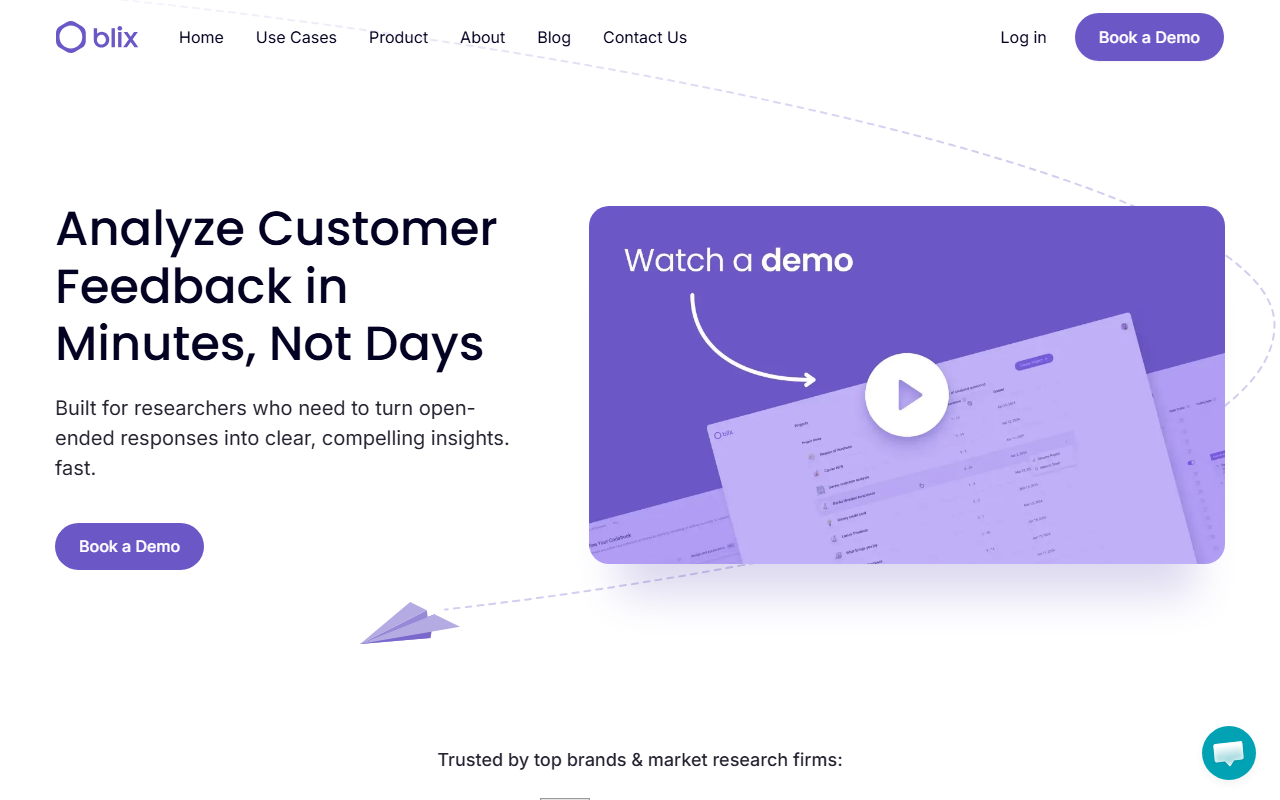
Upon visiting the Blix website, the interface is clean and professional, immediately conveying its purpose: turning messy open-end responses into structured data. The homepage features a prominent “Book a Demo” button and a free trial option, though the latter requires filling out a form—no instant sign-up. For a tool targeting researchers, the onboarding focus on demos rather than self-service might feel restrictive for those wanting to test immediately. The site showcases logos of trusted brands, which adds credibility, but details about specific models or underlying AI technology are sparse. Blix emphasizes its generative AI without naming which model (likely GPT-based, but unconfirmed).
Core Features and Workflow
Blix centers on three main capabilities: automated topic discovery, AI-powered coding, and automated reports and summaries. The workflow is straightforward: import data (Excel, CSV, SPSS), let the AI analyze, and receive a coded dataset with visual dashboards. When testing the workflow conceptually, the drag-and-drop import and multi-language support (out-of-the-box for global feedback) stand out. A key advantage is that the AI does not use your data for model training, addressing privacy concerns—a major plus for enterprise users. However, the actual accuracy and flexibility of the coding process are only demonstrated via demos and testimonials. The site claims “professional-grade accuracy” that can match manual coding, but independent benchmarks are missing. Blix also handles NPS and CSAT comments, making it useful for CX teams.
Pricing and Market Position
Pricing is not publicly listed on the website. Users must book a demo to get a quote, which suggests a custom enterprise pricing model. This is a significant limitation for small teams or individual researchers evaluating cost. Competitors like Qualtrics Text IQ or MonkeyLearn offer transparent tiers or free plans. Blix positions itself as a specialist in survey open ends, focusing on market research agencies and consumer insight teams. Its strength lies in speed and ease—turning weeks of manual coding into minutes. But without clear pricing, it’s hard to compare value. The tool likely fits medium-to-large organizations with dedicated research budgets. Alternatives include traditional coding platforms (e.g., NVivo) or general-purpose AI analysis tools.
Verdict and Recommendations
Blix excels at automating a tedious process. Its ability to handle multiple languages, protect data privacy, and generate structured outputs is impressive from what the website describes. The biggest limitation is the lack of self-service trial and transparent pricing, which may deter smaller teams. For market research agencies, CX teams, and insight professionals who frequently deal with open-ended responses and need fast, reliable coding, Blix is worth a demo. Others—such as individual researchers or startups with tight budgets—should look for more accessible alternatives first. In summary, Blix delivers on its promise to transform feedback into insights, but only if you’re ready to engage with their sales team. Visit Blix at https://blix.ai/ to explore it yourself.







Comments