

First Impressions and Onboarding
Upon visiting the site, I was greeted by a clean, modern landing page promoting the new Play Tables beta. The login button and a prominent 'Start Free Trial' call-to-action made it easy to dive in. I signed up for the free trial and found the onboarding straightforward. The dashboard immediately presents four main tabs: Data, Outbound, AI Agents, and Settings. The interface is intuitive, with a left sidebar for navigation and a central workspace. Within minutes, I created my first data enrichment job by connecting to a sample list. I was impressed by the transparency of the token-based system: during the enrichment run, I saw exactly how many credits each lookup consumed.
What GetSales.io Offers: Enrichment, Outbound, and AI Agents
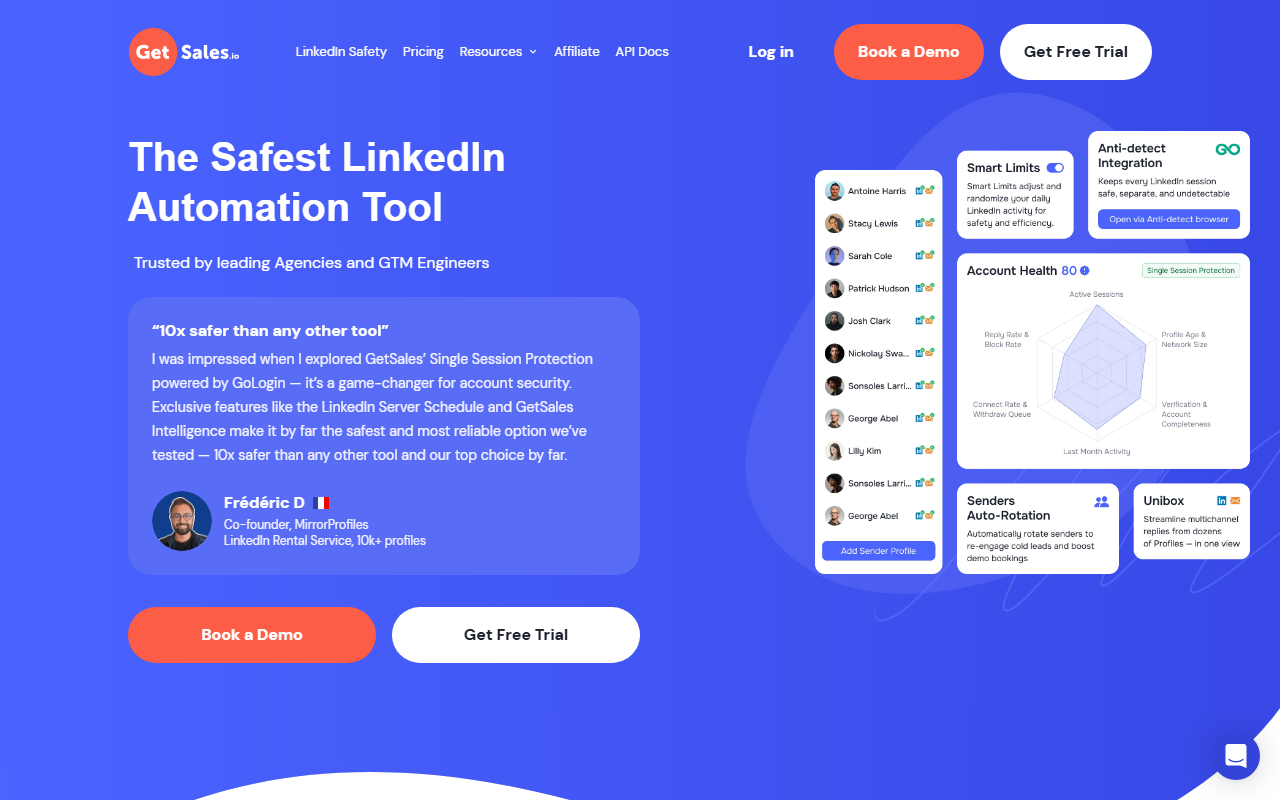
GetSales.io is not just another sales automation tool. It aims to be a complete GTM operating system. At its core, it solves the problem of stitching together separate data providers, outreach platforms, and AI assistants. The enrichment module supports over 100 data providers through a waterfall approach — if one provider doesn't have a data point, the next is queried automatically. I tested this with a small batch of leads; the system retrieved emails at $0.008 each and phone numbers at $0.08, with no extra fees for using multiple providers. The outbound engine is equally robust. You can build multichannel sequences that include email, LinkedIn DMs, phone calls, and more. The Unified Inbox (Unibox) pulls all replies into one view, eliminating the need to switch between accounts. What sets GetSales.apart from competitors is its native AI agent capability. I configured a 'Qualifier' agent to score incoming leads and a 'BDR' agent to personalize outreach. The agent uses enrichment data and connects to via Claude through an MCP interface, which runs directly from the platform. During my trial, the agents processed leads and crafted personalized messages without additional tools.
Pricing, Strengths, and Limitations
GetSales.io uses a token-based pricing model. While no fixed monthly subscription tiers are publicly listed, the per-data-point costs are clear: $0.008 per email found and $0.08 per phone found. There are no feature gates — all capabilities, including API access, webhooks, and AI agents, are available on any plan from day one. This is a significant strength compared to platforms like SmartLead or Apollo.io, which often hide advanced features behind higher tiers. Another strength is the MCP integration, allowing power users to control the entire system with Claude. However, there are limitations. The token system can become expensive for high-volume outreach if not monitored carefully. Also, the reliance on third-party data providers means some enrichment results may be incomplete — I encountered a few missing emails even after waterfall queries. Additionally, the platform is clearly designed for teams, not solo users; the learning curve for setting up AI agents is non-trivial.
Who Should Use GetSales.io?
GetSales.io is best suited for GTM teams, SDRs, and RevOps professionals who need a unified platform for lead generation, enrichment, and multichannel outreach. It shines for organizations that want to avoid stitching together multiple point solutions and prefer a pay-as-you-go data model. Small businesses with low outbound volume may find the per-contact costs add up, and the agent setup might be overkill for simple email campaigns. If you value transparency, no feature gates, and the ability to use AI agents out-of-the-box, this tool is worth a trial. Unlike Apollo.io, which bundles enrichment with a fixed monthly fee, GetSales offers more flexibility for custom workflows. Visit GetSales.io at https://getsales.io/ to explore it yourself.







Comments