

First Impressions and Onboarding
Upon visiting SleepSpace.com, the site immediately emphasizes depth of sleep over mere tracking. The homepage features a clean layout with a prominent call to action for a 7-day free trial. I appreciated that the interface clearly states “Trusted by 100,000+ sleepers” and “Clinically proven,” which adds instant credibility. The onboarding flow directs users to download the app and take a 5-minute “Sleep Animal” quiz to determine their chronotype. I tested the quiz through the mobile app, and it was quick—asking about energy patterns and bedtimes. The result assigned me a “Bear” type with tailored suggestions for wind-down routines.
How SleepSpace Works: Science, Tracking, and Smart Alarm
SleepSpace stands out by combining multiple evidence-based features. Its core technology uses the phone’s sensors (accelerometer and microphone) to detect movement and sound—no wearable required. During my test, the smart sound machine played pink noise that adjusted adaptively based on my sleep stage. I woke up feeling less groggy thanks to the smart alarm that detected light sleep periods. The app also offers 50+ meditations, stories, and a snore tracker. What impressed me most was the patented delta wave stimulation: pink noise frequencies shift in real-time to block disturbances and promote deep sleep. The approach is backed by CBT-I techniques, validated with EEG and HRV biomarkers, and even supported by a published NIH-funded trial.
The AI Coach: Dr. Snooze and Personalization
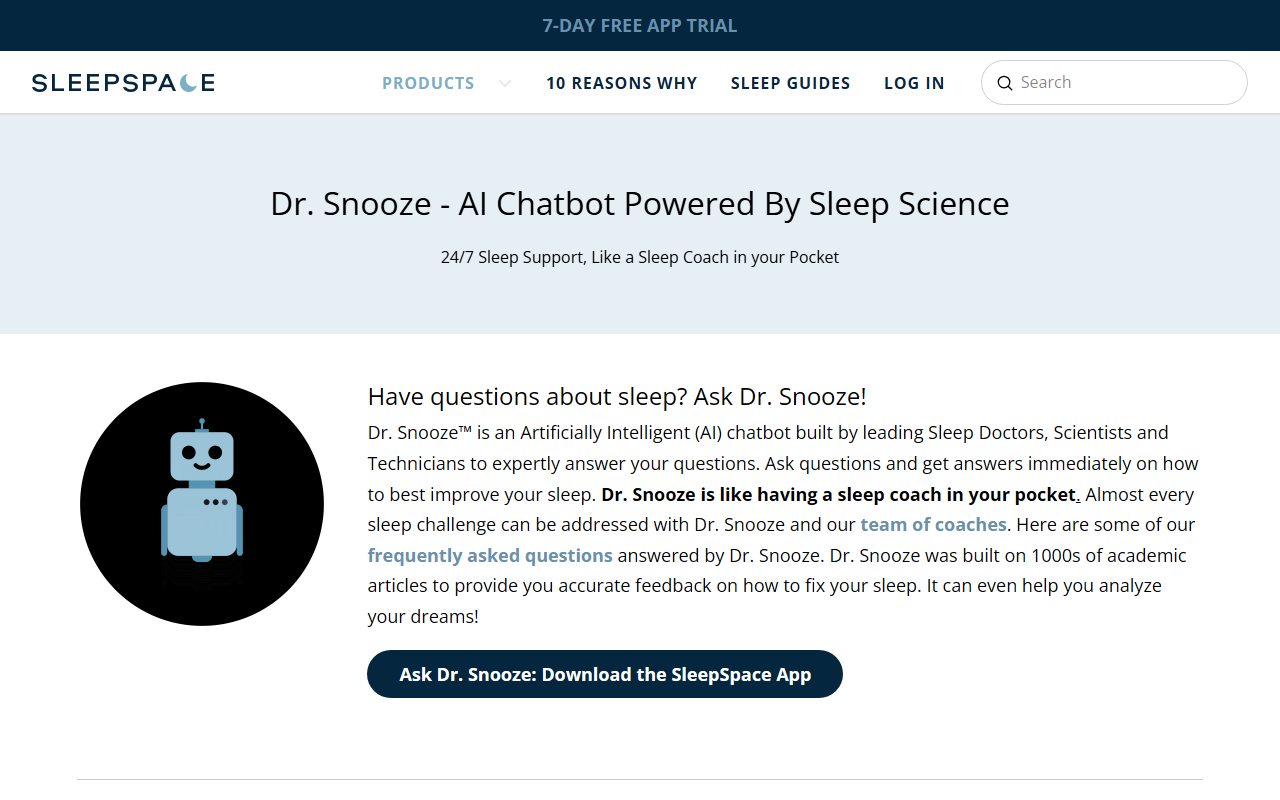
A key differentiator is Dr. Snooze, an AI-driven sleep coach available 24/7. I tested it by asking about nightmare frequency, and it provided a detailed CBT-I strategy within seconds. The responses felt more specific than a generic chatbot—likely because the system is trained on sleep science literature. The app also integrates wearables like Apple Watch, Oura, and Whoop for users who want extra accuracy, but the core functionality works without them. Unlike competitors such as Calm or Headspace, which focus on general meditation, SleepSpace is laser-focused on sleep optimization through automation and science. The AI coach is not just a gimmick; it can answer dream analysis questions and adjust your nightly program based on logged data.
Strengths, Limitations, and Who Should Use It
The greatest strengths are the clinically validated framework, the no-wearable tracking, and the intelligent adaptive sounds. The 7-day free trial is generous and gives full access. However, pricing is not publicly listed beyond the trial—you must start it to see subscription costs, which is a transparency issue. Another limitation: the smart alarm requires the app to be open and phone on the bedside table, which might drain battery. The app is best suited for people with chronic sleep issues who want a non-pharmaceutical solution grounded in CBT-I. If you already use a wearable and prefer passive tracking, SleepSpace still adds value through its sound modulation. For those seeking a simple meditation app, alternatives like Calm might be more straightforward. Overall, SleepSpace is a compelling choice for serious sleep optimization.
Visit SleepSpace at https://sleepspace.com/ to explore it yourself.





Comments