

First Impressions and Onboarding
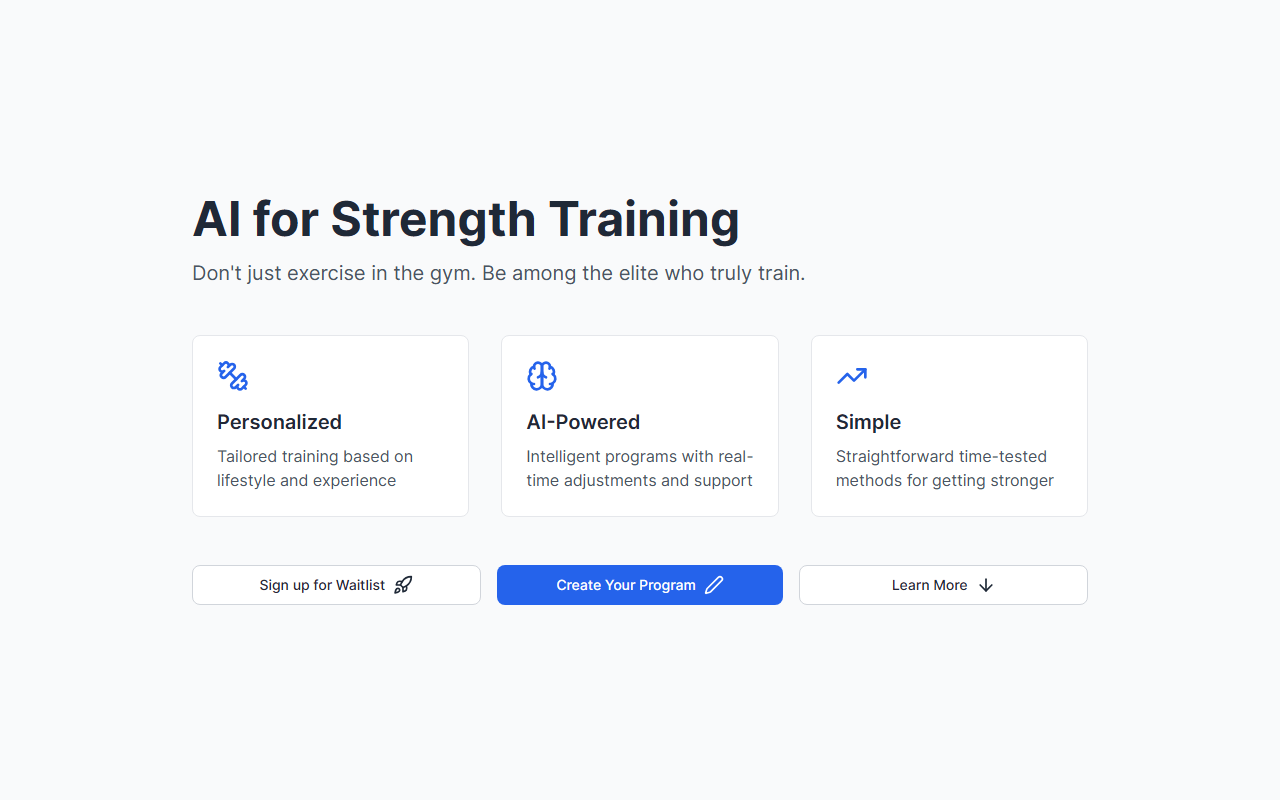
Upon visiting the Zenfit website at https://zenfit-v1.vercel.app/, I was greeted by a clean, minimalist interface that immediately communicates its focus: "Practical Training: AI for Strength Training." The hero section contrasts "exercising" versus "training," positioning Zenfit as a tool for those serious about progress. The design is straightforward, with a "Sign up for Waitlist" call-to-action dominating the top. There is no free trial or demo available because the product is not yet launched. The only interactive element is a waitlist form, which suggests the team is still building the platform. The site also offers a "Learn More" button that reveals the company's philosophy and solutions.
The "Practical Training Story" section explains the philosophy: exercising is common, but effective training requires personalization, expertise, feedback, and support. Zenfit aims to make strength training accessible via AI. The solutions listed are promising: create intelligent programs in under a minute, real-time adjustments based on progress, an affordable alternative to personal trainers, and a simple, uncluttered experience. The roadmap includes personalized intelligent training programs, real-time progress tracking and adjustments, 24/7 AI coaching support, and a mobile application. All of this sounds compelling, but without a working product, my assessment is based on stated intentions rather than hands-on experience.
How Zenfit Works: AI-Powered Strength Training
Zenfit claims to leverage AI to deliver personalized training programs. Based on the website copy, it will tailor training based on a user's lifestyle and experience, then provide real-time adaptations as the user progresses. This is not unlike what some advanced fitness apps attempt, but Zenfit's emphasis is on strength training specifically—not general fitness or cardio. The AI component likely analyzes user feedback (e.g., perceived exertion, recovery, weight lifted) to adjust volume, intensity, and exercise selection automatically.
The company states that it provides an affordable alternative to a personal trainer without human intervention. That suggests the AI will be the primary coach, handling everything from program design to motivational nudging. The roadmap includes 24/7 AI coaching support, which could be a chatbot or voice interface. The mobile application is in development. For now, the only interaction possible is joining a waitlist—no API, no integrations, no sample output. As a reviewer, I am left to infer from the marketing copy. It would be beneficial if the team released a demo or beta version to allow testing. I hope to see concrete examples of how the AI creates programs and adjusts them when the tool becomes available.
Pricing and Market Positioning
Pricing is not publicly listed on the website. The waitlist suggests a paid subscription model, but there is no mention of tiers, free trial, or costs. This is a limitation for anyone evaluating the tool now. In terms of competition, Zenfit enters a space with established players like Fitbod and Jefit, which offer AI-driven workout plans. Fitbod focuses on strength and muscle growth with real-time adjustments, while Jefit has a large exercise library and community features. Unlike both, Zenfit positions itself as a pure strength training platform with an emphasis on simplicity and philosophy—more like a coach than a database. If it delivers on its promise of a clean, distraction-free experience with intelligent coaching, it could appeal to serious lifters who find other apps cluttered.
Who is this for? Dedicated gym-goers who want personalized programming without the cost of a personal trainer. Also for intermediate lifters who understand the difference between exercise and training and need adaptive feedback. Who should look elsewhere? Those looking for a comprehensive fitness tracking app with diet, cardio, and social features. Zenfit seems laser-focused on strength training only. Also, anyone needing a product today should wait—the tool is not yet available. The team's background isn't mentioned, so authority is unclear. The website is a single-page landing on Vercel, indicating a small startup or solo developer.
Final Verdict: Strengths and Limitations
Zenfit's genuine strength is its clear philosophy and targeted approach. The idea of using AI to create truly personalized strength training programs, combined with real-time adjustments, addresses a real pain point—many apps generate generic routines that don't adapt to fatigue, travel, or injuries. The focus on simplicity is also commendable. However, the major limitation is that Zenfit is not yet functional. There is no way to test the AI's quality, the real-time adjustments, or the user interface. The waitlist-only state means it's an unproven concept. Furthermore, without pricing, it's impossible to evaluate its value proposition against alternatives.
I recommend that strength training enthusiasts sign up for the waitlist to get early access and stay updated on development. If Zenfit delivers on its promises, it could become a valuable tool for those who want a smart, affordable training coach. But as of now, it is purely speculative. I will revisit when a public version launches and provide a more detailed assessment of its actual performance. For immediate needs, consider established options like Fitbod or a human coach.
Visit Zenfit at https://zenfit-v1.vercel.app/ to explore it yourself.






Comments