

First Impressions: A Dashboard That Means Business
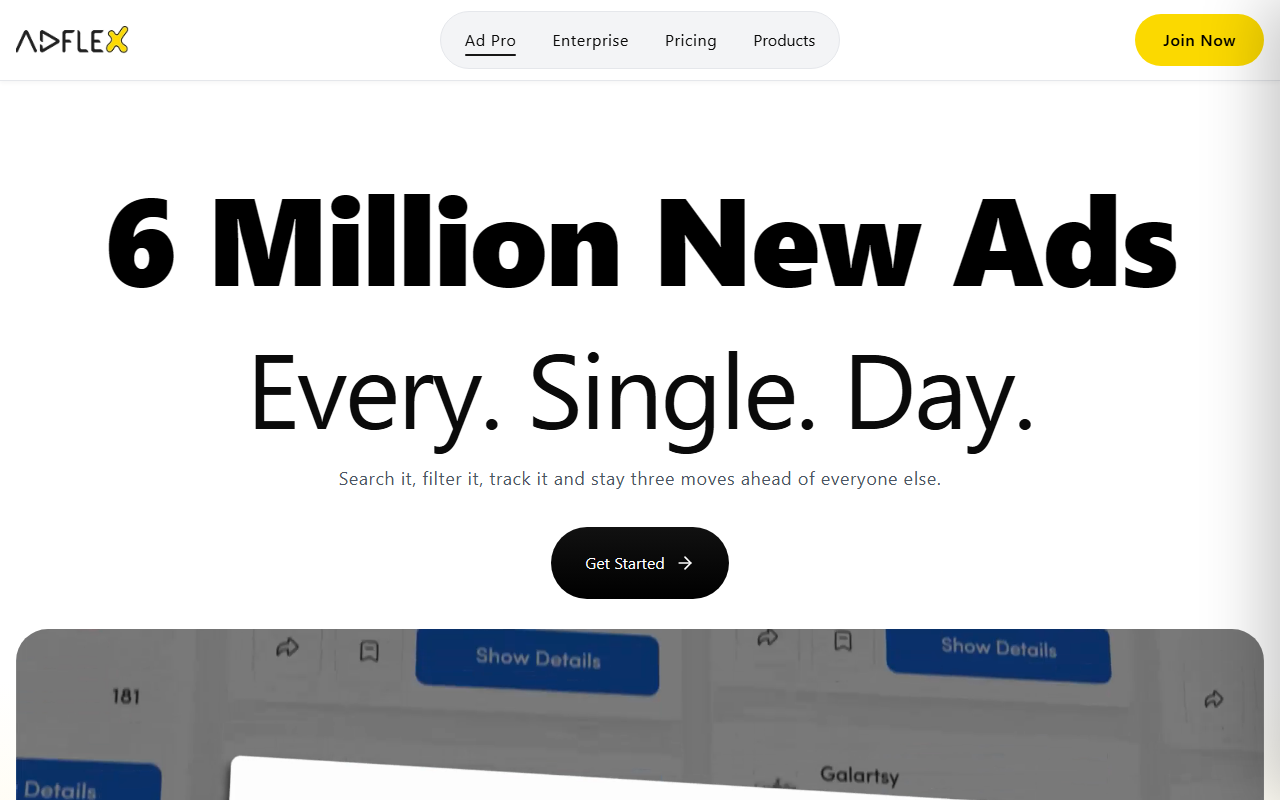
Upon visiting Adflex, the homepage wastes no time boasting its core value proposition: “6 Million New Ads Every Day.” The design is clean, with a search bar front and center that invites you to type in a domain or keyword. I tested the free tier by searching for a well-known e-commerce brand. Within seconds, Adflex returned ad creatives from Facebook, Instagram, and YouTube, each with estimated spend, impressions, and first-seen dates. The filtering system is robust—by platform, country, format, date range, and even device. The onboarding is frictionless; the free plan gave me unlimited Meta access and 2,000 credits to explore other platforms. I was able to bookmark a competitor’s video ad and set up a tracking alert without any tutorial. The interface feels built for both beginners and seasoned analysts, though power users will appreciate the “Mega Search” that queries all platforms simultaneously.
Core Features: Ad Library, Analytics, and E-Commerce Insights
Adflex’s main selling point is its vast ad library. The platform aggregates ads from Meta (Facebook and Instagram), YouTube, TikTok, Twitter/X, Pinterest, Reddit, Google Display, and native ad networks. I tested the “Analytics” module by entering a competitor’s domain; it showed a timeline of their ad history, estimated spend trends, and top-performing creatives. The “E-commerce” tab is a neat addition—it surfaces winning products being advertised across networks, complete with store URLs and sales counts. The tracking system lets you save ads, monitor competitors, and receive email alerts when they launch new campaigns. I found the data freshness impressive; newly launched ads appeared in searches within hours. However, the credit system is worth noting: each search or filter refresh consumes credits, and the free tier’s 2,000 credits can deplete quickly if you’re doing broad queries. The Enterprise plan includes API access, which is crucial for teams wanting to integrate ad intelligence into their own dashboards.
Pricing and Market Position
Adflex offers four tiers: Free (€0, unlimited Meta, 2K credits, 1 device), Pro (€99/month, 100K credits, 1 device), Team (€199/month, 250K credits, 5 devices), and Enterprise (€299/month, 500K credits, 10 devices, API). The Pro plan unlocks all platforms and advanced filters, while Team adds collaboration features. Compared to competitors like SpyFu or Semrush’s Ad History, Adflex focuses solely on ad creatives and omits keyword or SEO data. For pure ad intelligence, it’s more affordable than many enterprise tools—especially given the 50,000+ user base and a 4.9/5 rating. One limitation: the credit system can feel restrictive if you’re a heavy researcher; you may need to upgrade quickly. Also, the website states “6 million new ads daily” yet the analytics snippet shows only 6,781 total ads—likely a demo glitch or sample data, which undermines trust slightly. Still, the breadth of platforms and the speed of data ingestion are genuine strengths.
Final Verdict: Who Should Use Adflex?
Adflex is best suited for e-commerce marketers, social media managers, and competitive intelligence analysts who need a centralized ad spy tool. The free plan is generous enough for solo founders to test competitor strategies on Meta. Teams on a budget will find the Team plan a solid middle ground. However, if you require keyword research or SEO data, you’ll need a complementary tool. The credit system and occasional data inconsistencies are drawbacks, but the overall value—especially for the price—is impressive. I recommend starting with the free plan and upgrading to Pro when you need cross-platform access. Your competitors are probably already using it; you should too. Visit Adflex at https://adflex.io/ to explore it yourself.













Comments