

The Dawn of AI Workers
Two of the most influential figures in technology are placing parallel bets on a future where artificial intelligence doesn't just augment human labor—it replaces it entirely. According to reports from The New York Times and TechCrunch, Jeff Bezos's new industrial AI startup, Prometheus, has raised a staggering $12 billion at a $41 billion valuation. The company's stated goal: build an "artificial general engineer" capable of performing complex engineering tasks autonomously. Simultaneously, OpenAI is reportedly constructing a fully automated researcher, as covered by MIT Technology Review. Together, these developments mark a significant acceleration in the race toward AI that can perform high-level cognitive work independently, raising profound questions about the future of employment, innovation, and economic structure.
Prometheus: Building an Artificial General Engineer
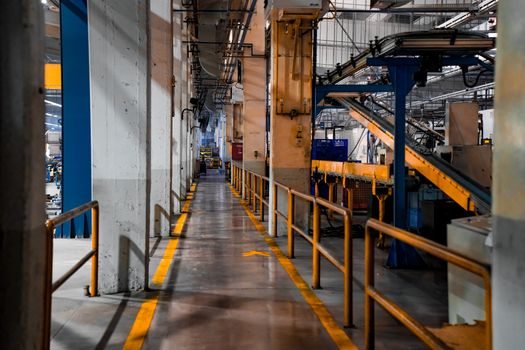
The Prometheus project draws on Bezos's long-standing fascination with automation and industrial efficiency. While details remain sparse—the company has not published a technical whitepaper—the core idea is to create an AI system that can design, simulate, and test engineering solutions without human intervention. The $12 billion funding round, one of the largest ever for an AI startup, signals investor confidence that such a system is technically feasible in the near term. The $41 billion valuation places Prometheus among the most valuable private AI companies, despite having no publicly demonstrated product. According to the TechCrunch report, Prometheus plans to target industries with high engineering overhead, such as aerospace, automotive, and energy. The name itself evokes the Greek titan who stole fire for humanity—a telling metaphor for Bezos's ambition to deliver a new kind of creative power. However, critics note that creating an "artificial general engineer" requires solving fundamental challenges in reasoning, tool use, and physical world interaction that have eluded AI researchers for decades.
OpenAI's Automated Researcher
OpenAI's parallel effort, first reported by MIT Technology Review, aims to build a system that can conduct scientific research autonomously—from formulating hypotheses to running experiments to writing papers. While OpenAI has not disclosed funding specifics for this project, the company's overall valuation topped $300 billion after its latest round, according to earlier reports. The automated researcher is expected to leverage a combination of large language models, code execution engines, and robotic lab interfaces. Early prototypes have reportedly shown promise in fields like drug discovery and materials science, where the system can iterate through thousands of potential compounds faster than a human team. OpenAI CEO Sam Altman has previously stated that the company's ultimate goal is to create "superintelligence that can solve the world's hardest problems." The automated researcher represents a concrete step toward that vision, but it also raises concerns about job displacement among scientific professionals. According to an MIT Technology Review analysis, the system could eventually replace entire research teams, accelerating scientific progress but potentially concentrating economic gains in the hands of a few corporations.
The Implications for Tech Labor
The simultaneous push by Prometheus and OpenAI toward AI workers—rather than AI assistants—marks a departure from the current paradigm of collaborative tools like GitHub Copilot or ChatGPT. These companies are explicitly aiming to replace, not augment, human expertise in fields that currently command high salaries and require years of training. If successful, the economic impact could be immense. Engineering and research salaries account for a significant portion of R&D costs across industries. A system that can perform the work of dozens of engineers for the price of compute time would reshape corporate balance sheets and potentially accelerate innovation cycles. However, the human cost is equally significant. Labor displacement in knowledge sectors has historically been slower than in manufacturing, but the advent of AI workers could change that. Policymakers are already grappling with the implications; the European Union's AI Act includes provisions for oversight of general-purpose AI systems, but it does not specifically address autonomous AI workers. China's recent intensification of tech enforcement, reported by the South China Morning Post, suggests regulators there are also wary of the concentration of AI power.
What's Next
Both Prometheus and OpenAI face formidable technical and regulatory hurdles. The "artificial general engineer" must integrate multiple subfields—natural language understanding, computer vision, simulation, physical robotics—into a coherent agent. No such system exists today, and many AI researchers remain skeptical that current approaches will scale. OpenAI's automated researcher, while more narrowly scoped, must overcome reproducibility and reliability challenges; an AI that generates plausible but incorrect results could misdirect research efforts at scale. The next 12 to 18 months will be critical. Prometheus is expected to demonstrate an early prototype in aerospace design by early 2027, according to people familiar with the company's roadmap. OpenAI has not released a timeline but is likely to publish a technical report on its automated researcher within the year. Investors are watching closely: if either company succeeds, the value of human expertise in STEM fields could be fundamentally revalued. For the tech community, the message is clear: the race to replace ourselves has officially begun.

Comments