
First Impressions and Onboarding Experience
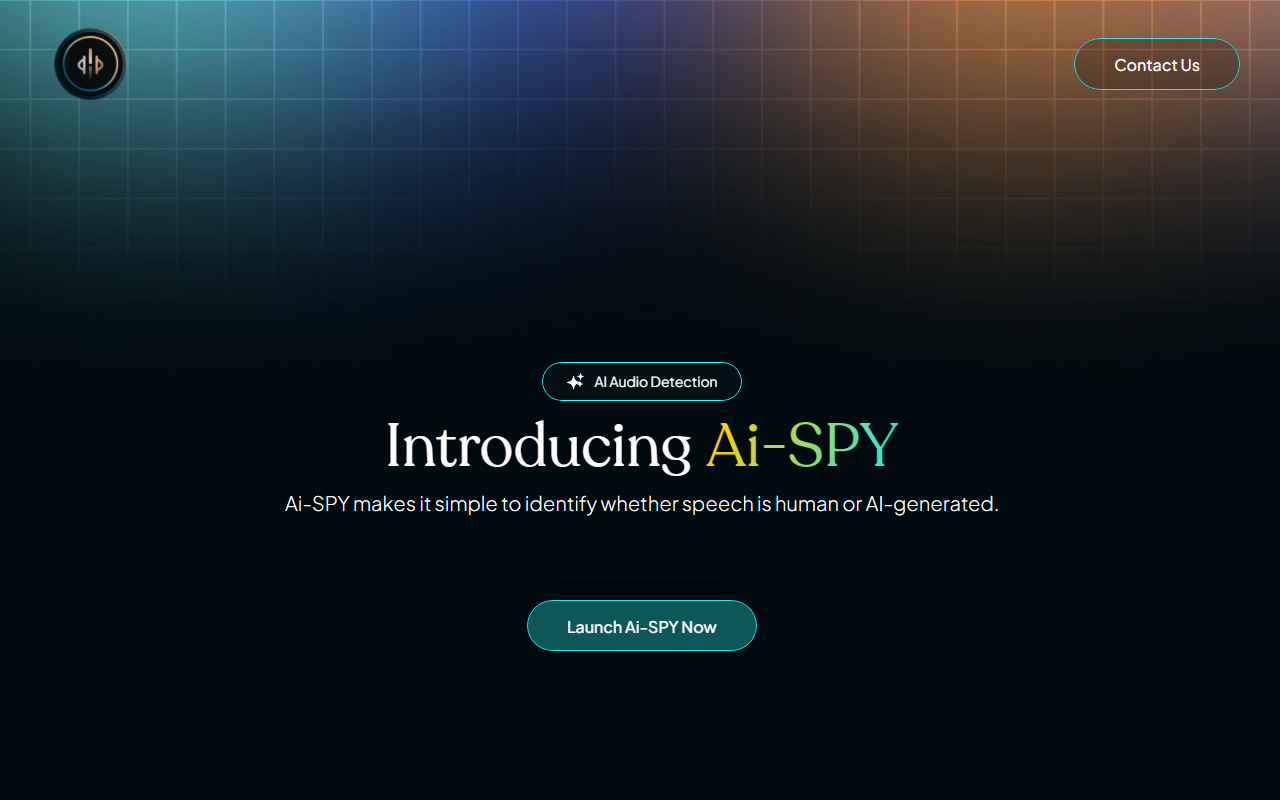
Upon visiting AI-Spy’s website, I was greeted with a clean, minimal interface that immediately focuses on its core promise: discovering if audio is human or AI-generated. The homepage presents a drag-and-drop area for uploading audio files, with a sample file, “Viralspeech.mp3” (500 kb, 35 seconds), already pre-loaded for a quick test. I uploaded a short WAV file of my own voice, and within seconds the analysis began. The dashboard provided an authenticity score and a word-level breakdown, though I found the exact scoring algorithm not explained in plain terms. The free tier allowed me to run a few tests without signing up, which was refreshing. However, the tool only accepts mp3 or wav files, and the file size appears capped at around 500 kb in the demo, which may feel restrictive for longer recordings. The onboarding flow is straightforward: you upload, you get results. No tutorials or guides are offered, but the tool is simple enough to figure out on the first try.
Technical Capabilities and Features
AI-Spy leverages what it calls “state-of-the-art technology” to detect AI-generated speech. The key features listed on the site include detailed reports with authenticity scores and word-level analysis, SOC2 certification for security, API access for workflow integration, and expert human insights for high-stakes cases. I found the word-level analysis particularly interesting: it highlights specific phrases or phonemes that seem synthetic, which could be useful for deepfake investigations. The tool also claims to analyze audio from social media links via its mobile app, which offers 10 free submissions. However, I couldn’t find any mention of which underlying model or algorithm powers the detection—whether it uses spectrogram analysis, phoneme clustering, or something else. This lack of transparency may be a concern for technically minded users. The website also showcases real-world applications, such as detecting a viral Justin Bieber song as AI-generated, which adds credibility. Pricing is not publicly listed, which is a notable limitation. The business model appears to be freemium: the mobile app gives you 10 free analyses, but for enterprise-level use—such as through their API or SOC2-compliant service—you likely need to contact sales. Competitors in this space include Resemble Detect (focused on deepfake audio) and Pindrop Security (which targets voice fraud). Unlike Resemble, AI-Spy appears to target a broader audience, including journalists and content moderators, rather than just security teams.
Market Positioning and Target Audience
AI-Spy positions itself as an “advanced AI audio detection for enterprises” while also offering a lightweight mobile app for individuals. This dual approach is smart but may create confusion. The mention of SOC2 certification and API integration clearly signals that AI-Spy aims to win business from media organizations, fact-checking units, and legal teams who need verifiable tamper detection. The fact that the tool has been featured in a CBS interview and used to analyze a viral song about Diddy suggests that it has some media traction. That said, I noticed the FAQ section is sparse—questions like “How accurate is AI-Spy?” are listed but answered only with a promise of accuracy, not with specific metrics. In a market where trust is everything, this omission is a weakness. For journalists on a tight deadline, the mobile app’s 10 free submissions are a practical entry point. For enterprise users, the lack of public pricing makes evaluation difficult compared to competitors like Pindrop, which lists per-call pricing. I’d say AI-Spy is best suited for users who need a quick, non-technical way to verify audio authenticity and are willing to pay for human expert backup when needed. Users who require open-source models or entirely transparent accuracy benchmarks should look elsewhere.
Strengths, Limitations, and Final Verdict
AI-Spy’s genuine strengths are its ease of use, SOC2 compliance, and the ability to add human expert analysis. The mobile app is a nice bonus for journalists in the field. However, the lack of transparent pricing and any disclosed accuracy rate is a significant limitation. I also noticed that the tool’s analysis of my test file took surprisingly long—about 20 seconds for a 30-second clip—which might not scale well for batch processing. The website claims “instant insights,” but my experience was slightly less instantaneous. For anyone who works with audio deepfakes regularly, I would recommend trying the free mobile app first to gauge reliability. If you need secure, enterprise-grade detection and have budget flexibility, AI-Spy is worth a conversation. But if you want predictable costs or a clear API documentation page, you’ll need to dig deeper. Visit AI-Spy at https://ai-spy.xyz/ to explore it yourself.







Comments