

What Is Coxwave Align?
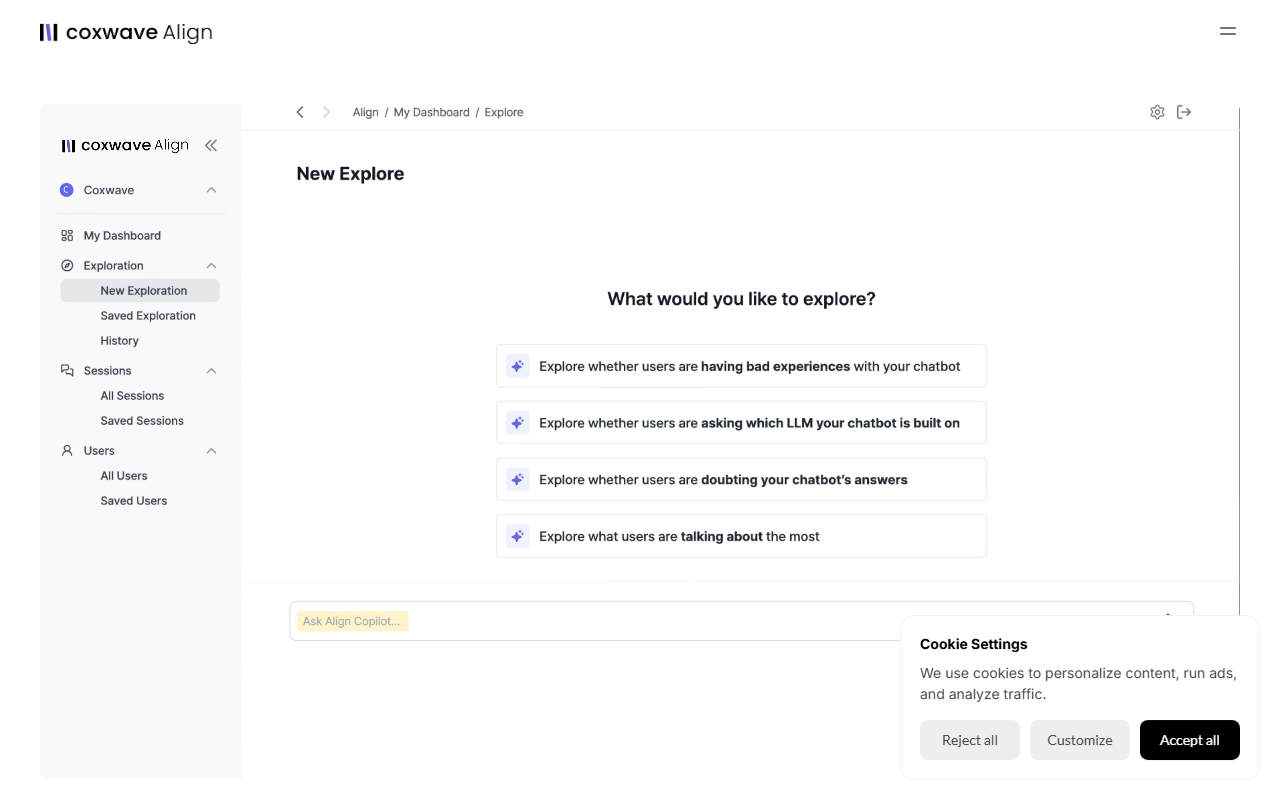
Upon visiting the Coxwave website (impaction.ai), I found a clear, modern interface focused entirely on one problem: making sense of the data flowing through your Gen-AI product. Coxwave Align positions itself as an analytics engine specifically designed for LLM-based conversational products like chatbots and virtual assistants. Instead of relying on generic product analytics tools that don’t understand the nuances of generative AI, this platform offers a dedicated workflow to monitor user-AI interactions, identify performance bottlenecks, and reduce hallucinations.
The dashboard shows a five-step workflow: save data in real-time via pre-built SDKs, search for high-priority conversations, analyze data cohorts in depth, auto-generate action items, and then re-evaluate after upgrades. This structured approach appealed to me as a reviewer because it directly addresses a common pain point for AI builders—how to iterate on a model without drowning in raw chat logs.
Key Features and Workflow
During my exploration, I focused on the platform’s core differentiator: its dedicated analytics pipeline for LLM-based products. The first step is data ingestion. Coxwave provides pre-built SDKs (likely Python and JavaScript) that capture both user queries and LLM responses in real-time. This makes integration straightforward for development teams already shipping conversational AI features.
Next, a diverse search toolkit lets you filter conversations by user intent, sentiment, or response quality. I appreciated that this goes beyond simple keyword search—it seems designed to surface problematic interactions that hurt user experience or model accuracy. After identifying a cohort of interesting sessions, you can deep-dive into the data at scale. The platform then synthesizes findings into auto-generated action items, turning analysis into prioritized tasks like “reduce hallucination on topic X” or “improve response speed for repeated queries.” Finally, you can evaluate the impact after applying changes, closing the loop.
The entire workflow is saved in a continuous cycle, which is exactly what Gen-AI product teams need when they ship weekly model updates. Coxwave offers two deployment options: a cloud version that promises setup in under 15 minutes without compromising data security, and an Enterprise on-premise solution for organizations with strict data governance requirements.
Pricing, Integrations, and Alternatives
Pricing is not publicly listed on the website. The navigation includes a “Pricing” link alongside “Contact Sales,” indicating that you must speak with a sales team to get a quote. This is common for enterprise-focused analytics tools but may frustrate smaller teams looking for a self-serve plan. The cloud solution likely has a tiered model based on data volume, but without transparent numbers, budgeting becomes difficult.
Integrations are hinted at via the SDKs, but I did not find an explicit list of supported frameworks or model providers. Given the focus on LLM products, it likely works with OpenAI, Anthropic, and other API-based models, but this should be confirmed. Alternatives in this space include LangSmith (by LangChain), which provides observability and testing for LLM applications, and Arize AI, which specializes in ML observability including LLM monitoring. Unlike these competitors, Coxwave Align focuses specifically on conversational products and offers a more guided workflow from data collection to action items.
Who Should Use Coxwave Align?
This tool is best suited for product teams building and iterating on conversational AI products who feel overwhelmed by raw chat logs and need structured insights. If you ship regular model updates and need to validate improvements, the five-step workflow is a strong fit. The on-premise option also makes it viable for regulated industries like finance or healthcare where data cannot leave a private cloud.
However, the lack of transparent pricing is a genuine limitation. Smaller startups or solo developers may find it hard to evaluate cost-effectiveness without a demo. Additionally, the platform’s emphasis on post-deployment analytics means it may not replace deep model evaluation tools like Weights & Biases or MLflow for pre-production testing. For its niche—monitoring and improving live LLM chatbots—Coxwave Align shows promise. I recommend requesting a demo if your team struggles to turn conversational data into real product improvements.
Visit Coxwave Align at https://impaction.ai/ to explore it yourself.






Comments