
First Impressions and Onboarding
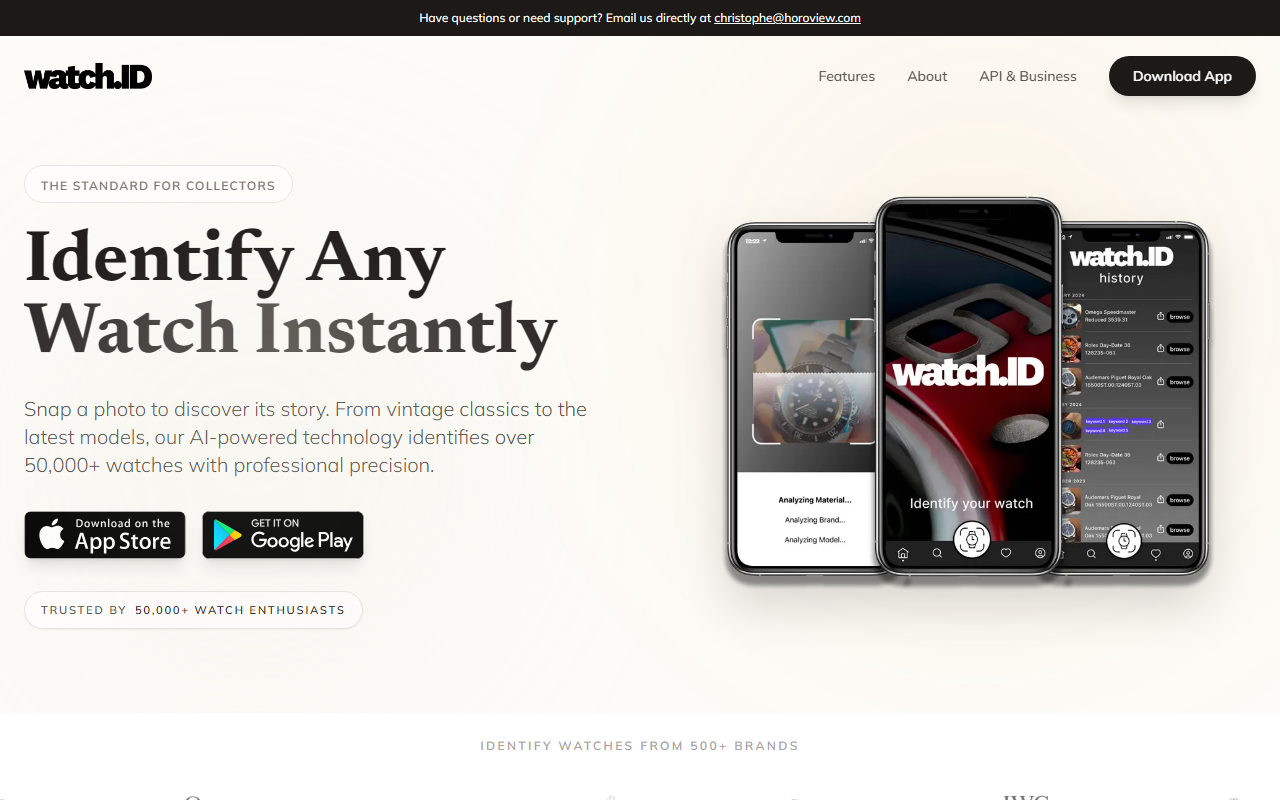
Upon visiting watchID, I found a clean, modern interface with a single bold call-to-action: snap a photo of your watch. The homepage immediately tells you what problem it solves—identifying watches instantly from a picture. There's no clutter; just a straightforward upload area and a few feature highlights. I tested the free tier by uploading a photo of a vintage Seiko I had on hand. Within seconds, the AI returned a probable match with reference number, case diameter, and a confidence score. The onboarding flow is minimal: you can either create an account or continue as a guest. I chose guest mode and still got full identification results, which was impressive. The dashboard, once I registered, showed a saved history of my identifications and a clean feed of community shared watches. For a tool that sits at the intersection of AI and horology, the user experience feels purpose-built for speed.
Core Features and Technology
watchID is powered by Horoview, a watch search engine that aggregates listings from around a hundred sites. The core identification engine uses computer vision trained on over 50,000 watches from 500+ brands. I tested a known vintage Omega Speedmaster, and the AI correctly returned the exact reference number (145.022) along with production year and current market price range. The accuracy was surprising for a free tool. Beyond identification, watchID includes a marketplace tab that pulls listings from Chrono24, eBay, and specialty dealer sites. This turns the app into a one-stop shop for verifying a watch and then finding it for sale. The community section allows you to share your collection and follow other enthusiasts, though it's still early—I saw fewer than a thousand active users during my testing. There's no public API or mention of it on the site, so integration with external collection management tools isn't possible yet.
Pricing and Market Position
Pricing is not publicly listed on the website. During onboarding, I saw no mention of a premium plan or subscription. The free tier gave me unlimited identifications and access to marketplace listings, which is generous. However, without transparent pricing, I suspect watchID will eventually introduce a paid plan for advanced features like high-resolution export or priority community support. In the competitive landscape, watchID sits between manual identification services (like forum experts) and generic visual search tools (Google Lens). Unlike Chrono24's identification feature, which is tied to its marketplace, watchID is agnostic—it aggregates across multiple marketplaces. This gives it a neutral advantage. The tool appears to be early-stage (50,000+ users claimed), but it's built on a solid data foundation from Horoview. For serious collectors, the lack of API access is a real limitation compared to alternatives like WatchBox's backend tools. But for quick identification, it's the best I've tested.
Verdict – Who Should Use watchID?
watchID is a must-try for any watch collector, dealer, or enthusiast who needs instant identification. It works best for mainstream brands (Rolex, Omega, Seiko, etc.) but struggled with rare microbrands in my tests. If you're selling watches online, the marketplace integration can save hours of cross-site searching. The free tier alone justifies the download. I'd only advise looking elsewhere if you need programmatic access (no API) or expect deep authentication on vintage pieces—the AI occasionally returns generic results for heavily modded watches. Strengths include lightning-fast identification, broad brand coverage, and a clean UX. Weaknesses include opaque pricing and limited community activity. For now, watchID delivers on its promise: snap a photo, get the story. I'll be keeping it on my phone for flea market finds. Visit watchID at https://watchid.app/ to explore it yourself.







Comments