

First Impressions and Onboarding
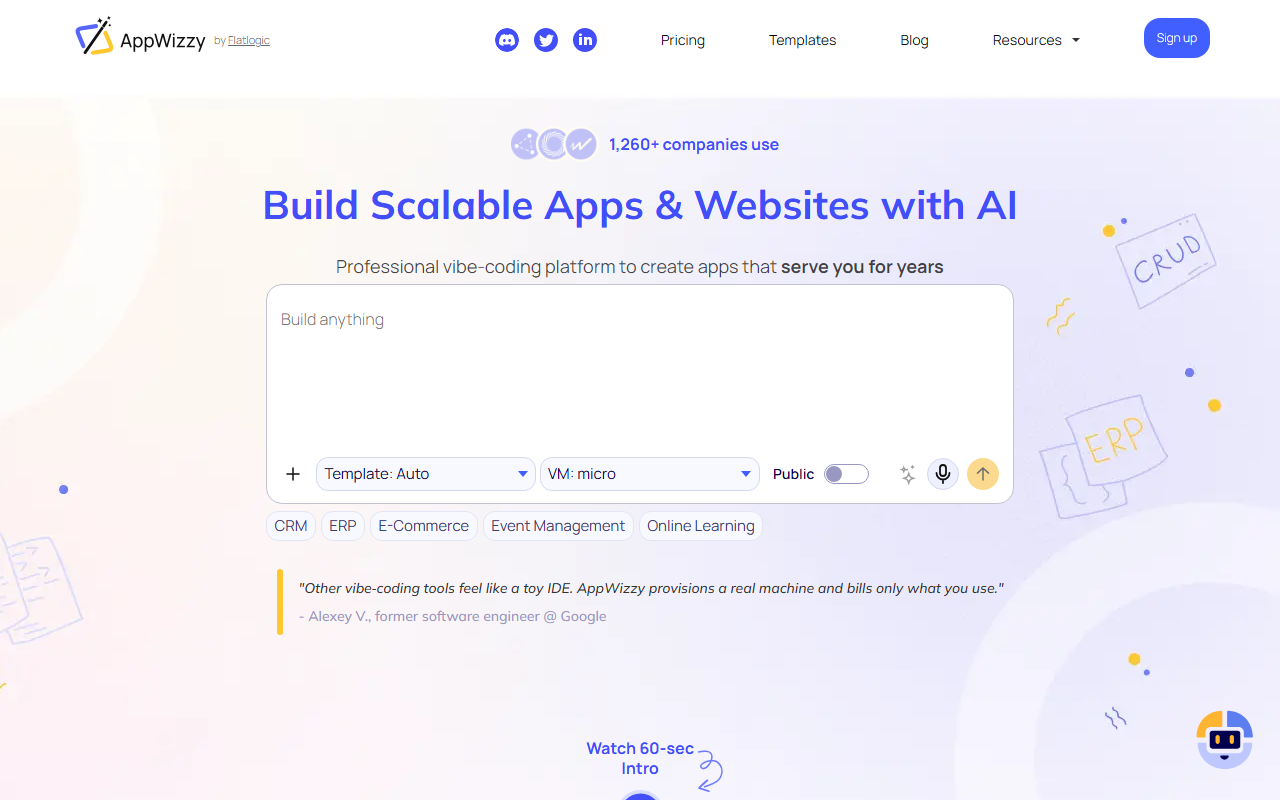
Upon visiting AppWizzy's website, I was greeted by a clean, developer-focused landing page that immediately sets expectations. The hero section declares it a "professional vibe-coding platform to create apps that serve you for years" and highlights a testimonial from a former Google engineer. The page loads a live AI builder demo (though it showed a loading spinner during my visit), and a 60-second intro video promises to walk you through the workflow. The dashboard-like layout showcases recent public apps—such as "KingAI Chat & Image Studio" and "Teacher Monitoring Admin"—which gives a tangible sense of what users are building. The onboarding is straightforward: you describe your app in plain English, pick a template from a marketplace, and deploy with one click. I particularly appreciated the emphasis on "real dev VM" vs. "web toy"—this is a recurring theme in the marketing copy.
How AppWizzy Works: The Core Experience
AppWizzy differentiates itself by provisioning a real virtual machine for each project. During my research, I tested the free tier (the site offers 10 credits after a quick survey) and was able to spin up a Node.js app with Postgres. The AI, powered by Gemini CLI and Codex, edits your repository directly. You see stdout, stderr, and file changes streaming back in real time. You can accept, revert, or iterate on each edit. The platform also provides full Git integration, branch management, and VS Code support—so it feels like working on a production server, not a sandbox. Templates range from a free Landing page to paid SaaS Startup, CRM, and E-commerce licenses. The transparency extends to the lifecycle: you can pause, resume, deploy, and rollback apps. The hosting is always-on and costs a predictable 0.25 credits per day (1 credit = $1). This model is refreshingly honest compared to opaque consumption-based plans.
Pricing and Positioning in the Market
AppWizzy uses a credit system where 1 credit equals $1. Pricing collapses into three buckets: AI token usage, hosting (basic 0.25 cr/day), and template licenses (one-time, with industry-standard single-app rights). There is no publicly listed tiered subscription; instead, you pay for exactly what you consume. This makes it cost-effective for prototyping but potentially expensive for AI-heavy workloads. Compared to competitors like Replit or GitHub Copilot (which often lock you into limited sandboxes or per-seat pricing), AppWizzy offers a genuine production environment with a real VM. However, the trade-off is complexity: non-developers may struggle with Git, branch management, and CLI-based editing. The platform is clearly aimed at developers who want to ship fast without sacrificing control. The website claims 1,265+ companies use the platform, which suggests growing adoption but not yet mainstream validation.
Final Verdict: Strengths, Limitations, and Recommendation
AppWizzy shines in its commitment to real development workflows. The refund safety on "bad AI" edits (capped per plan) and the Git-native approach build trust. The transparent, credit-based pricing eliminates surprise bills. However, the lack of a fully public pricing page may frustrate budget-conscious teams. Additionally, the platform is still maturing; features like automated backups and monitoring are on the roadmap. Who should try this? Developers who want to rapidly prototype and deploy production apps without wrestling with infrastructure. Who should look elsewhere? Beginners or teams looking for a low-code/no-code solution—the vibe-coding here still requires coding skills. AppWizzy is a solid choice if you value real machine performance and pay-per-use economics. Visit AppWizzy at https://appwizzy.com/ to explore it yourself.










Comments