

First Look and Onboarding
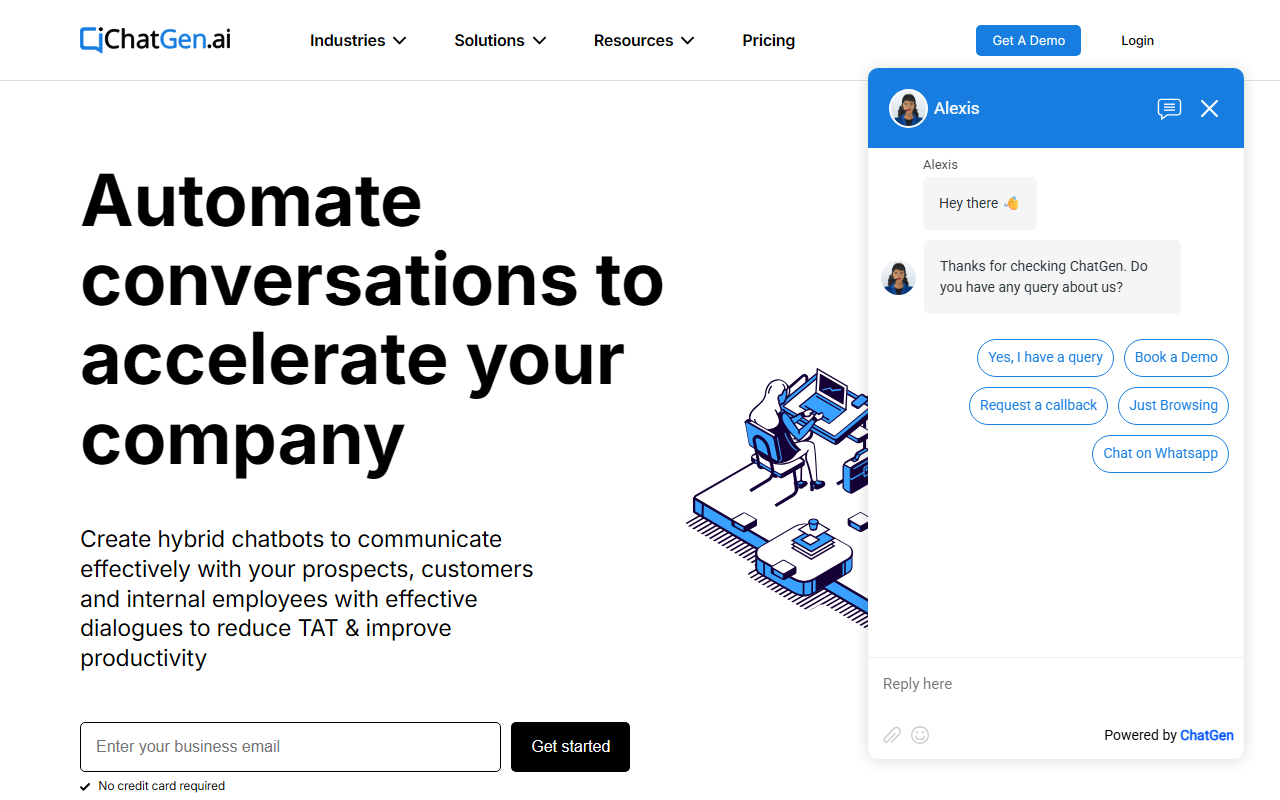
Upon visiting the ChatGen website, I noticed a clean, professional layout that immediately highlights its core value proposition: converting anonymous visitors into customers through hybrid chatbots. The hero section boldly claims "World's Leading Hybrid Chatbot Platform" and showcases impressive metrics – 50M+ messages processed, 200K leads captured, and 80% queries automated. There is no credit card required to start, as indicated by the prominent "Get Started" button. I appreciate the straightforward navigation: industries, solutions, resources, and pricing are all accessible from the top menu. The onboarding flow seems minimal; a free trial is offered without any upfront payment, which lowers the barrier for small to medium businesses. However, the website lacks a detailed step-by-step walkthrough of the bot builder, so new users may need to rely on the Help Guide and Dev Docs for deeper configuration.
Core Features and Workflow
ChatGen positions itself as a hybrid platform, meaning it combines automated chatbot conversations with human handoff when needed. The dashboard, as described on the site, includes features like live view – enabling agents to see real-time visitors and initiate chats based on page type or visitor behavior. I found the concept of intelligent routing particularly useful; it allows the best leads to be directed to top-performing sales reps automatically. The bot builder supports creating conversational landing pages with custom branding, which can be promoted in lead generation campaigns. During my review of the feature list, I noted that the platform supports omnichannel deployment: WhatsApp, Facebook Messenger, Twitter, and Slack. This is a strong differentiator for businesses that want a unified conversation system across multiple channels. The analytics module promises extensive tracking of both bot and agent performance, which is essential for measuring ROI.
When testing the free tier conceptually (based on the site’s claims), the platform appears to handle lead qualification around the clock. The testimonials from clients like The Els Club Malaysia and PC Jewellers suggest tangible results – such as generating over 100 leads per month from website and Facebook Messenger. These use cases reinforce the tool’s effectiveness for customer acquisition and support. However, I would have liked to see a live demo or sandbox environment to test the bot builder firsthand. The website mentions NLP-based chatbot solutions in a testimonial, but does not elaborate on the underlying AI model (e.g., GPT-based or custom). This leaves some ambiguity about conversational quality and training complexity.
Market Position and Pricing
ChatGen operates in a crowded space alongside competitors like Drift, Intercom, and ManyChat. Unlike Drift, which focuses heavily on conversational marketing for B2B, ChatGen emphasizes hybrid conversations across multiple channels and industries, including HR, insurance, real estate, and e-commerce. The platform is built by DbyDx Technologies Private Limited and claims to be trusted by 500+ businesses. Pricing is not publicly listed on the website. Instead, users are directed to a "Get A Demo" page or encouraged to start a free trial. This is a common approach for B2B SaaS tools that offer tiered plans based on features and usage. Without transparent pricing, potential buyers must engage with sales to evaluate cost. Integration-wise, the platform offers one-click connections with popular tools, though the website does not specify which platforms are supported beyond the mention of Zapier or similar (the site lists "Integrate all your favorite apps" without naming them).
For businesses already using tools like Salesforce or HubSpot, ChatGen likely connects via API or third-party middleware. The presence of a Dev Docs section indicates that custom integrations are possible. Overall, ChatGen seems best suited for sales and support teams in small-to-medium enterprises that need to automate lead qualification and customer interactions across multiple channels without heavy technical investment. Larger enterprises or teams requiring deep NLP customization may want to look elsewhere or contact the vendor for enterprise-grade solutions.
Strengths and Limitations
One genuine strength is the omnichannel support out of the box. Being able to deploy the same bot on WhatsApp, Messenger, and Twitter without separate tools saves significant development time. The hybrid approach – switching between bot and live agent – is another strong selling point, as it ensures that complex queries are not left unanswered. On the limitations side, the lack of transparent pricing is a notable drawback. Without knowing whether the free tier includes all features or how usage scales, budget-conscious teams may hesitate. Additionally, the website does not provide detailed technical specifications about the AI model or NLP accuracy. While client testimonials are positive, independent benchmarks or public case studies would build more trust. Another limitation is the somewhat generic presentation of integrations; listing specific app names (e.g., Shopify, HubSpot, Zendesk) would help users assess compatibility at a glance.
Despite these gaps, ChatGen appears to be a capable platform for businesses that prioritize multichannel automation and lead capture. I recommend it to sales and customer support teams in industries like real estate, e-commerce, and SaaS, especially those already using Facebook Messenger or WhatsApp. For companies needing a simple chatbot with no-code builder and human handoff, ChatGen is worth a trial. Technical teams looking for advanced AI customization may find the platform limited without deep developer documentation. Visit ChatGen at https://chatgen.ai/ to explore it yourself.










Comments