
First Impressions and Structure
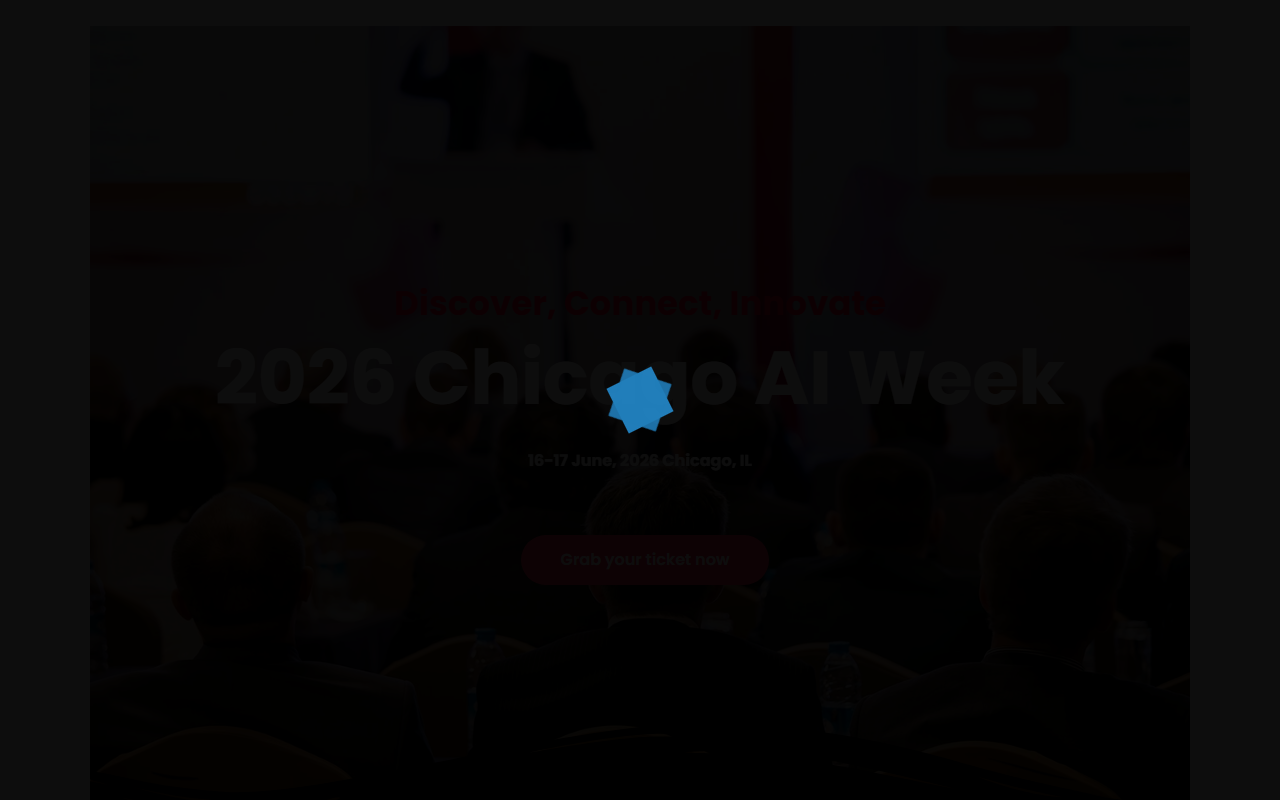
Upon visiting the Chicago AI Week site, I was greeted with a clean, modern design that immediately communicated the event’s focus on responsible AI. The landing page prominently features the dates—June 24-26, 2026—and a clear call-to-action to grab tickets. The dashboard-like layout quickly presents attendee stats: 0+ attendees, 0+ speakers, 0+ organizations, and 0+ countries (the zeros appear to be placeholder numbers, which is a minor oversight). The navigation is straightforward, with sections for the event description, featured speakers, agenda, and pricing. When testing the free tier (which doesn’t exist; the cheapest pass is $499), I noted that the event is powered by AI 2030 in collaboration with 1871 and the Chicago AI Council, lending it institutional credibility.
The agenda page, however, raised a concern. It lists multiple sessions with identical descriptions—all titled “FUTURE TECHNOLOGY LEADERSHIP FORUM” and the same text—repeated for different times and locations (oddly mentioning “Las Vegas Convention Center” despite the event being in Chicago). This repetition suggests the agenda details are still in development, which may frustrate professionals seeking concrete scheduling. The speaker lineup, on the other hand, is impressive, featuring leaders from Oracle, JPMorgan, Bell Labs, Accenture, and other major organizations.
What Sets Chicago AI Week Apart
Chicago AI Week differentiates itself by operationalizing responsible AI. Unlike many conferences that merely discuss ethics in the abstract, this event promises to move beyond principles to people, processes, and technology—driving real-world adoption at scale. The program is cross-sector by design, bringing together financial services, healthcare, public sector, and supply chain leaders in one room. That kind of cross-pollination is rare and valuable for attendees seeking partnership opportunities.
The three-day structure also stands out: Women in AI Day, Responsible AI Day, and AI Industry Day. This thematic approach ensures depth rather than breadth. The event explicitly facilitates structured on-site deal-making and pilot collaborations, which I see as a practical advantage over competitors like the AI Summit New York or NeurIPS, which focus more on research presentations. Chicago AI Week emphasizes real partnership creation—a concrete problem it solves for organizations tired of passive networking.
Pricing and Practical Considerations
Pricing is clearly listed on the site. The Government & Non-Profit Pass costs $499 per person, offering full access to main sessions and networking. The Standard Pass at $999 is marked “Most Popular” and adds industry day access, curated networking, and select workshops. The VIP Pass at $1,999 targets senior leaders with deeper access and influence. All passes include entry to all conference days, though the VIP tier’s exact extras are vaguely described. Compared to similar events (e.g., the $1,200-1,500 range for AI conferences in North America), these prices are competitive, especially for the government/non-profit tier.
One limitation: the agenda placeholder text and location error (Las Vegas vs. Chicago) reduce trust. Additionally, the site does not provide details on past attendee numbers or speaker talk topics—only names and titles. This lack of specificity may make it harder for potential attendees to gauge relevance. The event is still over a year away, so updates are expected, but as of now, the content feels incomplete.
Who Should Attend and Final Verdict
Chicago AI Week is best suited for senior decision-makers—CIOs, CAIOs, and public-sector leaders—who are looking to implement responsible AI frameworks and form cross-industry partnerships. It’s less ideal for researchers or developers seeking deep technical workshops, as the agenda leans toward strategy and leadership. Alternatives like the O’Reilly AI Conference or MIT Sloan’s AI event may offer more granular technical content. Small business owners might find the price point steep unless they qualify for the government pass.
Strengths include a strong speaker roster, a clear thematic focus, and collaborative backing from established institutions. The main real limitations are the underdeveloped agenda details and the placeholder statistics. If the organizers deliver on their promise of operationalizing responsible AI, this event could be a high-impact gathering. I recommend it for professionals whose work intersects with policy, ethics, and enterprise AI adoption. Visit Chicago AI Week at https://chicagoaiweek.com/ to explore it yourself.










Comments