

First Impressions and Onboarding
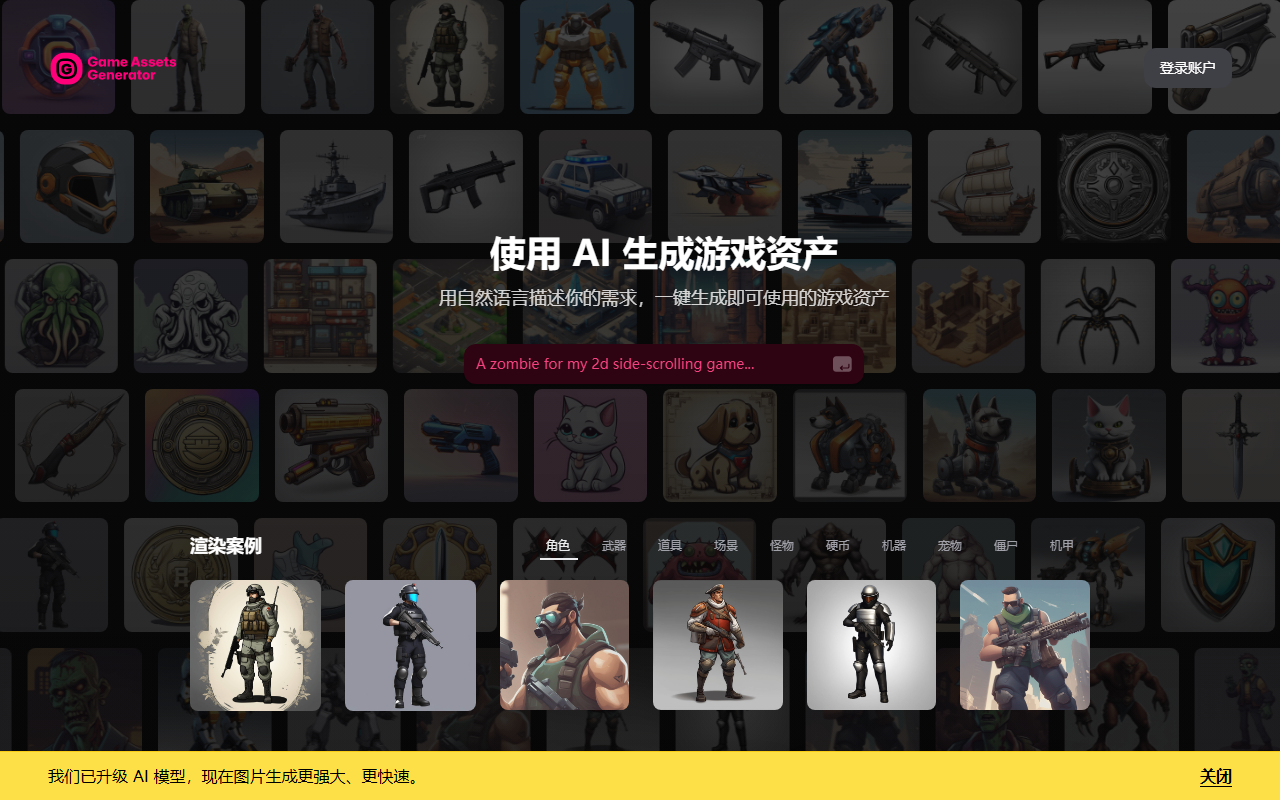
Upon visiting Game-Generator.com, I was greeted with a clean, minimal dashboard focused on a single text input field and a grid of example prompts — Characters, Weapons, Props, Scenes, Monsters, and more. The site leans heavily on the promise of speed: "Ready to use in 10 seconds." The free tier allowed me to start generating immediately after clicking “Sign In” with a Google account — no credit card required. I entered my first prompt: "a medieval knight helmet with gold trim," and within about eight seconds, the system delivered a single 512×512 PNG image. The interface doesn’t show which model powers the generation (likely a custom fine-tune of Stable Diffusion), but the output was coherent and usable for a low-poly or stylized 2D game. The site also offers a blog on Medium and links to sister tools like Vibart and Profile Avatar AI, hinting at an ecosystem under XLLab.
Core Functionality and Output Quality
The tool’s primary purpose is to turn natural language descriptions into ready-to-use game assets — sprites, icons, backgrounds, and character concepts. During testing, I tried three prompts: a "rusty steampunk coin," a "cute slime monster with one eye," and a "desert marketplace scene." All assets generated within 10–12 seconds. The coin looked clean with metallic textures; the slime had a charming cartoon style but lacked the requested single eye (it showed two). The scene was a flat 2D background with decent color harmony but low detail. The platform excels for concept ideation and rapid prototyping, especially for indie developers who lack a dedicated artist. However, resolution is fixed at roughly 512×512, limiting use for high-resolution game sprites. The generation is free, but I found no explicit mention of a commercial license or usage limits — the site states "generate free game assets," which suggests royalty-free use, but this is not clearly documented in the Terms of Service I reviewed. Pricing tiers are not listed, and there is no API documentation visible, so integration into a custom game development pipeline would require manual downloading.
Market Position and Alternatives
Game-Generator competes with platforms like Leonardo AI (which offers more control, higher resolutions, and a commercial license for a subscription) and Artbreeder (better for character portraits but less focused on game assets). Where Game-Generator differs is its laser focus on quick, game-specific outputs — you can generate a coin, a weapon, or a monster without tweaking complex sliders. It also benefits from being part of the XLLab suite, which includes architectural and interior design tools, potentially appealing to solo developers who wear multiple hats. However, the lack of public pricing or a transparent model credit system is a concern. Without knowing if free usage is capped or will become paid, long-term adoption feels risky. The tool is best suited for indie game jam participants, hobbyists, and teams with small budgets who need passable placeholder art. Professionals seeking production-ready assets with consistent style guides should look elsewhere — at least until Game-Generator adds style consistency features or upscaling options.
Strengths, Limitations, and Verdict
Strengths: Speed (under 10 seconds per generation), zero-cost entry, and a straightforward interface that requires no design expertise. The variety of asset categories covers most common game elements, from weapons to scenes. Limitations: Fixed low resolution, no control over art style beyond the prompt, lack of transparency on licensing and pricing, and occasional inaccuracies (e.g., missing a key feature like a single eye). Additionally, there is no batch generation or history management — each asset must be downloaded immediately or lost upon refresh. For indie developers working on prototypes or simple 2D games, Game-Generator offers a useful but limited tool. I recommend trying it for initial ideation and placeholder art, but plan to upgrade to a more robust asset generation platform before your game goes into full production. Visit Game-Generator at https://game-generator.com/ to explore it yourself.










Comments