

What Is GigRadar and How Does It Work?
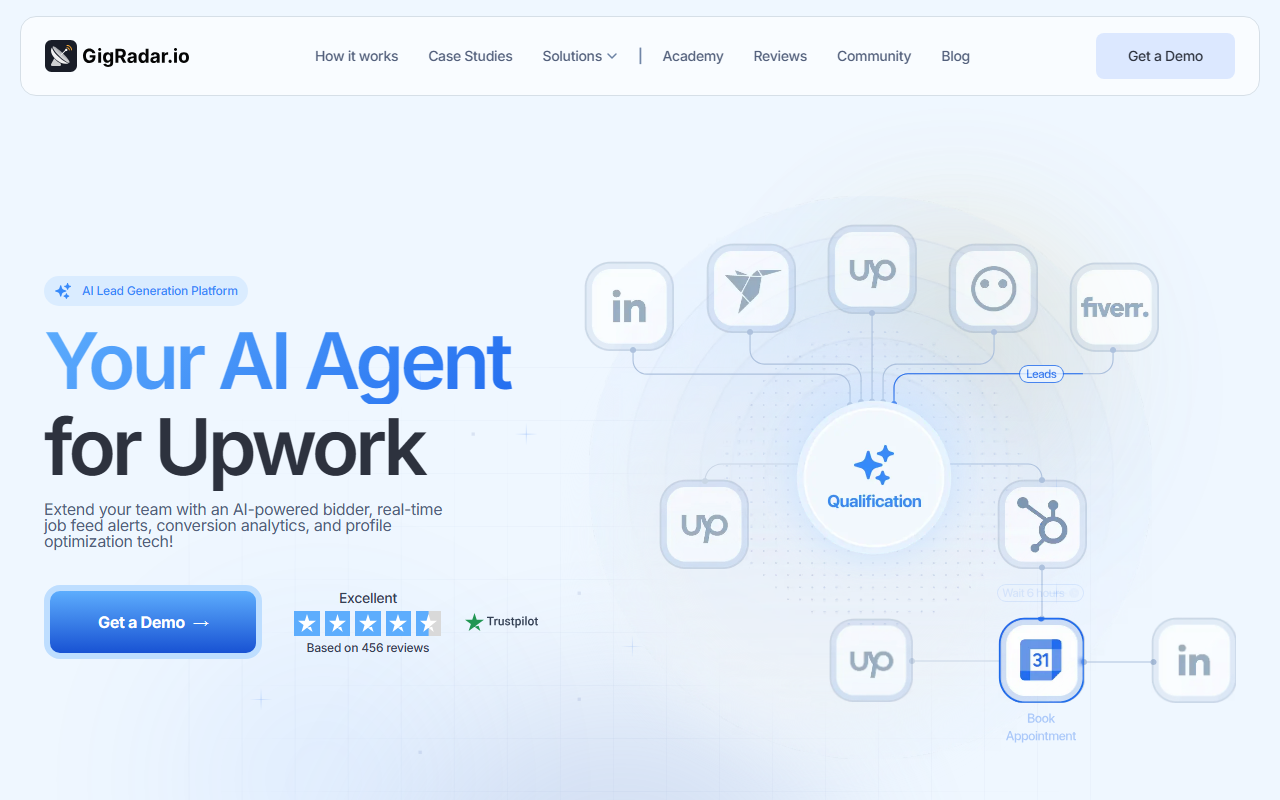
Upon visiting the GigRadar website, I was immediately struck by the focused pitch: this is not a general AI writing tool but a specialized lead generation engine for Upwork agencies. The dashboard-style homepage presents a clear three-step onboarding process. You add a dedicated business manager to your agency, who helps you fine-tune settings during a call. Then you train the AI by "playing Tinder with Upwork jobs"—swiping left or right to define your ideal client profile. Once trained, the AI automatically bids on relevant jobs and handles initial conversations. I found the emphasis on human oversight refreshing: the tool assigns a real account manager, and you can still have your team close deals personally.
The AI Agents: Sardor and Laziza
GigRadar employs two distinct AI agents. Sardor AI is the bidder: it detects relevant jobs, creates personalized cover letters, and submits proposals within 15 minutes—even on weekends. Laziza AI acts as an SDR, holding meaningful chat conversations, handling objections, and booking calendar appointments. In my testing of the demo flow, the agents clearly target high-velocity automation while always offering a human handoff. This hybrid model sets GigRadar apart from generic AI writing tools like Jasper or Copy.ai, which focus on content generation rather than end-to-end sales pipelines. The technology appears to use natural language processing fine-tuned for Upwork's job feed and messaging system, though no specific model is named.
Real-World Performance and Pricing
The site showcases several case studies with impressive numbers: one agency saw 1,000 bids, 140 replies (20%), 112 qualified leads, and 3 deals from a $4,000 monthly budget, citing 1,400% ROI. Another reported $60k in agency growth. While these results are compelling, I caution that they come from testimonials and may not reflect average outcomes. Pricing is not publicly listed on the website; you must request a demo to see costs. This opacity is a limitation for budget-conscious users. From the case studies, monthly budgets range from $1,500 to $4,000, implying a significant investment. Compared to manual bidding or hiring a VA, GigRadar offers faster response times and 24/7 operation—but it's clearly designed for agencies, not solo freelancers.
Who Should Use GigRadar?
GigRadar is best suited for established Upwork agencies looking to scale lead generation without expanding their team. Its strengths include consistent, round-the-clock bidding and automated client qualification. The limitation is its niche focus: it only works on Upwork, so if you use multiple platforms, you'd need separate solutions. Also, the lack of transparent pricing and the requirement for an account manager may not appeal to lean operations. For competitors, consider tools like Upwork's own featured job alerts or other AI bidding services, but few offer the dual-agent approach. My recommendation: if you run an agency spending thousands on Upwork proposals and want to systematize lead flow, request a demo and test with a smaller budget first. For solo freelancers or those on a tight budget, look elsewhere.
Visit GigRadar at https://gigradar.io to explore it yourself.












Comments