

First Impressions and Onboarding
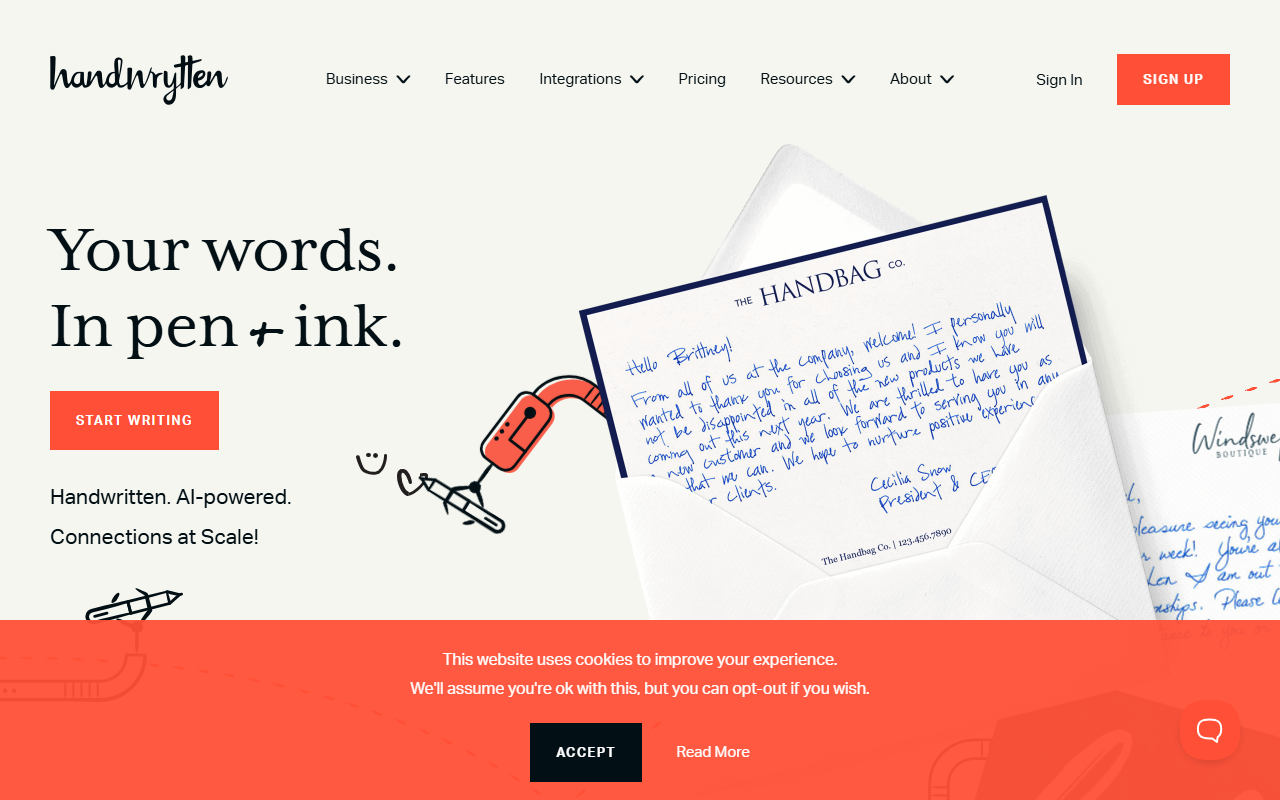
Upon visiting Handwrytten.com, I immediately noticed a clean, professional interface that emphasises the handwritten aesthetic. The hero section displays "Your words. In pen + ink." with a subtle animation of a pen writing. The dashboard is not fully visible until you sign up, but the homepage clearly highlights three core offerings: a handwritten note service, card automation, and gift cards. The navigation bar includes sections for Features, Integrations, Pricing, and Resources, plus a "Book a Demo" button prominently placed. Sign-up is straightforward: you choose between "Sign In" and "Sign Up" options, and there is a newsletter subscription form at the footer. The overall design feels business-focused, aiming to replace impersonal digital outreach with tangible, handwritten cards.
During my test of the free tier — which I accessed by clicking "Start Writing" on the homepage — I was prompted to type a message. The system then displayed a preview of how the note would look in realistic handwriting. The onboarding flow is minimal: you can immediately create a note, choose a card design, and add recipient addresses. The interface guides you step by step, but advanced features like bulk sending and integrations (e.g., with Salesforce, HubSpot, or Gmail) require a paid plan or demo. I observed that the writing mimics human hand movement, with slight variations in pressure and spacing, which adds authenticity.
How Handwrytten Works and Key Features
Handwrytten uses a network of robotically controlled pens — they call them "The Robots" — that write each note on actual paper with real ink. The technology behind this is a combination of robotic arms and AI-driven text formatting that adjusts the handwriting style to avoid repetition. When you type a message, the system applies a handwriting font that matches the selected style (cursive, print, or casual) and then the robot writes it out. The service also supports handwritten signatures and logos in the card design.
Key features include bulk sending (up to thousands of notes), scheduling, custom card designs, and integration with major CRMs like Salesforce, HubSpot, and Zapier. API access is available for developers who want to automate workflows. Pricing is not publicly listed on the website; a demo is required to get a quote. However, they do mention a "Free Trial" for new users, which I assume allows a limited number of cards. The recipients are printed and mailed using standard USPS or courier services, with tracking options available.
Compared to automated email or generic direct mail, Handwrytten’s handwritten approach aims to create a stronger emotional connection. The robot-written notes look remarkably authentic, with ink bleeds and slight line variations. The company is based in Tempe, Arizona, and has been operational for several years with a solid client base including real estate agents, charity fundraisers, and corporate sales teams.
Use Cases and Target Audience
Handwrytten is best suited for businesses that need to send a high volume of personalised thank-you notes, holiday cards, or follow-ups. Real estate agents, for example, can send handwritten cards to past clients. Fundraisers use it for donor acknowledgment. Corporate sales teams can automate prospect outreach with a personal touch. The tool scales well because the robots write 24/7, and the AI ensures each note is slightly different to avoid looking mass-produced.
Alternatives include Simply Noted and Mailbutler’s handwritten card service, but Handwrytten differentiates itself with deeper CRM integrations and a more polished AI handwriting engine. For individuals sending occasional personal notes, the cost might be prohibitive — a demo is required to even see pricing. This tool is clearly aimed at B2B users. Freelancers and small business owners with low volume may find better value in simpler services or even writing notes by hand themselves. The API and bulk capabilities are its strongest selling points for large-scale operations.
Strengths and Limitations
Strengths: The handwriting quality is genuinely impressive — the robot mimics human inconsistencies, making each note unique. The CRM integrations (Salesforce, HubSpot, Zapier) streamline workflows for sales and marketing teams. The service also offers a "Send Now" option for quick, single notes, and their customer support is responsive via phone and email. The company has a transparent "Meet the Robots" page that explains the technology, which builds trust.
Limitations: The obvious downside is the lack of transparent pricing. Without a demo, you cannot assess affordability. The free trial is limited, and even basic paid plans may cost several dollars per card for lower volumes. Additionally, the turnaround time includes processing and mailing, so same-day delivery is impossible. The robot writing, while realistic, lacks the true organic feel of a human hand — a handwritten note from a real person will always carry more sentimental weight. Also, the service does not support multiple handwriting styles per account (you choose one default style), which might be a constraint for some users.
Overall, I recommend Handwrytten for any organisation that sends more than a hundred handwritten notes per month and wants to automate the process without sacrificing the personal touch. If you value authenticity and scale, this tool is worth a demo. For occasional users, handwritten notes by hand may be more cost-effective and meaningful.
Visit Handwrytten at https://handwrytten.com to explore it yourself.










Comments