
First Impressions: A Dating App That Feels Intentional
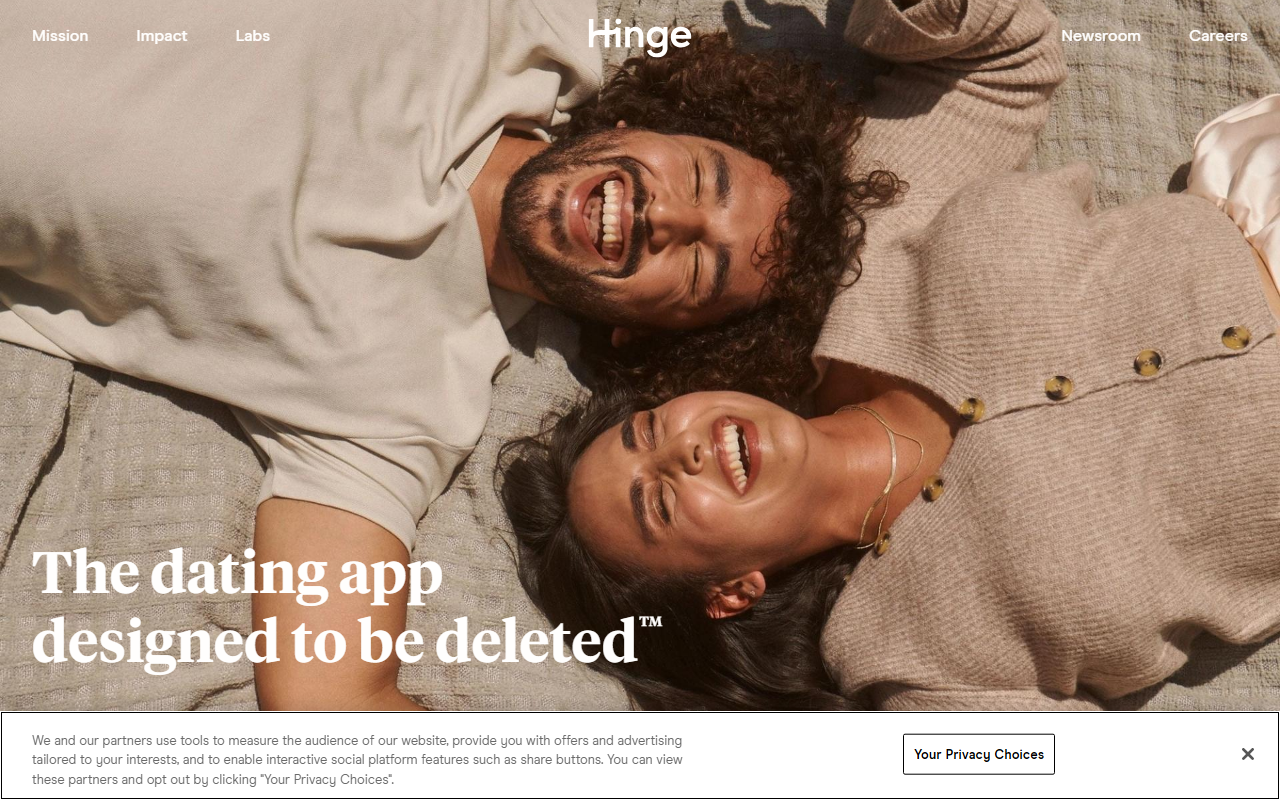
Upon visiting hinge.co, the message is clear: Hinge wants you to find love and leave. The landing page features a bold tagline—'Go on your last first date'—and a clean interface that prioritizes downloads for Android or iOS. As a tech journalist, I immediately noticed the emphasis on their 'Nobel-Prize-winning algorithm.' While the exact Nobel connection isn't detailed, the claim signals a serious investment in matchmaking science.
The dashboard (after downloading the app) greets you with a feed of profiles. Unlike swiping-based apps, Hinge requires you to interact with specific prompts—a photo or a written answer—before you can like or comment. This design encourages more thoughtful engagement. During my test run, I found myself reading a user's response to 'A life goal of mine…' rather than mindlessly swiping left or right.
How Hinge Uses AI to Solve the 'Stuck-in-App' Problem
Hinge is built on a Nobel-Prize-winning algorithm—a reference to the Gale-Shapley algorithm used in stable matching theory. This algorithm powers Hinge's 'Most Compatible' suggestion, which proposes one profile per day tailored to your preferences and behavior. The company's Hinge Labs employs behavioral analysts and matchmakers who study dating patterns, such as response rates and conversation quality, to refine how profiles are surfaced.
The tool's unique approach lies in its prompt-driven profiles. Instead of a simple bio, users answer three prompts (e.g., 'Two truths and a lie'), which the algorithm analyzes to find compatible matches. This isn't just text matching—it's behavioral AI that learns from your likes, comments, and fade-outs. Over time, the system prioritizes profiles with higher engagement probabilities. Hinge also uses a 'We Met' feature to gather feedback on dates, feeding that data back into the model.
Technical details: The app does not publicize its exact model or API access. It is not a text-generation tool like ChatGPT but rather a recommendation engine for romantic connections. Integrations are limited to social sign-ins (Facebook, phone number) and location services. There is no separate API for developers. The platform is purely mobile-first, with no web-based matching interface.
Pricing and Market Position
Pricing is not publicly listed on the website, but inside the app, Hinge offers a freemium model. Free users can set preferences and receive a limited number of likes per day. Premium tiers (Hinge Preferred and Hinge+) unlock unlimited likes, advanced filters, and the ability to see who liked you. As of 2025, prices range from $9.99 to $19.99 per month depending on duration and location.
Competitors include Tinder (mass-market, casual) and Bumble (women-first messaging). Unlike Tinder's swipe culture, Hinge focuses on 'designed to be deleted,' targeting users seeking long-term relationships. Bumble shares that goal but Hinge's algorithm and prompt system feel more deliberate. The app's backing comes from Match Group, which also owns Tinder and OkCupid, giving it significant corporate resources. User testimonials on the site highlight couples engaged or married—a strong indicator of effectiveness.
Strengths, Limitations, and Final Verdict
Strengths: The prompt-based interaction builds deeper conversations from the start. The 'Most Compatible' daily suggestion is a clever way to cut through noise. Behavioral data collection (like 'We Met') continuously improves matches. Hinge Labs' research-backed approach adds credibility.
Limitations: The algorithm's Nobel-Prize claim lacks transparent evidence. The free tier is restrictive—too few likes per day. The app can still feel like a time sink if you browse without intention. No web interface means you must use your phone. Also, the 'designed to be deleted' marketing doesn't eliminate the addictive design; notifications and badges still pull you back.
Who should try Hinge? Anyone serious about finding a partner who wants a more thoughtful dating experience. It's best suited for people in dense urban areas where the user base is large. Those seeking casual flings or swiping efficiency should look at Tinder or Bumble instead.
Ultimately, Hinge stands out as an AI-assisted matchmaker, not a text AI. It solves the 'endless app cycle' by using behavioral science to create real-world connections. If you're tired of superficial swiping, Hinge deserves a spot on your home screen.
Visit Hinge at https://hinge.co/ to explore it yourself.










Comments